Abstract
A human resource management dissertation is read for the link between an HR practice and an outcome and whether the design shows its direction. Readers check access to the organization, common-method bias when one employee survey measures both practice and outcome, whether managers' or employees' views carry a finding, anonymity in small groups, and whether proposals fit the country's employment rules.
A human resource management (HRM) dissertation or master's thesis is often built on a survey or interviews inside one organization, and that access shapes what the findings can claim. This page shows how HRM dissertations are structured, what a reader in the field looks for in each part, and the problems that come with studying people at work: access, common-method bias, whose voice the data carry, and staff anonymity. Guidance from programs in Latvia, Germany, Finland, and the United States is quoted.
In short
HRM research asks how the way organizations recruit, train, appraise, pay, and involve people relates to what those people do and feel, and to how the organization performs. A dissertation in the field typically examines one HR practice or a bundle of practices (onboarding, performance appraisal, flexible work, training, diversity policies) against an outcome such as engagement, commitment, turnover intention, wellbeing, or unit performance. Theories commonly used to explain the link include social exchange, the ability-motivation-opportunity (AMO) framework, and the job demands-resources model.
Some programs expect empirical work. The Chair of Human Resource Management and International Management at the University of Göttingen states: “Especially master students should work empirically-based (primary, secondary quantitative data and/or qualitative data) in their theses.” In the United States, programs often offer a choice. Michigan State University's master's program in human resources and labor relations describes its thesis option this way: “Plan A consists of prescribed course work, research, thesis, and a final oral examination.”
Whatever the form, the reader asks the same thing: does the evidence in your draft support the claim you make about the practice, for the people and the organization you studied?
Some professional master's programs require proposals as a formal part. At the Latvia University of Life Sciences and Technologies, the HRM master's guidelines ask that proposals be “justified, concrete, addressed to a certain entity and feasible in practice.” A proposal such as "improve communication" fails each of those tests.
| Part | What an HRM reader looks for | Gap that often appears in drafts |
|---|---|---|
| Introduction | An HR problem stated as a research question, with the organization or sector named | A problem the company raised, with no question a study can answer |
| Theory and literature | A framework that explains why the practice should affect the outcome | A list of definitions of engagement without a mechanism |
| Organizational and legal context | Size, sector, workforce, and the employment rules that shape the practice in that country | A context section copied from the company website |
| Method | Access, sampling, instruments, ethics, consent, and anonymity | Response rate missing; no word on how the survey link reached staff |
| Findings | Results per research question, with managers' and employees' views kept apart where both were asked | Quotes from HR staff used as evidence of employee experience |
| Discussion | Findings set against the literature, with the limits of a single organization | Causal wording from cross-sectional data |
| Recommendations or proposals | Measures that follow from the findings and fit the organization's legal and practical limits | Advice that could appear in any HR textbook |
Most HRM dissertations depend on access to an organization, often the student's employer or internship host. Access shapes the data: who forwards the survey link, who chooses the interviewees, which documents you may see. A reader wants to know who the gatekeeper was and how you kept the organization's interest from steering the question or the sample. Contracts and supervision on the company side are covered in the guide to a master thesis in a company.
An employee survey that measures an HR practice and an outcome from the same respondents at the same moment can inflate the relation between them. This is common-method bias. Podsakoff and colleagues (2003) describe procedural remedies: separating measures in time, using another source for the outcome (supervisor ratings, absence or turnover records), and assuring anonymity so respondents feel less pressure to answer favorably. Harman's single-factor test, often reported as the only check, is widely regarded as weak evidence.
Managers and employees describe different things. Wright and Nishii (2013) distinguish intended HR practices (the policy), actual practices (what line managers do), and perceived practices (what employees experience). Interviews with an HR director tell you about intended practices. If your question concerns how employees experience appraisal, employees have to be asked, and their accounts should be reported apart from management's.
Claims from practice to outcome need care. In a cross-sectional survey, a link between training and commitment can run both ways, and a survey of current staff leaves out those who already left. Legal context matters as well: dismissal protection, working time, collective agreements, and employee representation differ between countries, so a practice that is voluntary in one country may be required or restricted in another. Before surveying staff, ask the organization whether employee representatives, such as a works council, need to be involved.
On ethics, the Latvian guidelines ask the method chapter to include “describing in detail the ethical aspects of the survey (informed consent, the anonymity of the respondents, the principles of data acquisition and processing, etc.)” In the United States, Michigan State's handbook sets the order of steps for human subjects research: “all investigators (faculty and/or graduate students) who will conduct research that involves human subjects must submit an application and approval of the research protocol must be in place before the investigator begins data collection.”
On documentation, Göttingen's HRM guidelines specify: “The list of interviews should at least contain the name (or pseudonym) of the interviewee, the organizational position or job of the interviewee as well as location and date of the conducted interview.” For surveys: “Please add the original format of the conducted survey.” The position of each interviewee is exactly what lets a reader see whose perspective a finding rests on.
On confidential data, Aalto University's People Management and Organizational Development program advises for the thesis presentation: “Start by clearly identifying which parts of your data are confidential, compared to those that are publicly available or can be disclosed safely.” The same sorting helps for the text of the dissertation.
For the chapter that sets out design and instruments, see thesis methodology chapter.
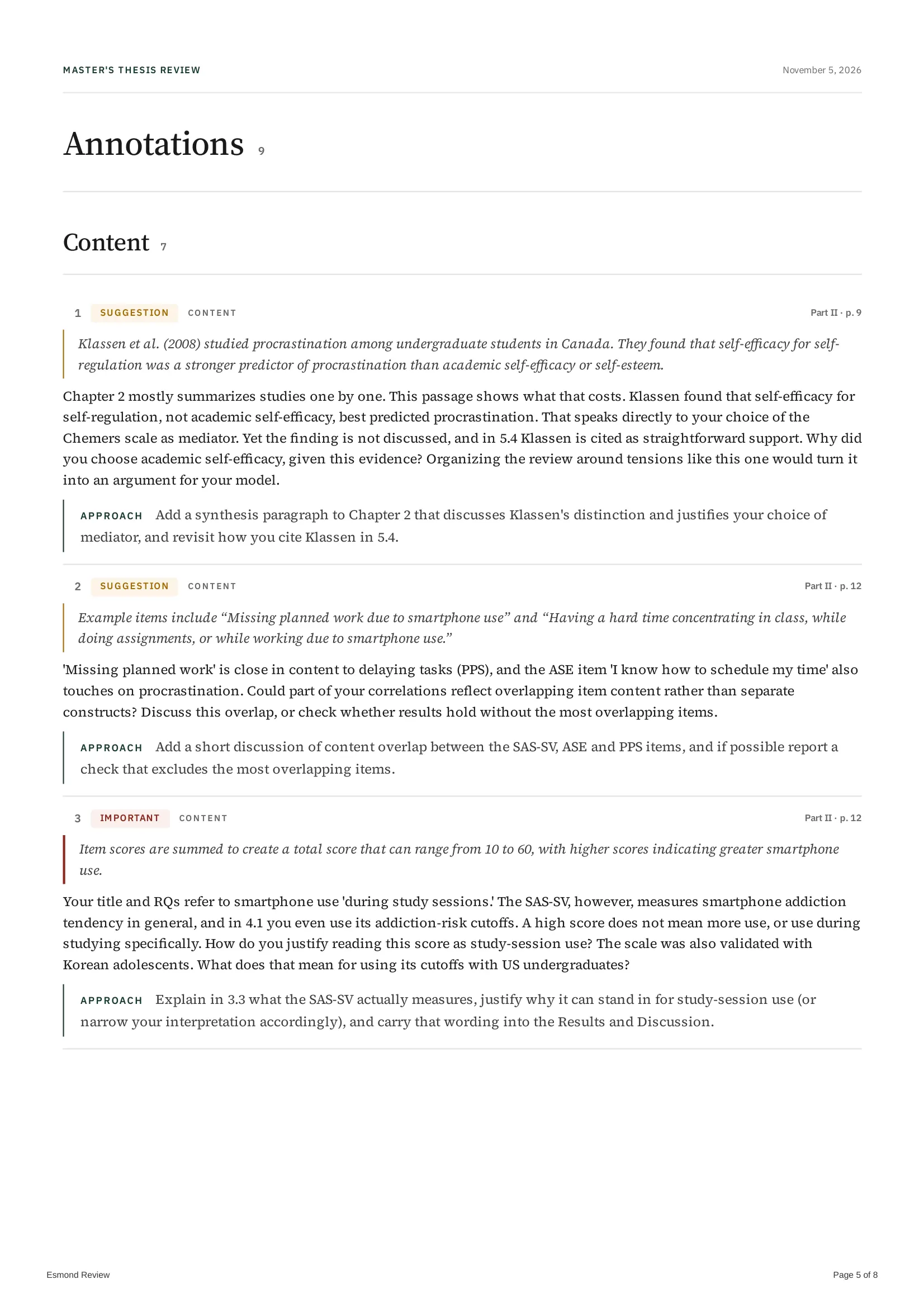
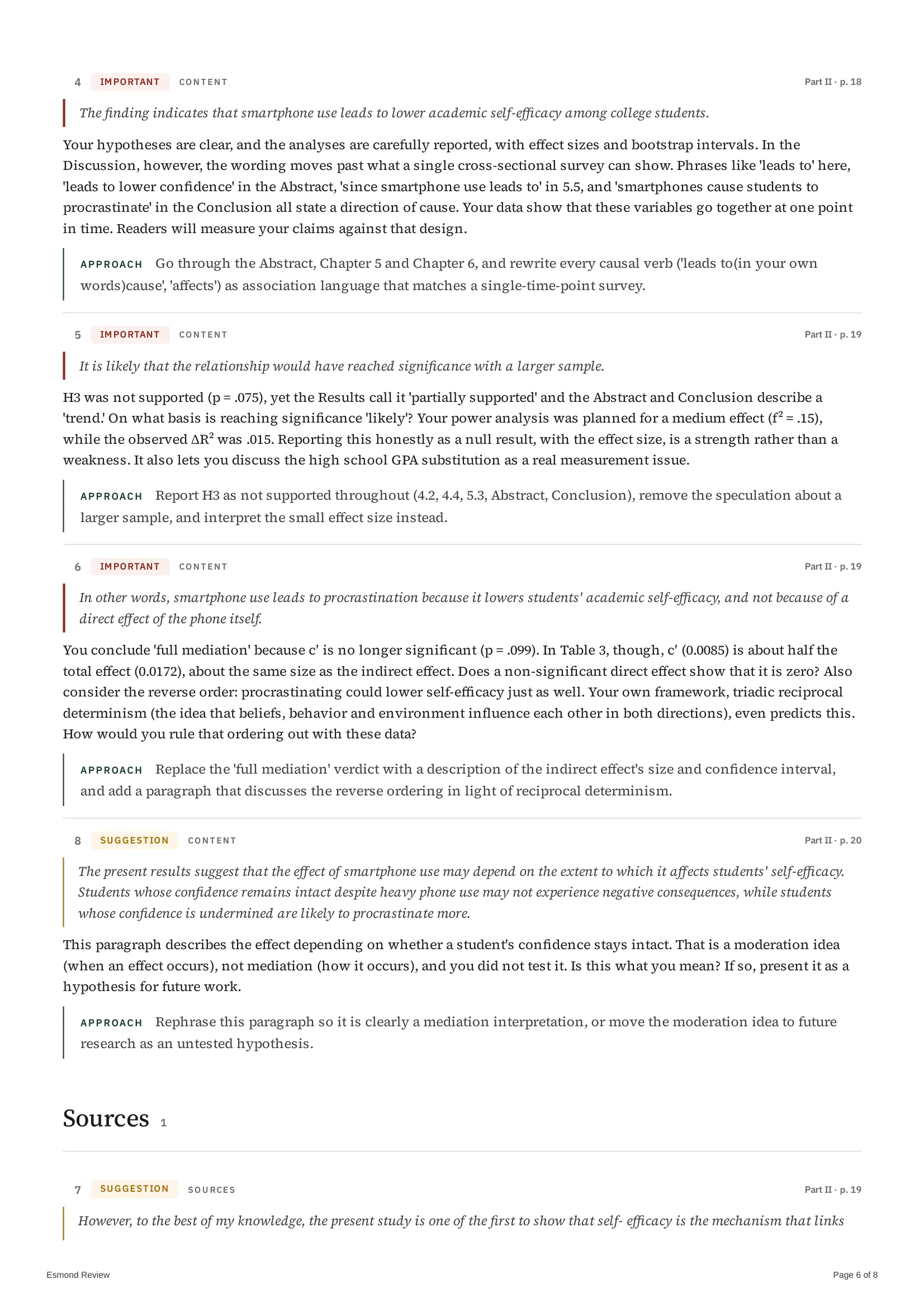
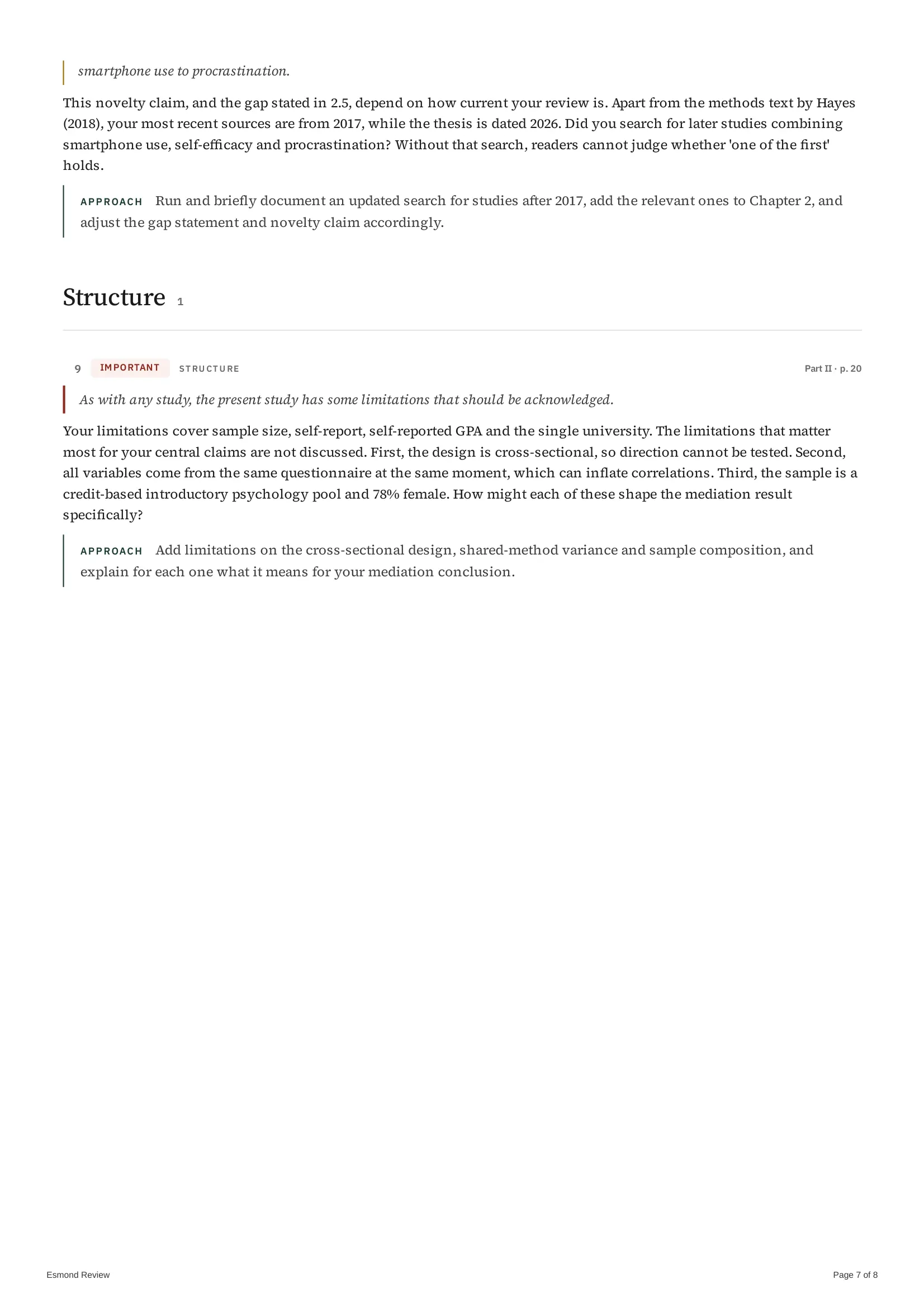
These fragments are made up. None of them comes from a real dissertation.
Your academic supervisor is the main reader for method and theory. In an in-company dissertation there may also be a contact person at the organization; that person knows the context, but their interest in the findings is not neutral, so ask them about facts and access, not about conclusions. Your university's ethics committee or data protection office can answer questions about consent and anonymity before data collection starts. A fellow student can tell you whether a table could identify someone.
AI rules vary. The Latvian HRM guidelines require disclosure: “If artificial intelligence tools were used to produce the master's thesis (e.g., for transcribing audio recordings of interviews into text), this must be indicated and referred to in the text.” Göttingen's HRM chair asks for complete transparency about AI tools and a signed declaration attached to the thesis. Where rules like these apply, ask your supervisor first before using any AI review on your draft, and declare it as required. Feedback on your own text differs from having someone else produce it, which would not be your own work. See can I get AI feedback on my thesis for more.
The thesis checklist before you submit covers formal points. For what to put in the final chapter, see what goes in a thesis conclusion.
An HRM dissertation has an introduction, a theory and literature chapter, a description of the organization and its legal context, a method chapter with access, instruments, and ethics, findings, a discussion, and in many professional programs a section of recommendations or proposals. Your program's guidelines decide the exact parts.
Your department's thesis archive and your university library's repository show what your program accepts. When you read one, look at how access to the organization is described, whether managers' and employees' views are kept apart, and how anonymity is protected in the tables. Esmond doesn't supply example dissertations.
Many students do. Readers then look closely at access, at who distributed the survey or selected interviewees, and at anonymity, since colleagues and managers may read the result. Agree with your supervisor and the organization what can be published.
When the same people rate both the HR practice and the outcome in one questionnaire at one moment, part of the relation can come from the shared method. Separating measures in time, using another source for the outcome, and assuring anonymity reduce the risk.
Your supervisor is the first reader, and ethics or data protection offices can advise on consent and anonymity. Outside feedback and AI tools are possible where your institution allows them, sometimes with a declaration. Esmond reads a draft you upload and comments on it.
Esmond evaluates every assignment before you submit. It never writes it.
Esmond is an AI tool that doesn't write for you. If your course doesn't allow any AI tools, don't use Esmond for that work. If you're unsure, ask your instructor or advisor.
Esmond can flag, in the text you upload, what an HRM reader may question: causal claims about an HR practice from one cross-sectional survey, management interviews used as evidence of employee experience, a method chapter that is silent on common-method bias, a promise of anonymity that a later table seems to break, or proposals that do not follow from the findings. The sample report shows the format; how Esmond works describes what happens after upload.
Upload the whole draft if you can: Esmond then reads the chapters against each other, for example whether the conclusion answers the question the introduction asked. A single chapter gets a review of that chapter only.
Esmond doesn't check your survey data, assess the legal situation in your country, or confirm ethics approval. Before you upload a draft anywhere, anonymize participant and employee details as your ethics approval and the organization require. You decide what to change.
Read on November 21, 2026.
Last revised
Get your paper evaluated before you submit