Abstract
An empirical finance dissertation is read first for its sample: database, period, filters and firms that disappeared. Readers check event study windows and benchmarks, fixed effects and clustered standard errors in panel regressions, look-ahead and survivorship bias, and how endogeneity is named. Effects should be stated in economic terms beside statistical significance, and finance chairs often ask for data and code that reproduce each table.
A finance dissertation or master's thesis can be an empirical study of returns, a corporate finance question tested on firm data, or a valuation case; this page is for students with any of the three under way. It covers the chapter structure of an empirical finance dissertation, the methods readers in finance look at hardest, and the questions your sample and data will be asked, with guidance from finance chairs in Germany, Denmark, and Sweden quoted.
In short
Finance dissertations ask how markets value information and risk, and how firms raise and spend money. Typical questions: does the market react to an announcement (a merger, a dividend cut, an ESG rating change); do firms with a certain characteristic earn different returns; does a financing, payout, or governance choice relate to performance; how much is a particular company worth. The answer almost always rests on numbers from markets or financial statements, so the reader's attention goes to where those numbers came from and what was done with them.
That is the core of the empirical work. The finance guidelines of the University of Southern Denmark put it in one line: “An empirical thesis also includes collection and selection of data.” At Goethe University Frankfurt, one finance chair states for master's students: “For Master’s students, we require quantitative research.” Other programs accept a case or valuation dissertation, and the Chair of Corporate Finance in Mannheim expects the majority of its theses to be case studies. The reader then looks at the quality of the valuation model and how well the case is structured, and much less at test statistics.
The general logic of a methods chapter is on the page about the thesis methodology chapter. Below is what changes in finance.
A valuation or case dissertation replaces data, methodology, and results with a company and industry analysis, the valuation model (discounted cash flow, multiples, or both), and a sensitivity analysis. The reader then checks that the forecast assumptions are argued from the company's history and industry, that the discount rate inputs are sourced, and that the spreadsheet can be followed.
| Chapter | What a finance reader checks first |
|---|---|
| Introduction | The question, the main result in one or two sentences, and why it matters for investors, firms, or regulators |
| Literature and hypotheses | The papers your test builds on, and a hypothesis derived from a model or mechanism with the expected sign |
| Data and sample | Database or hand collection, period and its reason, filters (financials, utilities, missing values), number of firms and observations after each step, outlier treatment |
| Methodology | The model in an equation, each variable defined, the estimation window or fixed effects, how standard errors were computed |
| Results | Descriptive statistics, the main table, coefficients interpreted in economic units, and the limits of what they show |
| Robustness | Alternative definitions, subperiods, other samples or estimators, reported briefly with the reason for each |
| Conclusion | The answer to the question, what it does not show, and what a next study would need |
An event study measures how returns react to news. The draft has to state the event date and how it was found, the estimation window used to fit normal returns (for example a market model), the event window, and how abnormal returns were cumulated and tested. Readers look for confounding news inside the event window, for event dates that cluster in calendar time, and for thinly traded shares whose returns react late.
A panel regression follows many firms over several years. Readers check whether firm and year fixed effects are included and why, and whether standard errors are clustered by firm, since the same firm's observations are not independent. They also check variable definitions against the cited papers: debt ratios, Tobin's Q, and cash holdings each have several common definitions, and the draft should name the one it uses.
Endogeneity is the question that follows nearly every finance regression. If profitable firms choose more independent boards, a positive coefficient on board independence says little about what the board does. Reverse causality, omitted variables, and self-selection are the usual reasons. A dissertation may leave the problem unsolved. It should name it, though, and if it uses an instrument, a difference-in-differences design around a regulatory change, or matching, it should argue why the conditions of that method hold.
Two biases come from the data rather than the model. Survivorship bias appears when a sample includes only firms that still exist at the end of the period. Look-ahead bias appears when a variable is used before the market could know it, such as annual report figures dated to the fiscal year end instead of the publication date. Finally, statistical significance is not the size of an effect: with tens of thousands of firm-years, a coefficient worth a few hundredths of a percentage point can carry three stars.
Reproducibility is the standard in the guide of Mannheim's Chair of Corporate Finance: “The ultimate standard of what you should include is reproducibility: with your written guidelines and the materials included, the reader should be able to follow your argument and reproduce your results.” The same guide asks for a clear line between sources and your own work: “Also, please make clear where you rely on materials available to you, and where your own analysis starts.”
On robustness, the 2026 guidelines of Mannheim's Chair of International Finance say: “Minor results, such as robustness checks where you vary data requirements marginally, can be reported in the appendix.” The main tables stay in the text. Mannheim's Chair of Finance puts the interpretive aim this way: “Focus should be on a causal interpretation of results.” That aim is exactly why the endogeneity section of your draft gets read closely.
Stockholm University's master's thesis course in finance asks for close ties to research: “The thesis should in all areas (problematization, literature review, theoretical framework, analysis/interpretation, discussions and conclusions) be closely linked to research articles published in scholarly peer-reviewed academic journals.” And on licensed databases, the Frankfurt chair is explicit for theses done with a company: “It is forbidden to provide data licensed through the chair or Goethe University / SAFE to the company.” If your data come from a university license, check its terms before sharing tables or files with anyone outside the university.
Limitations belong in the text before the conclusion; see the page on the master's thesis limitations section.
These fragments are made up. None of them comes from a real dissertation.
Your supervisor knows the methods of your subfield and is the reader to ask about identification, data choices, and which robustness checks matter. Supervisors' time and scope have limits, though. The finance guidelines of the University of Southern Denmark list what students should not expect from their supervisor, among them: “A thorough reading and corrections of mistakes before handing in.” The same guidelines advise: “Let someone else read the final version of your thesis.” A fellow student who knows the methods can check whether your tables can be followed without you in the room.
The university library can help with database access and licenses, and with tracing an annual report or prospectus to a stable source. Outside feedback and AI tools are possible only where your institution allows them. Check your program's rules, and if they are unclear, ask your supervisor first. Paying someone to carry out the analysis or produce chapters is a different thing from feedback on your own draft: the result is not your own work. See can I get AI feedback on my thesis for what universities say about AI feedback.
For the general order of things before submission, see the thesis checklist before you submit. The citation checker matches your reference list against your in-text citations.
An empirical finance dissertation has an introduction, a literature review that leads to hypotheses, a data and sample chapter, a methodology chapter with the model in an equation, results, robustness checks, and a conclusion. A valuation or case dissertation replaces the empirical chapters with a company and industry analysis, the valuation, and a sensitivity analysis.
Look in your own department's thesis archive or your university library's repository, because those show what your program accepts. In each one, check how the sample is built, how standard errors are computed, and whether effects are stated in economic terms. Published papers in the journals your guide names show how results tables are laid out. Esmond doesn't supply example dissertations.
Not always. What readers expect is that you name the threat, say how your design deals with it, and keep your wording within what the design supports. Ask your supervisor how far your program expects you to go.
Analysis that someone else carries out for you and that you submit as yours is not your own work, and universities treat that under their academic integrity rules. Feedback on your own draft is different, as long as your institution allows it.
Your supervisor comes first, and a fellow student who knows the methods can read for clarity. Outside feedback and AI tools are possible where your institution allows them. Esmond reads the draft you upload and comments on it.
Esmond evaluates every assignment before you submit. It never writes it.
Esmond is an AI tool that doesn't write for you. If your course doesn't allow any AI tools, don't use Esmond for that work. If you're unsure, ask your instructor or advisor.
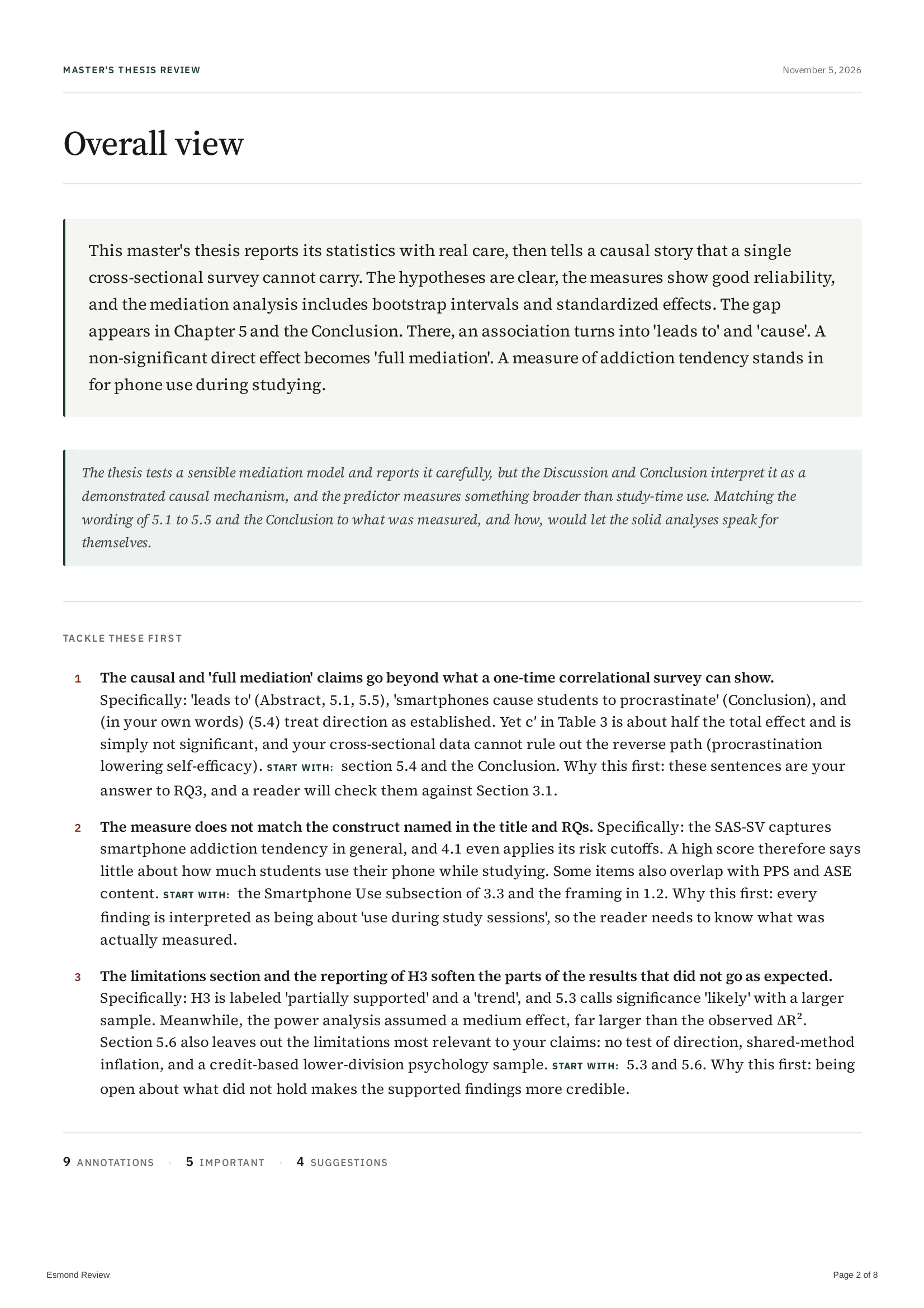
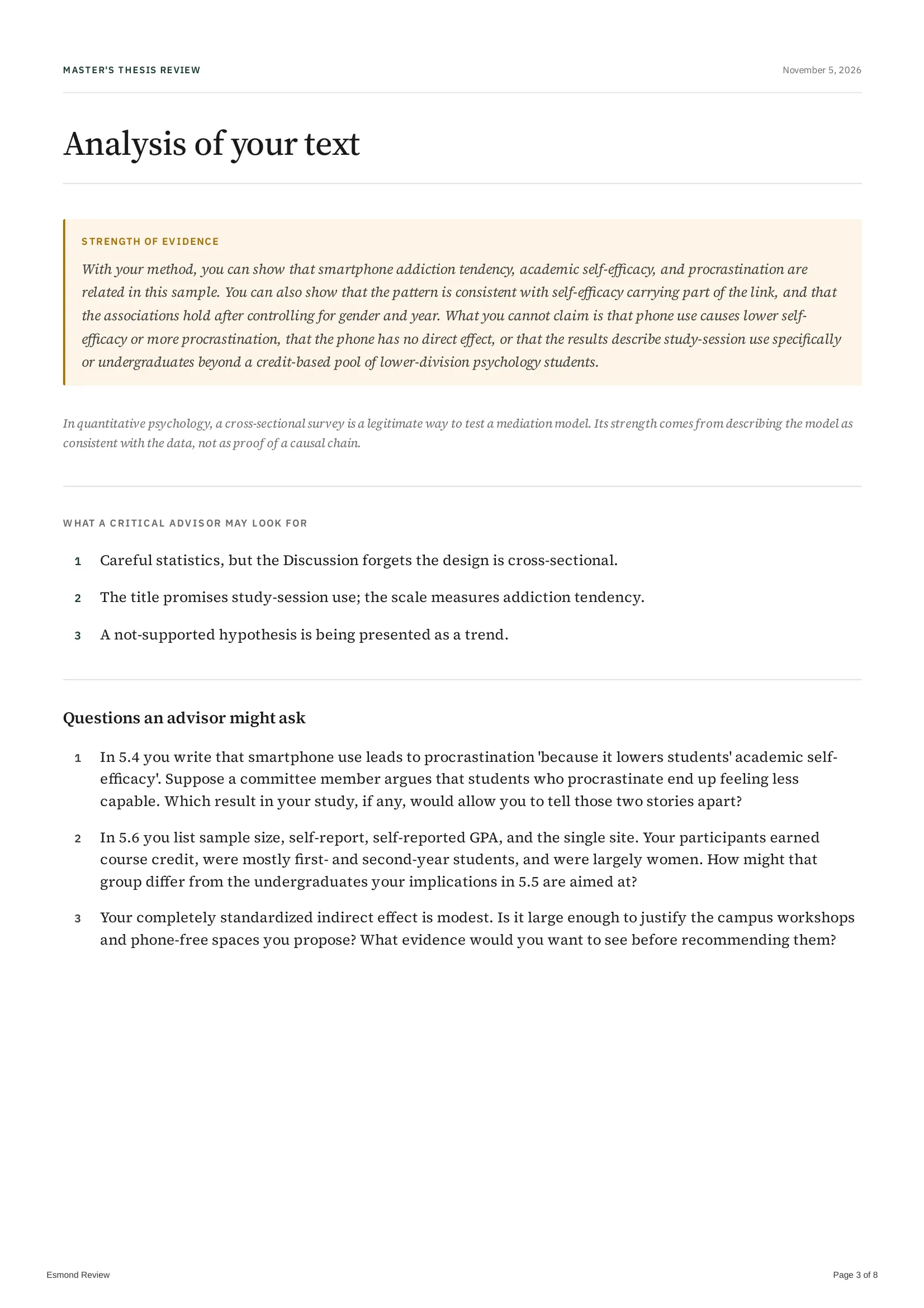
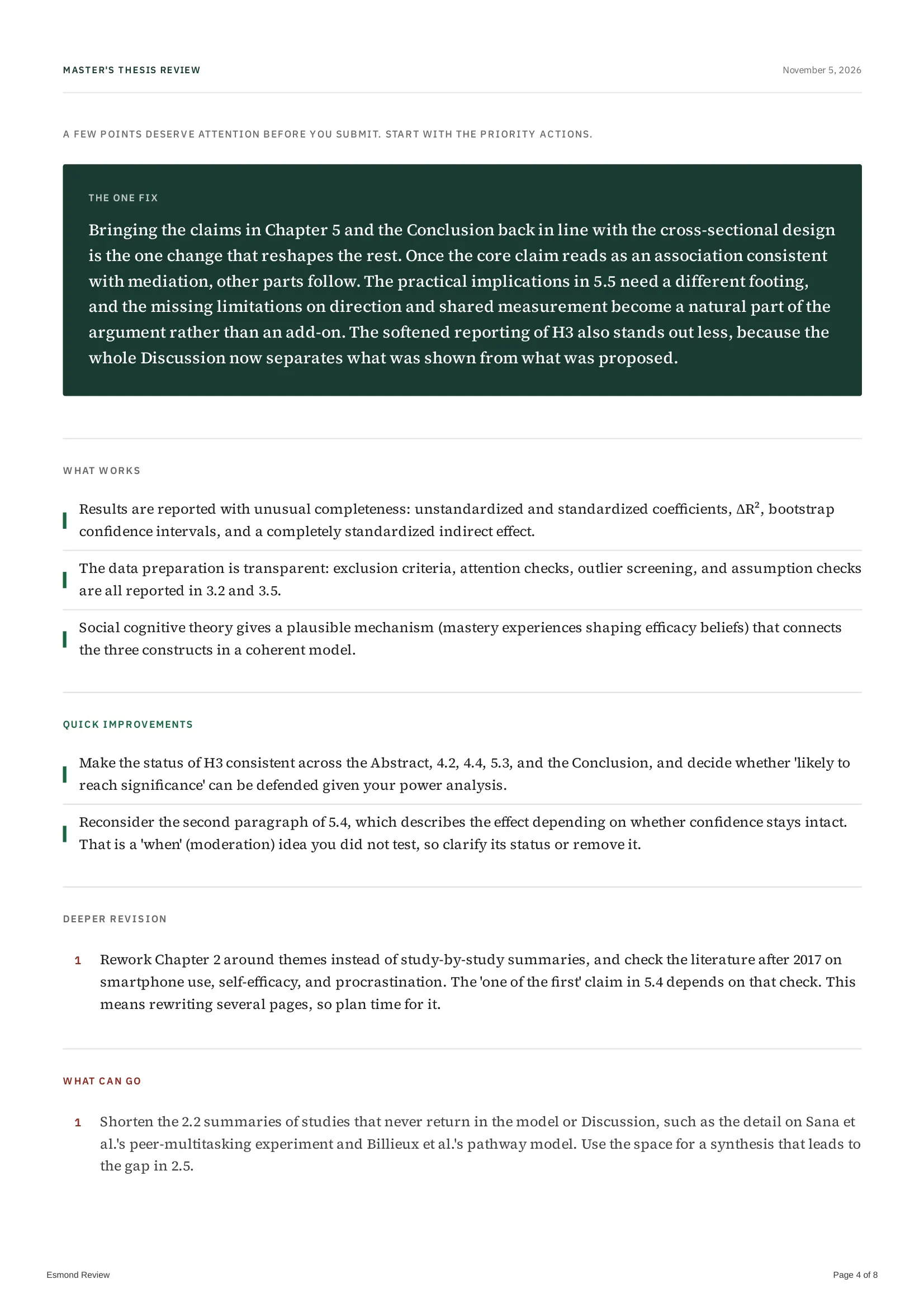
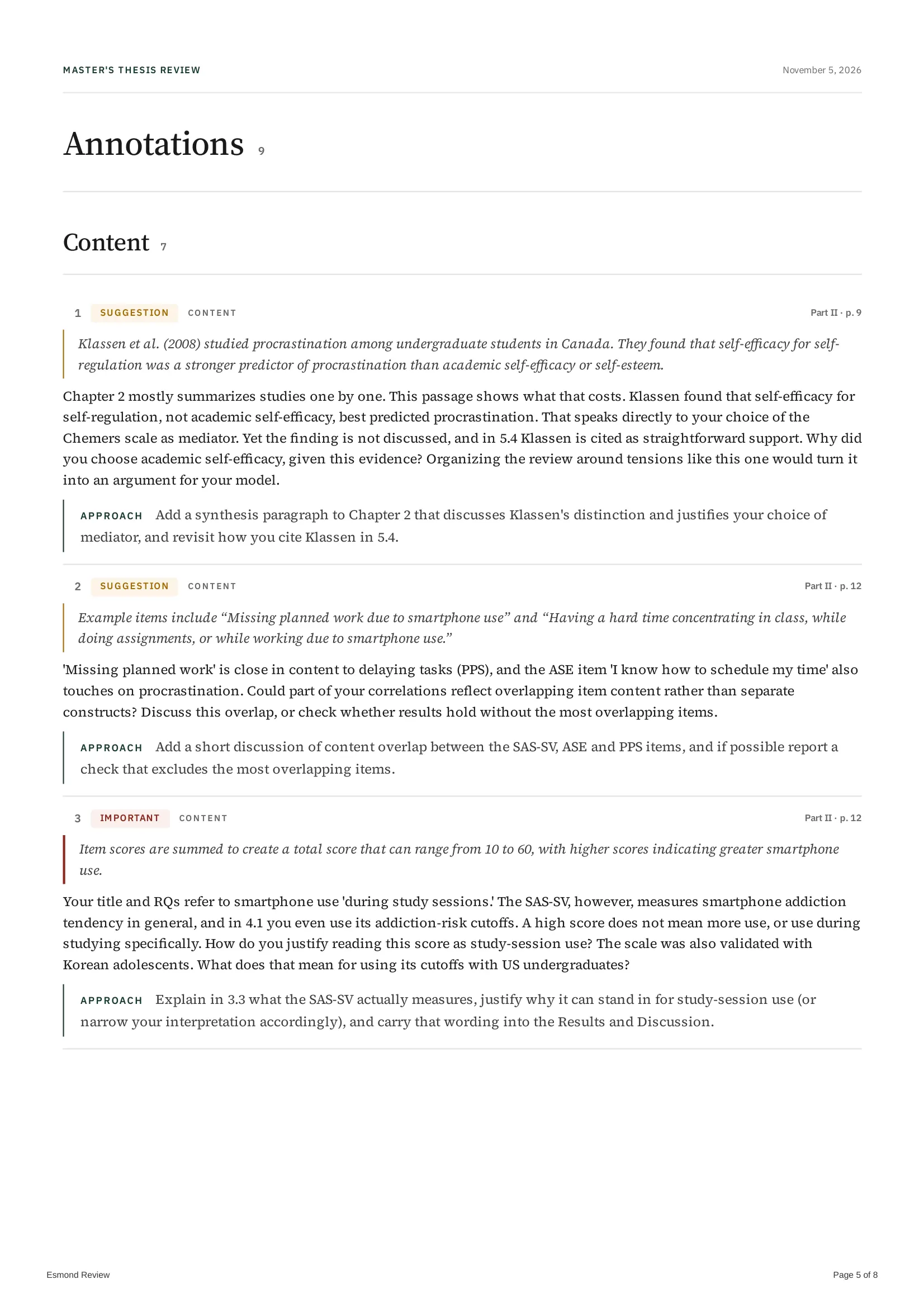
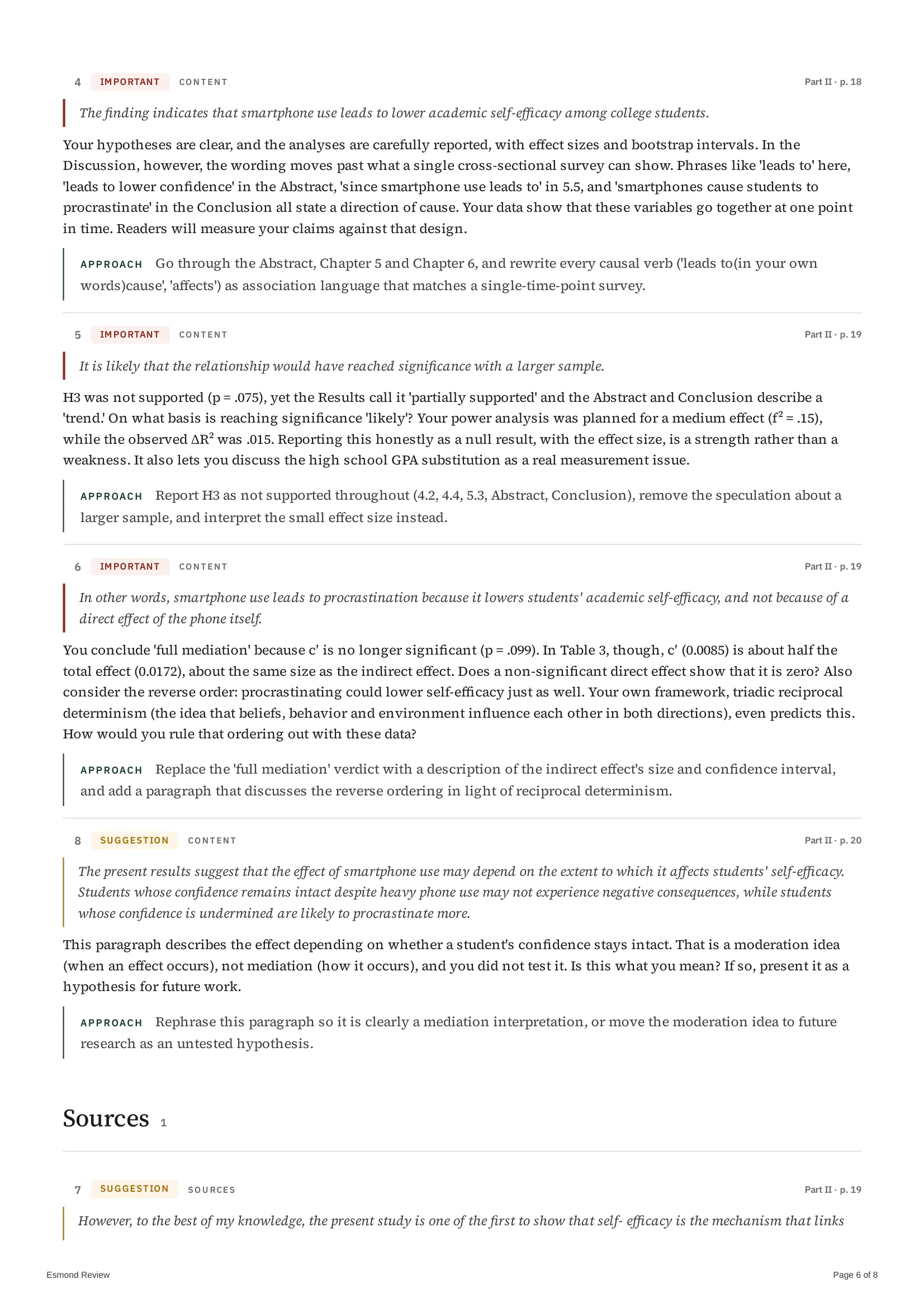
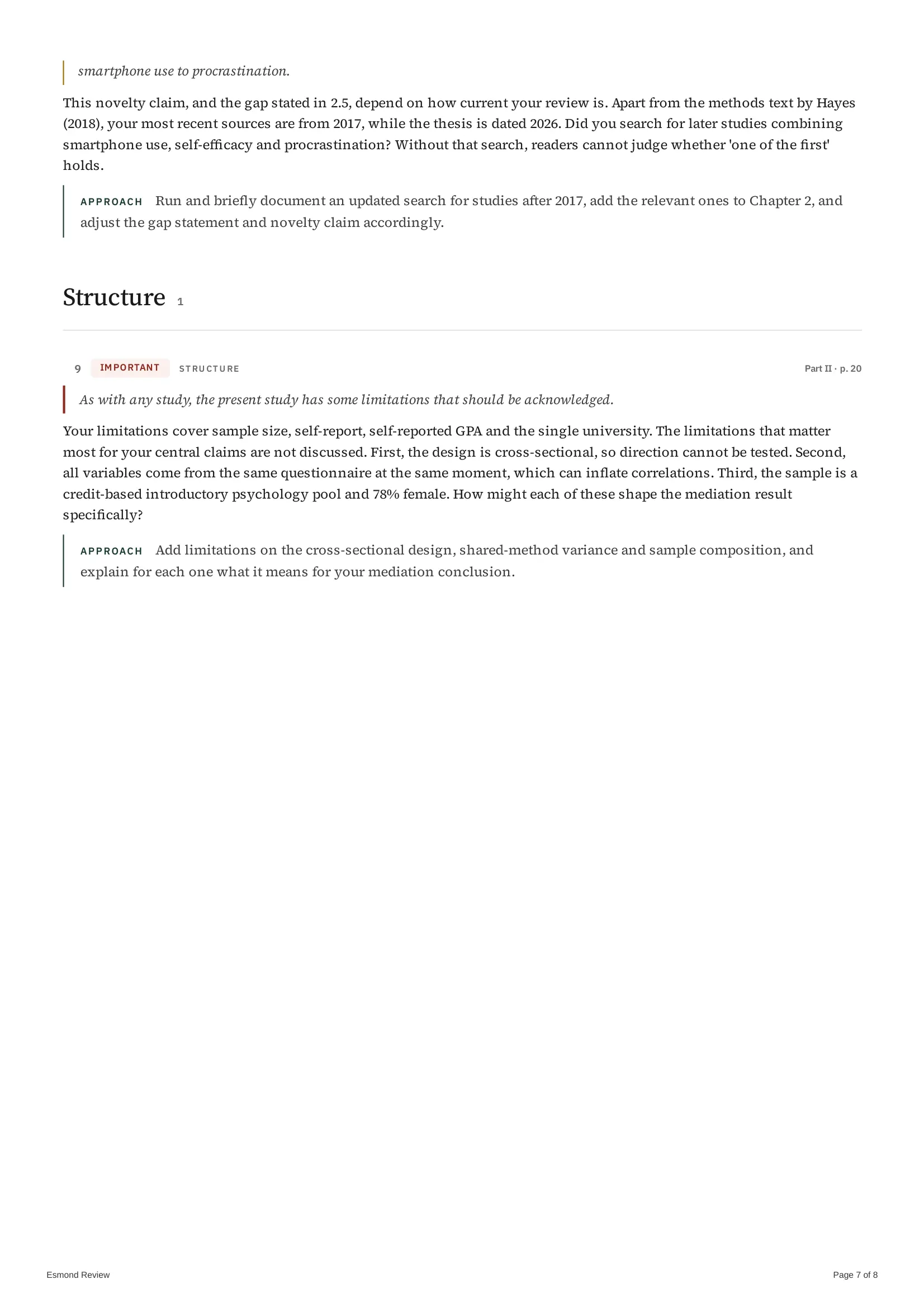
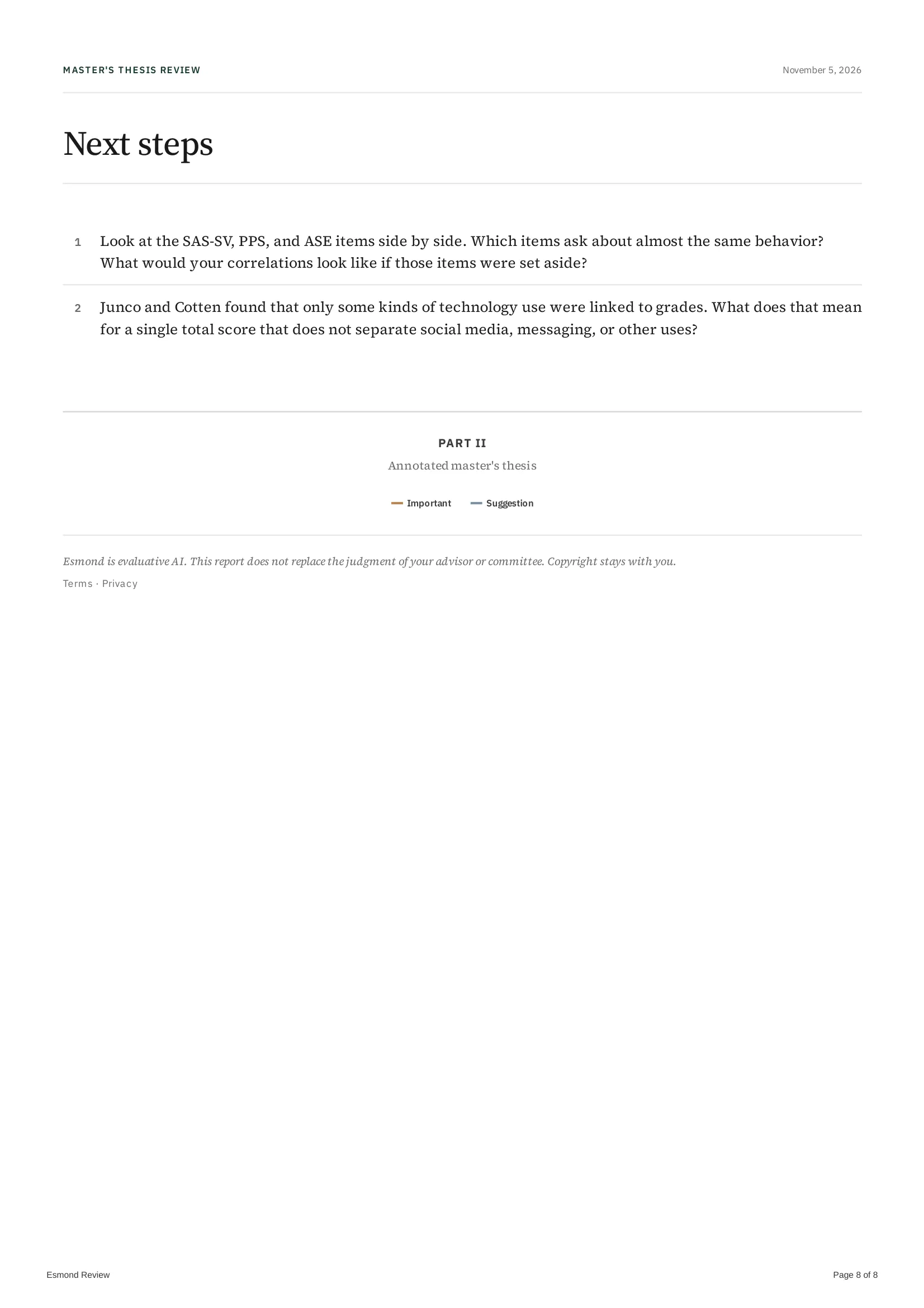
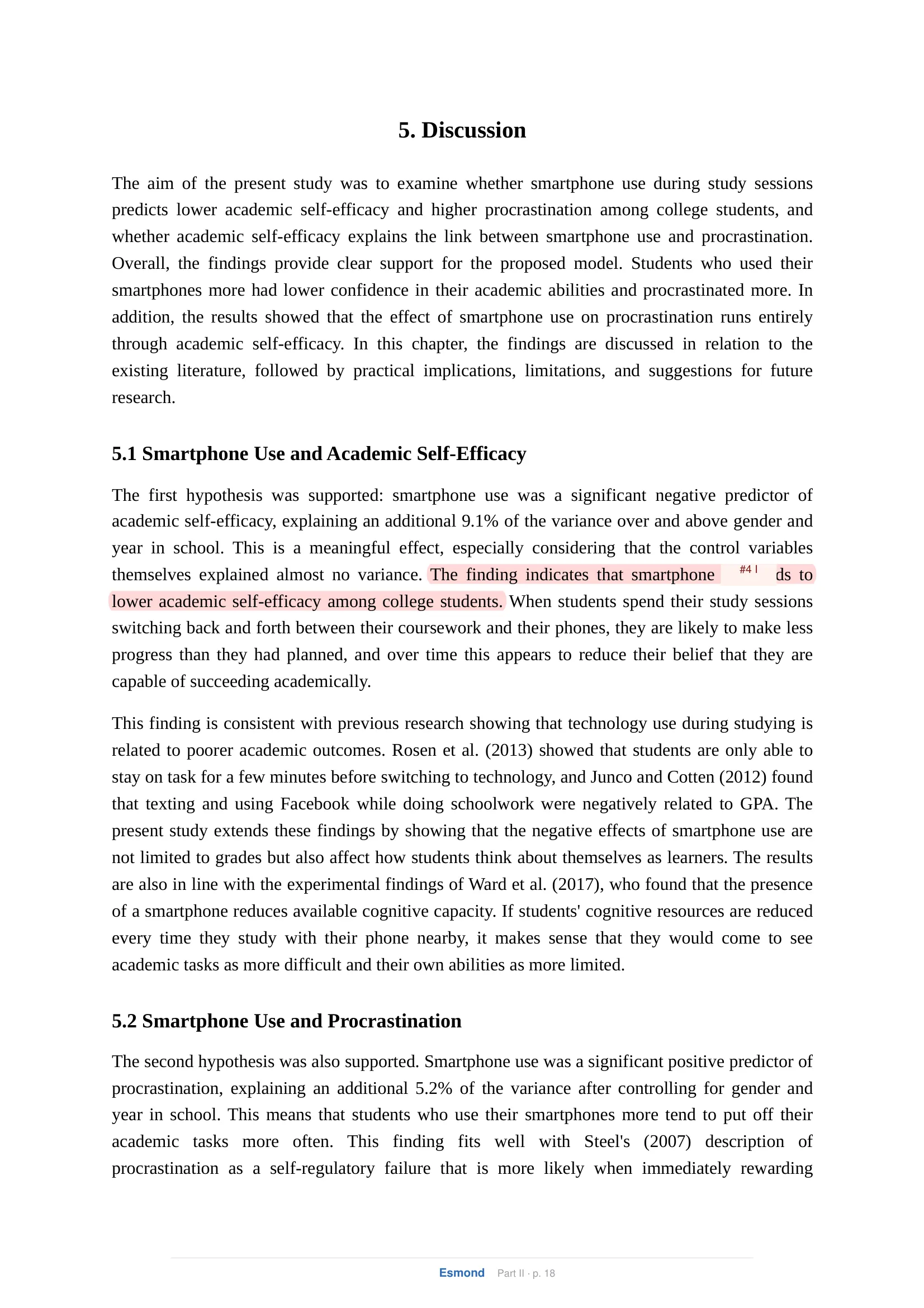
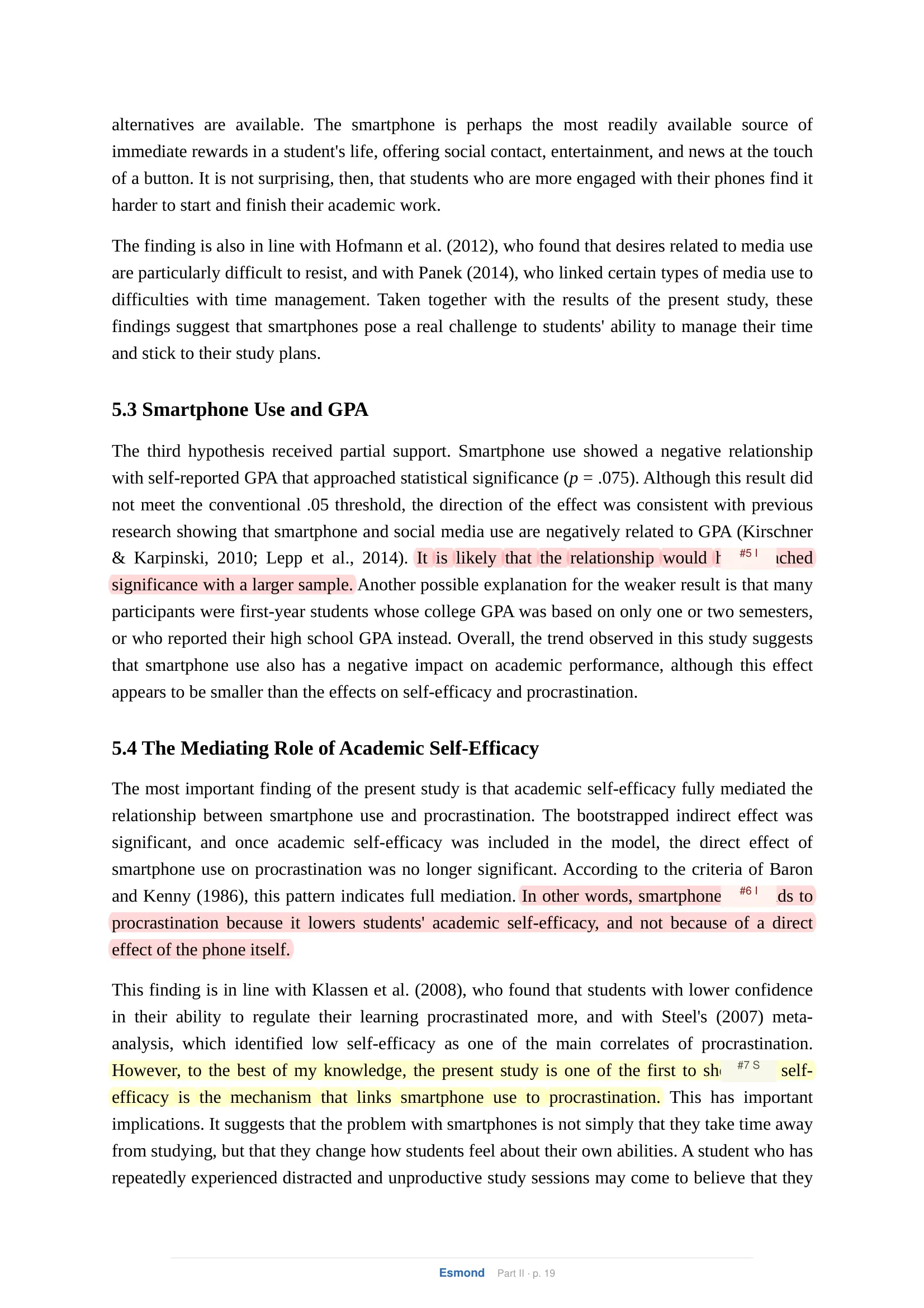
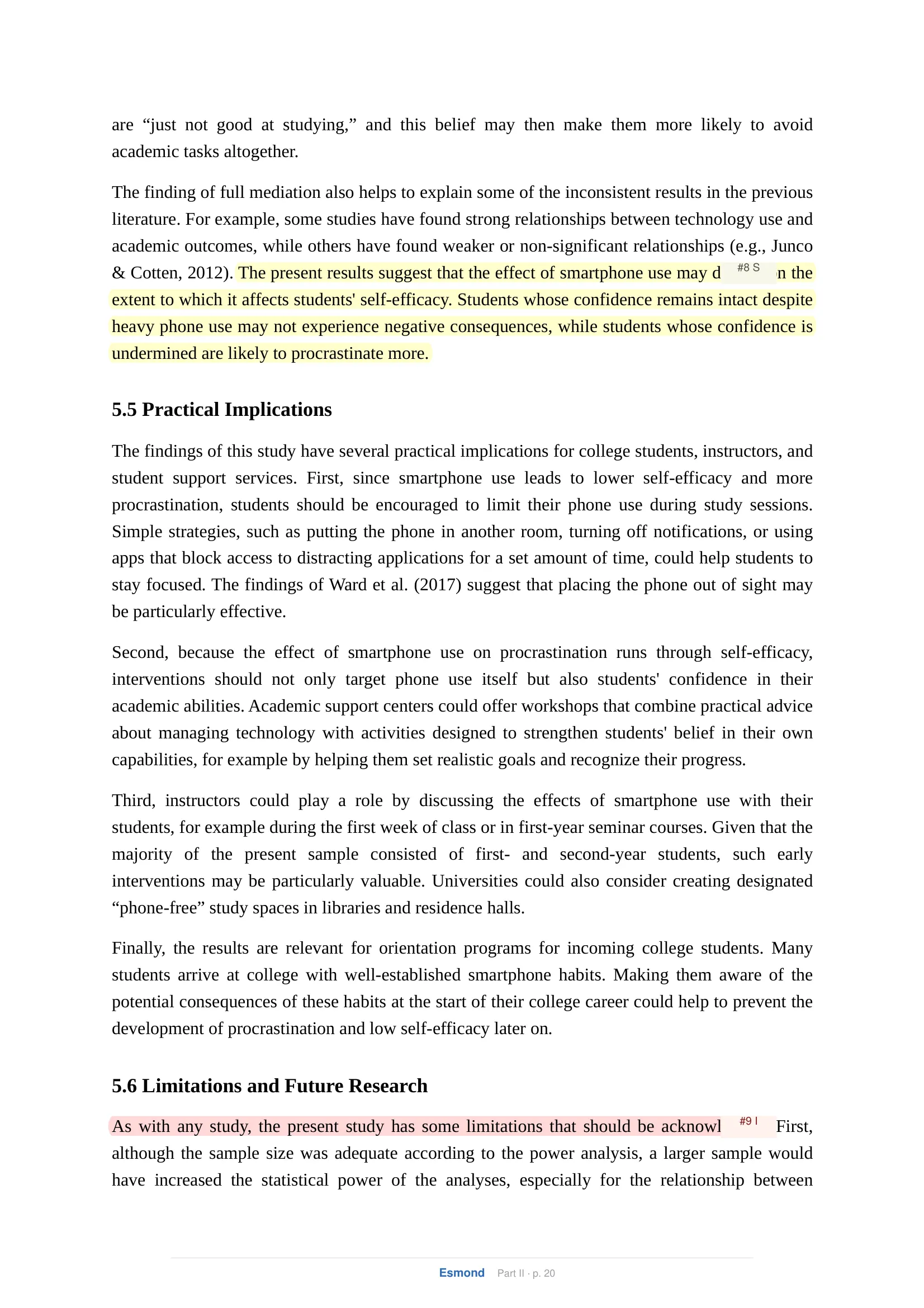
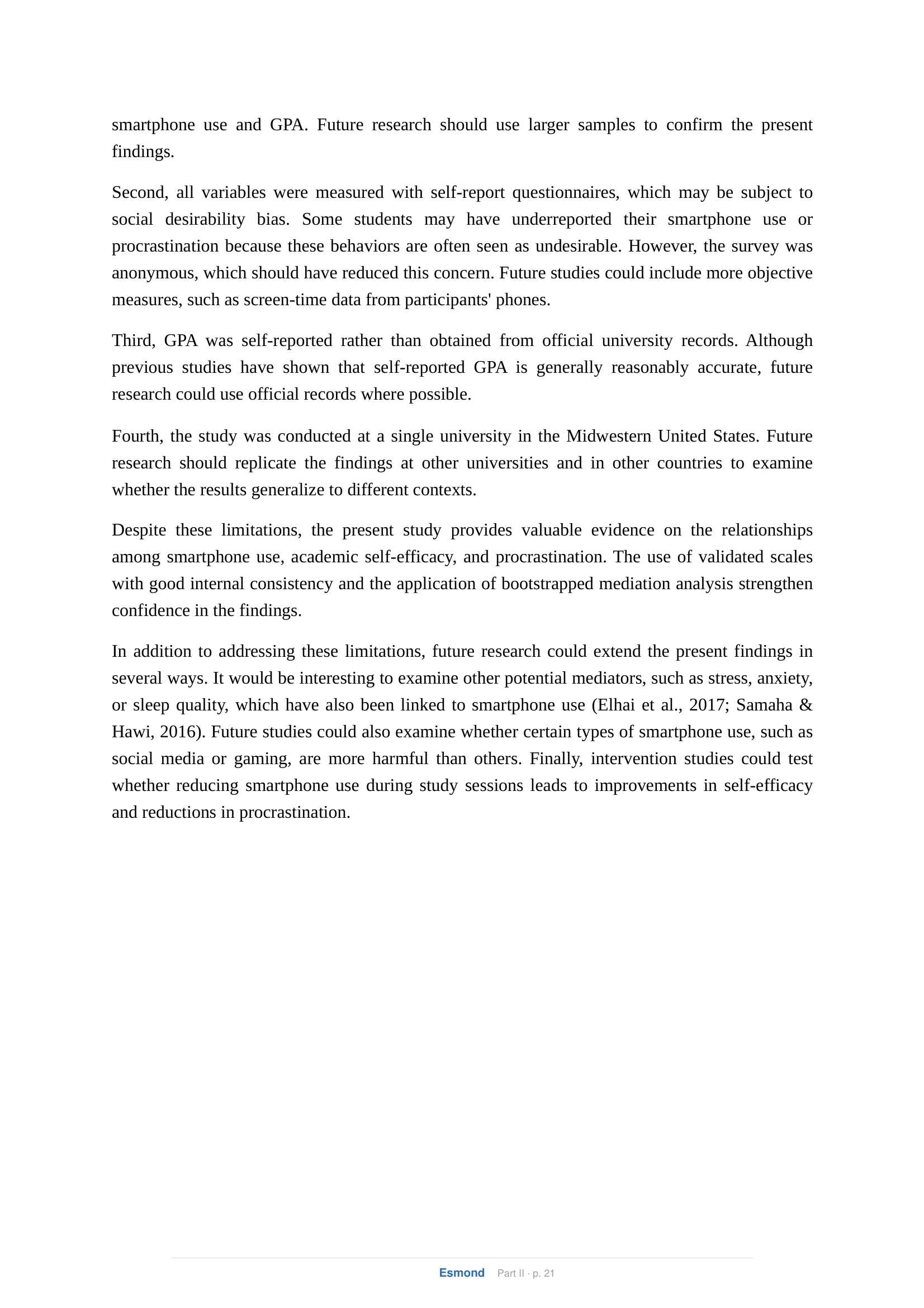
Esmond can flag, in the text you upload, what a finance reader may ask about: a sample description that leaves room for survivorship bias, causal wording that the design in your methods chapter does not support, a result called significant where the reported statistic is not, an effect presented without its economic size, or a robustness section that does not test the main threat named in your own draft. The sample report shows what a review looks like, and how Esmond works explains the steps.
Upload the whole draft if you can: Esmond then reads the chapters against each other, for example whether the conclusion answers the question the introduction asked. A single chapter gets a review of that chapter only.
Esmond doesn't run your regressions, open your data or code, or verify figures against a database. You decide what to change in your dissertation.
Read on November 21, 2026.
Last revised

Get your paper evaluated before you submit