Abstract
A criminology dissertation is read for its data on crime: whether police-recorded figures, victimization surveys, and self-report studies are used with their limits, including the dark figure of unreported crime. Readers also check access through gatekeepers such as police, prisons, and probation, ethics with offenders and victims, a theory of crime that shapes the analysis, and recommendations that fit the sample.
A criminology or criminal justice dissertation, at bachelor's, honours, or master's level, is read for how its crime data, access and ethics support its claims. This page explains what readers in criminology look for chapter by chapter, where criminology drafts tend to slip (recorded crime treated as all crime, a sample chosen by a gatekeeper, a theory named and then dropped), and what departments in Canada, Sweden, and Nigeria say in their own guidance.
In short
Criminology asks why crime happens, how it is measured, and what police, courts, prisons, and other agencies do about it. A dissertation in the field usually takes one of those angles and answers a question with evidence: recorded crime data, a victimization survey, interviews with practitioners or people with a conviction, court files, media coverage, or published research.
Departments describe the goal in similar terms. The honours thesis outline of Carleton University's Institute of Criminology and Criminal Justice in Ottawa lists as a learning outcome to “Design and conduct criminological scholarship that is well conceptualized, theoretically informed, methodologically rigorous, and that adheres to the ethical conduct required of social science research.” Each part of that sentence points to something a reader checks: concepts that are defined, a theory that does work, a method that fits the question, and ethics that cover the people involved.
What sets criminology apart from its neighbors is the data problem. Crime is partly hidden, recorded by agencies with their own routines, and often studied through people who have reasons to say little. A reader in the field expects the draft to show it knows this. The general shape of a methods chapter is covered on thesis methodology chapter; this page stays with what is particular to criminology.
Carleton's outline notes that, while styles vary between disciplines, “most follow a generally accepted format (introduction, research questions, literature review, methodology, results, analysis, conclusion)”, and that a separate theoretical framework section may be added. Criminology dissertations come in two broad kinds: projects with primary data (interviews, surveys, observation) and projects built on secondary data or published material. Mount Royal University's honours manual for the criminal justice degree in Calgary says that “Most Honours projects engage in secondary data collection (e.g., published materials) while some embark on the collection of primary data (interviews, questionnaires, direct observation).” The table shows what a criminology reader looks for in each chapter, and where the secondary-data version differs.
| Chapter | What readers in criminology look for in it | If the dissertation uses secondary data only |
|---|---|---|
| Introduction | A crime problem or justice response stated precisely, with the place and period, and a research question the design can answer | The dataset or document set is named early, so the reader knows what the answer rests on |
| Literature review | Research grouped by argument, with the gap your study addresses; the main theories of crime in the area set against each other | Same, plus what earlier studies found with the same or similar data |
| Theoretical framework | One theory, or a clear combination, turned into things the study looks for (concepts, expected patterns) | The theory's concepts matched to variables or codes that the data actually contain |
| Methodology | Who was studied, how they were reached, through which gatekeeper, under which ethics approval, and what the limits of confidentiality were | Who collected the data, for what purpose, how crime was defined and counted, and what the data leave out |
| Results | Findings reported for the sample studied, with counts and quotes that a reader can trace | Rates where populations differ, the same definitions across years, changes in recording noted |
| Discussion | The findings set against the theory and the literature, with the sample's limits in view | What the data can say about individuals and what only about areas or groups |
| Conclusion and recommendations | An answer to the question, and recommendations that match the scope of the evidence | Same; no causal language where the design only shows association |
Police-recorded crime counts what was reported to the police and then recorded. It misses offenses nobody reported, and it moves when reporting habits, police priorities, or counting rules change. Victimization surveys, such as the National Crime Victimization Survey in the US or the General Social Survey on victimization run by Statistics Canada, ask a sample of residents what happened to them, whether they told the police or not. Self-report surveys ask people about offenses they committed. The gap between crime that occurs and crime that is recorded is what criminologists call the dark figure.
A course guide on victimology and crime statistics from the National Open University of Nigeria describes how victimization survey data “have been used to study the similarities and differences in criminal offending as estimated by police-report data and by victim survey data that include crimes not reported to the police”. A dissertation that uses recorded crime says what kind of measure it uses and what that measure can show; a victim survey of its own is optional. Readers also look for rates instead of raw counts when areas or years differ in population, and for care when area-level data are used to say something about individuals.
On ethics, Mount Royal's manual is direct about timing: “If primary data collection (interviews, questions, direct observation) begins before University ethics approval is secured, a student’s standing in the Honours stream may be revoked.” Research with people in custody, on probation, or recovering from victimization adds a further question that a criminology reader asks: what did the consent form say about information on offenses that were never reported? The answer belongs in the methods chapter, in line with what the ethics board approved.
At master's level, the syllabus of Malmö University's two-year criminology thesis course in Sweden names originality and meta-theoretical understanding as what characterizes the strongest degree projects. Meta-theoretical understanding means knowing what a theory assumes about crime and about people, as well as what it predicts.
Length, format, citation style, and deadlines differ by department, so check your own course outline or handbook. Those rules are not something this page can state for you.
If you can't find the gap your study fills, research gap in a thesis explains how readers look for one. For the final chapter, see what goes in a thesis conclusion.
| What is checked | What it looks like in a criminology draft |
|---|---|
| The measure of crime | The draft says whether it uses recorded crime, victimization data, self-report, or accounts from interviews, and what each misses |
| Access and sample | The gatekeeper is named (a police service, a prison, a probation office, a support organization), and the draft says how that route may have shaped who took part |
| Ethics | Consent, anonymity, the limits of confidentiality, and the risk to participants are described in line with the approval obtained |
| Theory | Strain, labeling, routine activity, social control, or another theory is used to decide what to look for, and the discussion returns to it |
| Inference | Association is not presented as cause; area-level findings are not read as findings about individuals |
| Recommendations | Policy advice fits the sample and setting; one service or one city is not treated as a country |
| Language | Terms for people in the system are used consistently and with care, in the form the department prefers |
These fragments are made up. None of them comes from a real dissertation.
Your supervisor is the first reader. Carleton's outline states that “Students are required to meet with their supervisors on a weekly or bi-weekly basis depending on the specific needs of the student and the availability of the supervisor.” Bring a specific question to each meeting: whether the sampling route is described well enough, whether the theory section does any work later on.
Peers can read too. In Malmö's master's thesis course, “At every meeting the student will present material for review and peer review other students’ material.” Many universities also have academic skills support and subject librarians; a criminology librarian can help you find victimization surveys and official statistics for your country.
Before you upload a draft anywhere, anonymize interview and case details as your ethics approval requires. Whoever reads your draft, the text has to stay yours. The graduate handbook for criminology at Ontario Tech University lists among a student's responsibilities “acknowledging and crediting any source of ideas, assistance, materials and/or data provided by others”. Feedback that points out a problem leaves the fix to you; text someone else produced for you is not your own work. Whether an AI tool may read your draft depends on your course and institution. Carleton's outline, for example, lists the unauthorized use of generative AI tools among its examples of plagiarism, so where a rule like that applies, ask your supervisor before you use any AI tool on your thesis, Esmond included. See also can I get AI feedback on my thesis and is AI feedback on a thesis cheating.
The full list for the last week is on thesis checklist before you submit, and the citation checker compares your reference list with your in-text citations.
Usually an introduction with the research question, a literature review, a theoretical framework (sometimes inside the review), methodology, results, discussion, and a conclusion with recommendations. Carleton's criminology honours outline lists the same order. Your department's handbook decides the exact form.
Start with your own department or university library. Carleton, for instance, points its students to an archive of completed honours theses. When you read one, look at how the author describes the data on crime, how participants were reached, and whether the theory returns in the discussion. Use examples to see how a chapter is built, never as text to borrow.
One that names a specific crime problem or justice response, a place, and a period, and that your data can answer. A question about why crime rose in a country is hard to answer with interviews in one office; a question about how officers in that office use a risk tool is not.
Research grouped by argument, the main competing theories set out, attention to what kind of data each study used, and a gap that your own study then fills. A review that summarizes one study per paragraph shows reading but not an argument.
Yes, start with your supervisor, and use peers or your university's academic skills support where available. Outside feedback, including from AI tools, depends on what your course and institution allow. Esmond reads a draft you upload and comments on it without changing your text.
Esmond evaluates every assignment before you submit. It never writes it.
Esmond is an AI tool that doesn't write for you. If your course doesn't allow any AI tools, don't use Esmond for that work. If you're unsure, ask your instructor or advisor.
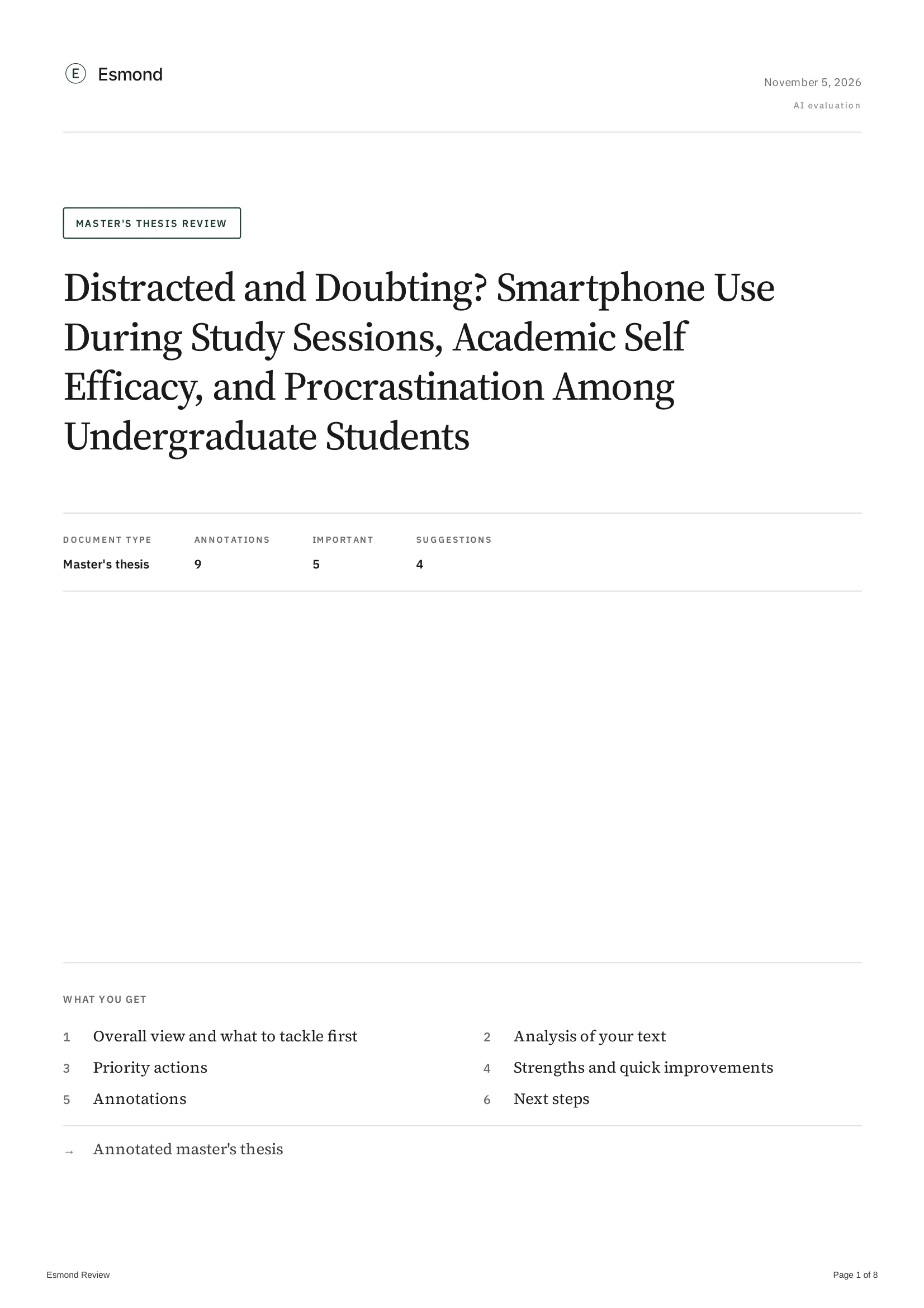
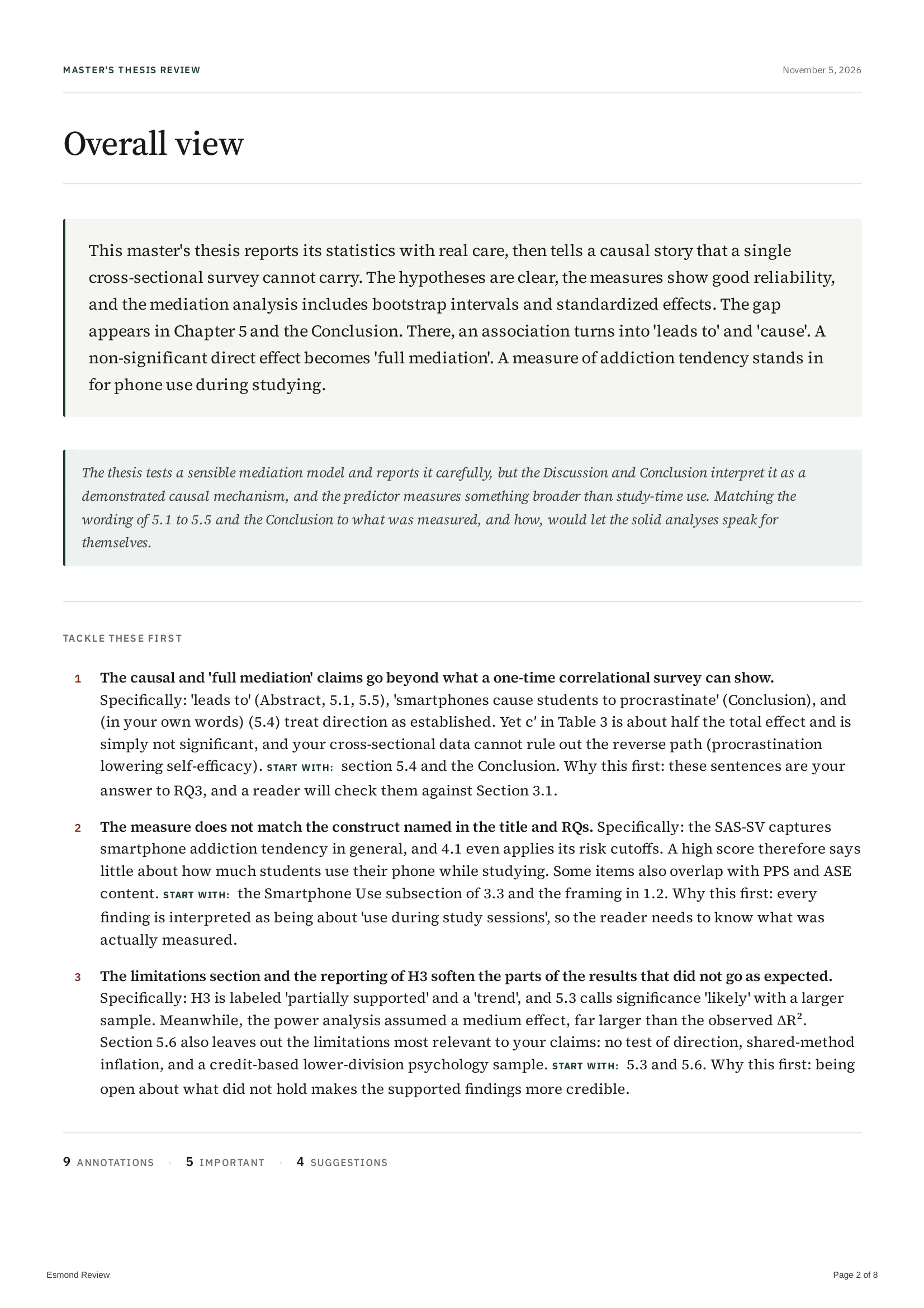
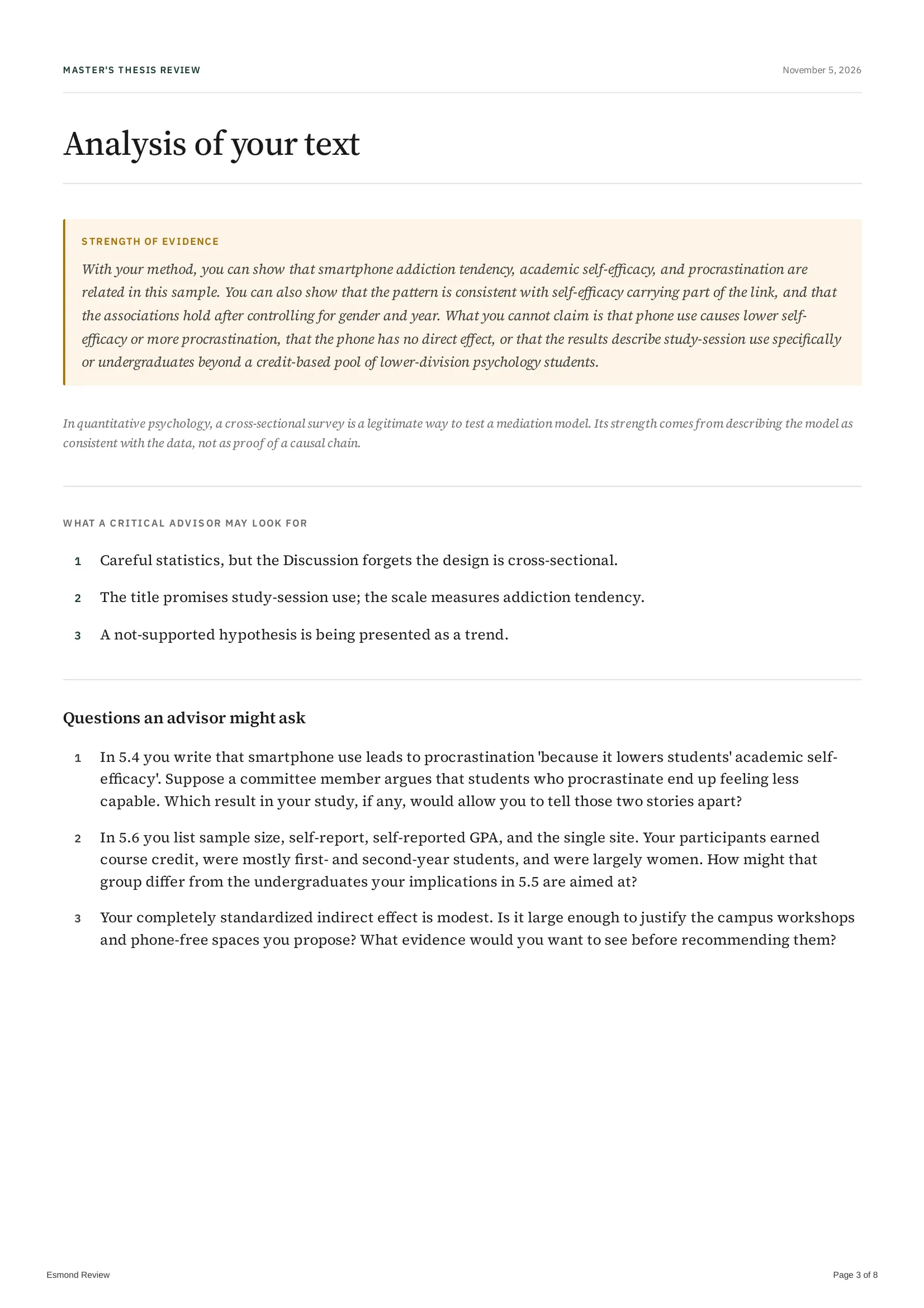
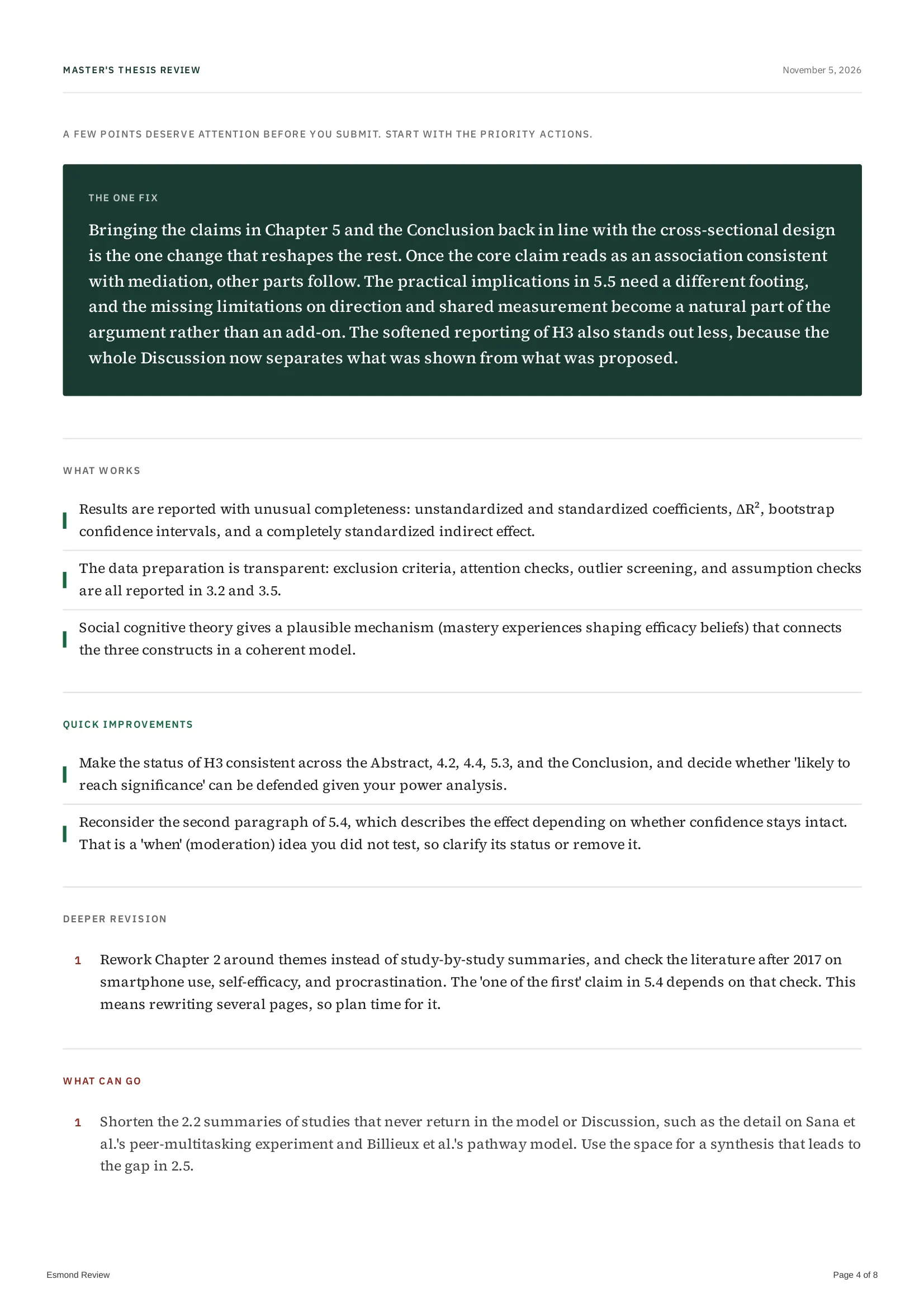
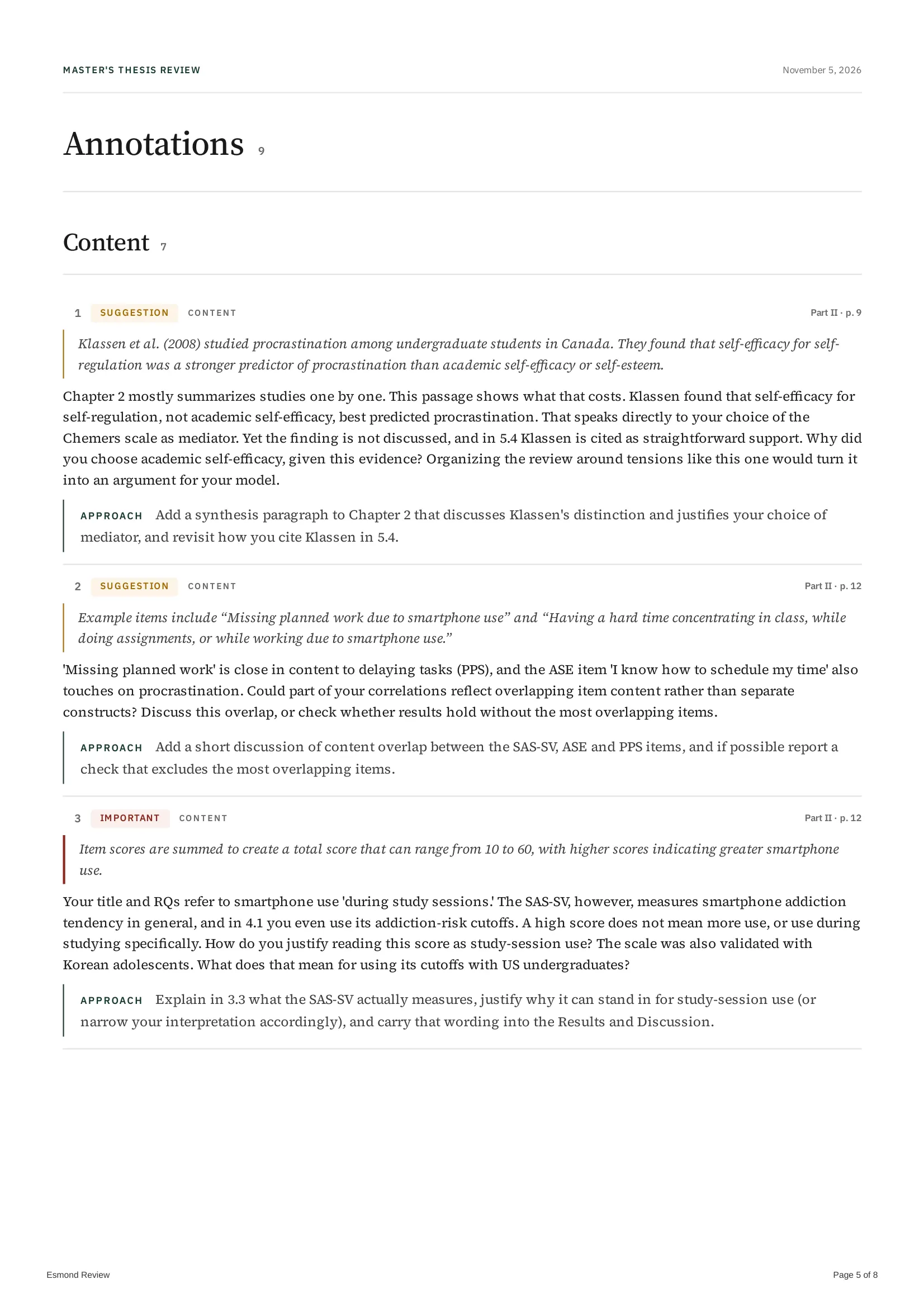
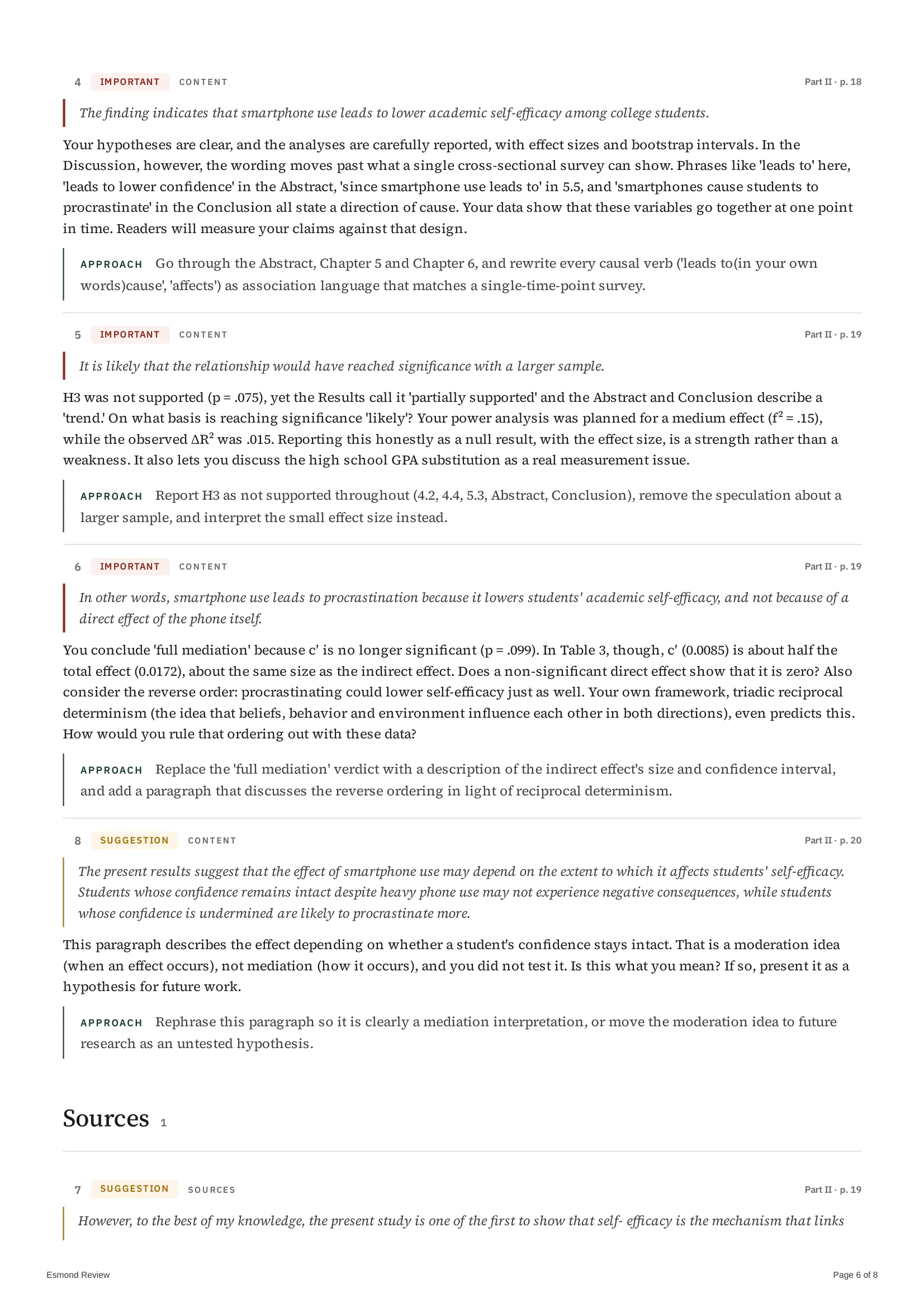
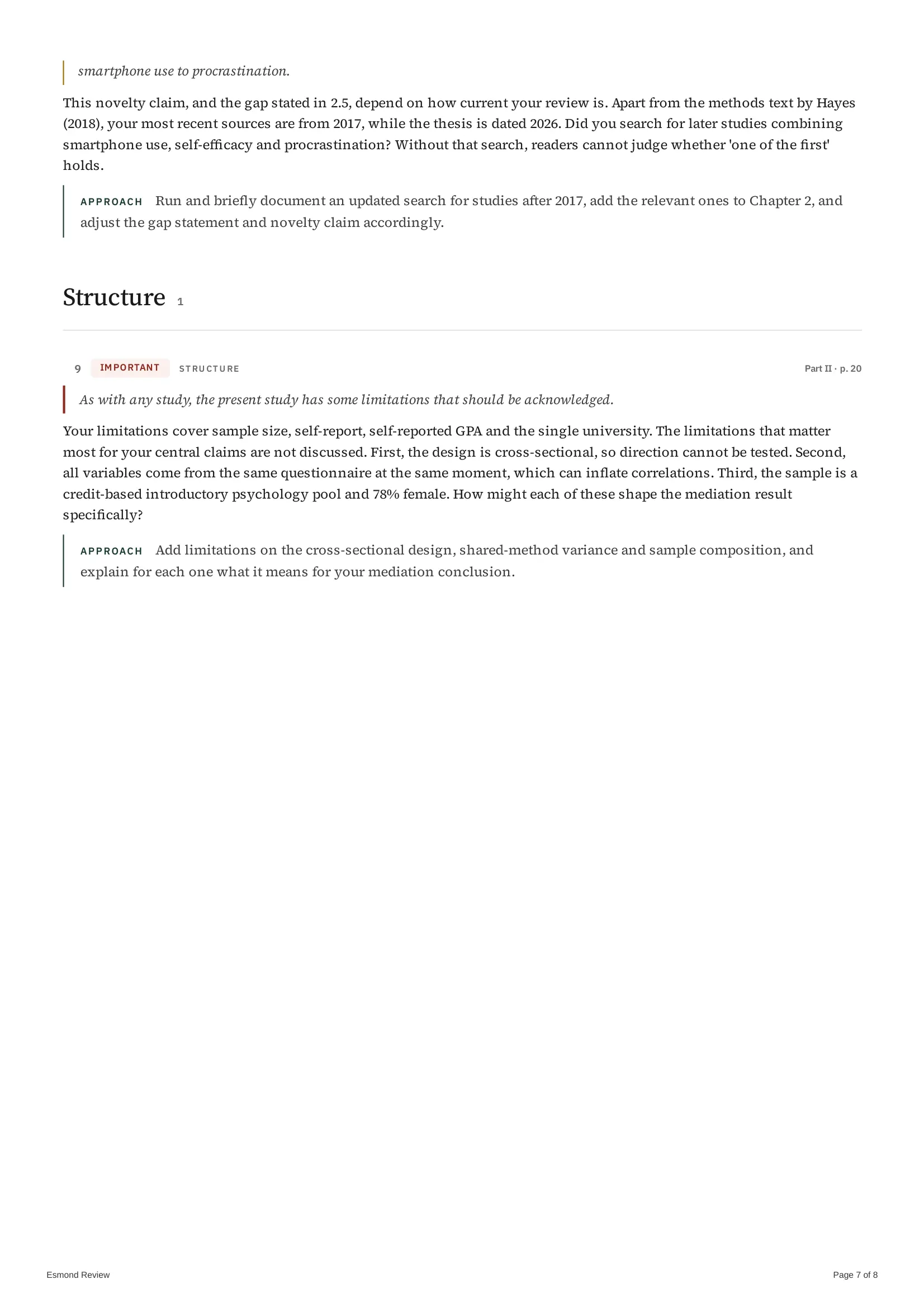
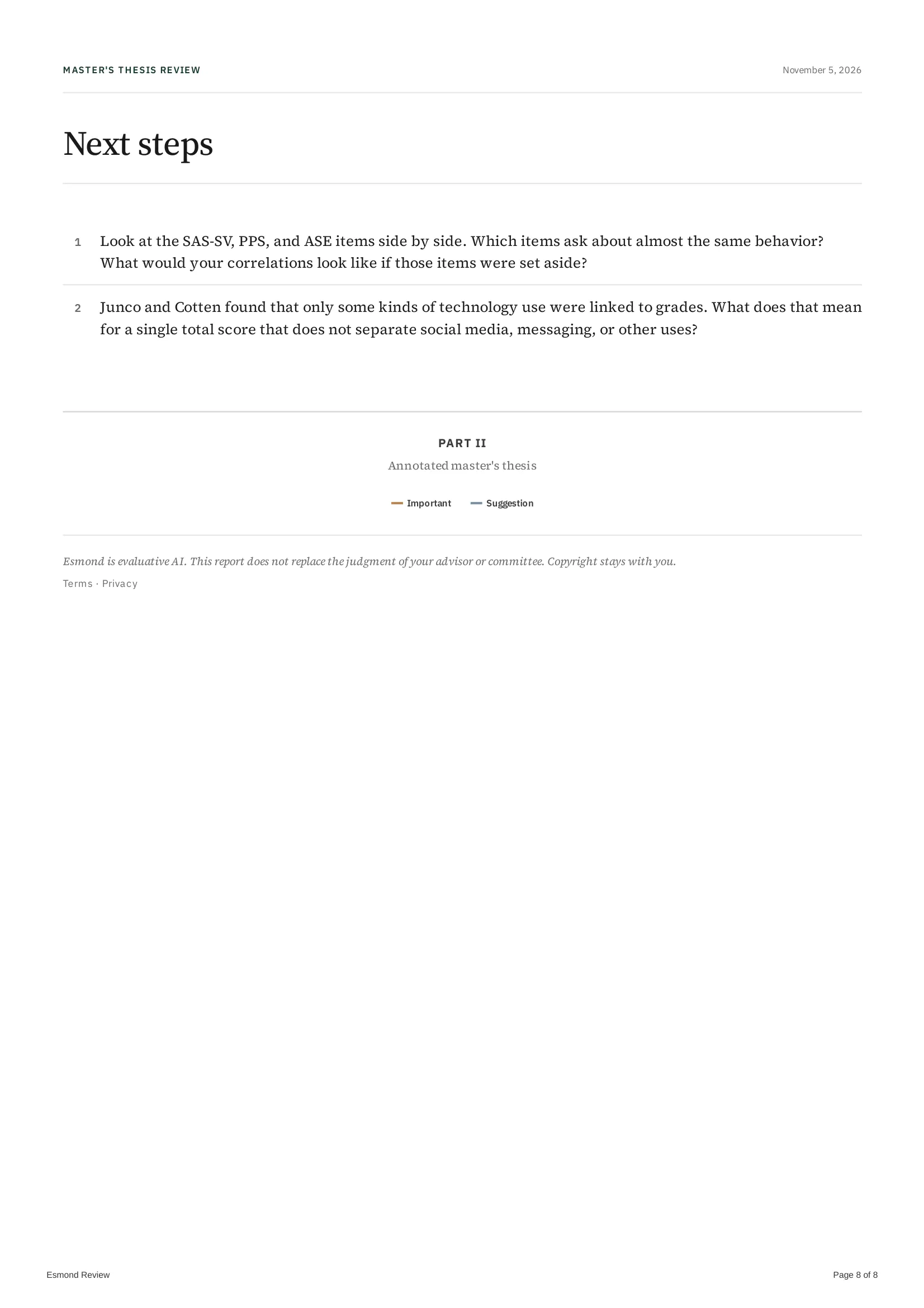
Esmond can flag, in the text you upload, what a criminology reader may question: recorded crime described as all crime, counts compared where rates are needed, a sample whose recruitment route is not explained, a theory that disappears after the literature review, and recommendations that reach further than the interviews behind them. The sample report shows what the review looks like, and how Esmond works explains the process.
Upload the whole draft if you can: Esmond then reads the chapters against each other, for example whether the conclusion answers the question the introduction asked. A single chapter gets a review of that chapter only.
Esmond does not rerun your statistics, check your data against the original source, or compare your draft with your ethics approval or your department's template. What you change in response is your decision.
Read on November 21, 2026.
Last revised

Get your paper evaluated before you submit