Abstract
A social work dissertation is read for its implications for practice and for whose voice it carries: service users or practitioners speaking about them. Readers check ethics with vulnerable groups, agency permission and consent when the data come from the student's own placement, laws named with their country or province, and in child protection or domestic violence research, participant safety and the legal frame.
Meant for BSW, honours, and MSW students whose social work dissertation is underway, whether it draws on interviews, placement experience, case material, or the literature alone. It goes through the parts of the dissertation and what social work readers look for in each, the ethical questions that come with research on vulnerable groups and in your own placement, and what universities in India, Canada, and Sweden ask for.
In short
Social work is a practice discipline, and its dissertations are read with practice in mind. A reader wants to know what the study means for the people social workers serve, for the work itself, or for the policies that shape it. A well-argued study that ends without that link leaves a social work reader asking what it was for.
Universities build this into their guidance. Netaji Subhas Open University's guideline for the MSW dissertation in India states: “The topic must be pertaining to Social Work issues or relevant social issues/problems and have enough scopes for Social Work Intervention/practice.” Bharati Vidyapeeth in Pune sets the same condition for the research project in its distance MSW: “The topic of Research must be related to the area of Social Work.”
Forms vary. Carleton University's School of Social Work in Ottawa notes that “The thesis can be pursued through fieldwork, literature review, archival research, artifacts and more.” If your dissertation is mainly a review, the social work literature review page covers sources, gray literature, and legislation in that chapter in detail. US MSW capstones are covered on social work capstone project.
The MSW guideline at Netaji Subhas Open University sets out six chapters: introduction, review of literature, methodology, data analysis, major findings, and discussion and conclusion. Other universities name the parts differently, but the order is similar. The table shows what social work readers look for in each, and how a literature-based dissertation differs.
| Chapter | What social work readers look for | In a literature-based dissertation |
|---|---|---|
| Introduction | A practice or policy problem, the group affected, the setting, and why it matters for social work | The same, plus why a review is the right way to answer the question |
| Literature review | Research, gray literature, and law or policy kept apart, with the gap the study addresses | The search method, inclusion criteria, and how sources were appraised |
| Methodology | Design, sampling, recruitment route, consent, safety of participants, and the researcher's relation to the setting | Databases, search terms, dates, and how the synthesis was done |
| Findings | Findings that keep participants' own words and stay close to the data | Findings organized by theme across sources, with conflicting evidence shown |
| Discussion | Findings set against the literature, the values of the profession, and the legal context of the country | What the evidence means for practice in a named setting |
| Conclusion and implications | Concrete implications for practice, agencies, or policy, matched to what the study can carry | Implications stated with the limits of the reviewed evidence |
Social work places weight on the perspective of the people who use services. NSOU's guideline describes the value of a qualitative approach: “The Heuristic approach on the other hand helps to understand the problem from the respondent’s own perspective and thus gives a rich detail to the problem and increases the scope for inclusion of marginalized segment also.” Umeå University's syllabus for the Nordic two-year master's thesis in social work names, among the aims of social work research, “developing user participation”.
A reader therefore checks who speaks in your findings. Practitioners' accounts of what clients need are valuable, but they are practitioners' views. If the dissertation makes claims about service users' experience, readers look for service users among the participants, or for a clear statement of why they could not be included.
Values come in a second time, in your own method. Anti-oppressive and strengths-based approaches ask about power. A reader may ask how you, as a student who is also a future professional, handled the power gap in an interview with someone who receives services, and whether the way you describe participants matches the values you set out in chapter 2.
Many students research the agency where they do their practice placement. It offers access and real questions. It also raises questions a reader will look for in the methods chapter: did the agency give formal permission, does the ethics approval cover the use of case files or interviews there, and how were the people you worked with as a student protected from feeling they had to take part?
Confidentiality needs extra care when the setting is small. An anonymized quote from "a team leader at a rural child protection office" may identify that person to anyone in the region. Readers check whether the description of the setting is specific enough to make sense and vague enough to protect people.
Umeå's syllabus includes the expected outcome to “Show the ability to make judgments with regard to research ethics and societal aspects”. In a placement-based dissertation, that judgment shows in how the methods chapter handles access, consent, and your double role.
Two subjects come up often in social work dissertations, and both bring specific questions. In child protection research, readers look at whether children took part, how consent from parents or guardians and the child's own agreement were handled, and what you would have done if a participant disclosed a child at risk. Many student studies interview practitioners instead; then the dissertation should say clearly that it reports professional views.
In domestic violence research, the safety of participants comes first: how they were contacted without putting them at risk, where interviews took place, what support information they received, and how you dealt with distress during an interview. Readers also check the legal frame, because the law differs by country. In India, a study would refer to the Protection of Women from Domestic Violence Act, 2005; in South Africa, to the Domestic Violence Act 116 of 1998, and for child protection to the Children's Act 38 of 2005. In Canada, child welfare law is provincial, so the province matters.
NSOU asks that the final chapter address practice directly: “Scope for Social work interventions must be given, along with the role of Social Workers, NGOs and Government organization as relevant.” Across guides, a social work reader checks:
These fragments are made up. None of them comes from a real dissertation.
Your supervisor is your main reader, commenting on chapters as they come in. Your field educator or placement supervisor can tell you whether the implications make sense in practice, but check your confidentiality agreements before sharing a draft that contains agency material.
Peers help too. Carleton's MSW Thesis Guide observes: “Many MSW thesis students find that they need the support of writing groups or partners, and regular check-ins with colleagues and their thesis committee.” University libraries can help you find gray literature and current legislation for your country.
Before you use any AI tool, check your university's and department's rules, and ask your supervisor if they are unclear. Feedback on your own text is different from someone producing parts of it for you: that would not be your own work. If your draft includes case details, make sure that what you upload anywhere is anonymized as your ethics approval requires. More on this: can I get AI feedback on my thesis and is AI feedback on a thesis cheating.
For the final week, see thesis checklist before you submit. The citation checker compares your reference list with your in-text citations.
Usually an introduction, a literature review, methodology, findings or data analysis, discussion, and a conclusion with implications for practice. Netaji Subhas Open University's MSW guideline uses six chapters in that order. A literature-based dissertation replaces data collection with a documented search and synthesis.
Your own university library is the best source. Carleton's School of Social Work, for example, points students to completed MSW theses on its library website. When you read one, look at how consent and access are described, whose voice the findings carry, and how specific the implications for practice are.
Often yes, if the agency agrees and your ethics approval covers it. Readers will look for how you handled permission, confidentiality, and the double role of student and researcher, especially if participants received services from you.
Participant safety and consent first, then a clear legal frame for the country or province, and honesty about whose views the study reports. Your ethics board and supervisor decide what is acceptable in your setting.
Yes, from your supervisor, peers, and university support. Outside feedback, including from AI tools, depends on your university's rules, and anything you share should be anonymized. Esmond reads a draft you upload and points out what a social work reader may question, without adding text.
Esmond evaluates every assignment before you submit. It never writes it.
Esmond is an AI tool that doesn't write for you. If your course doesn't allow any AI tools, don't use Esmond for that work. If you're unsure, ask your instructor or advisor.
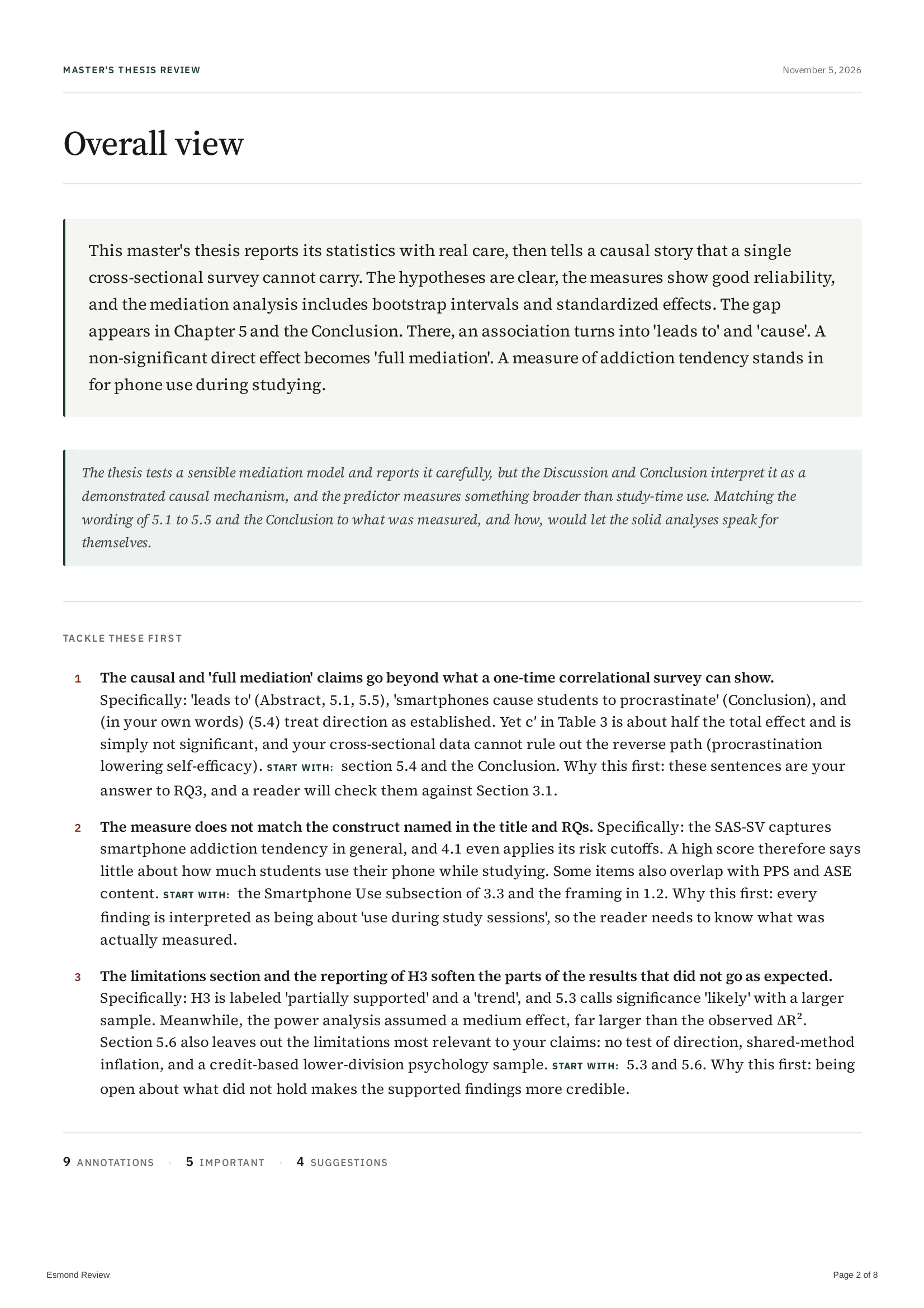
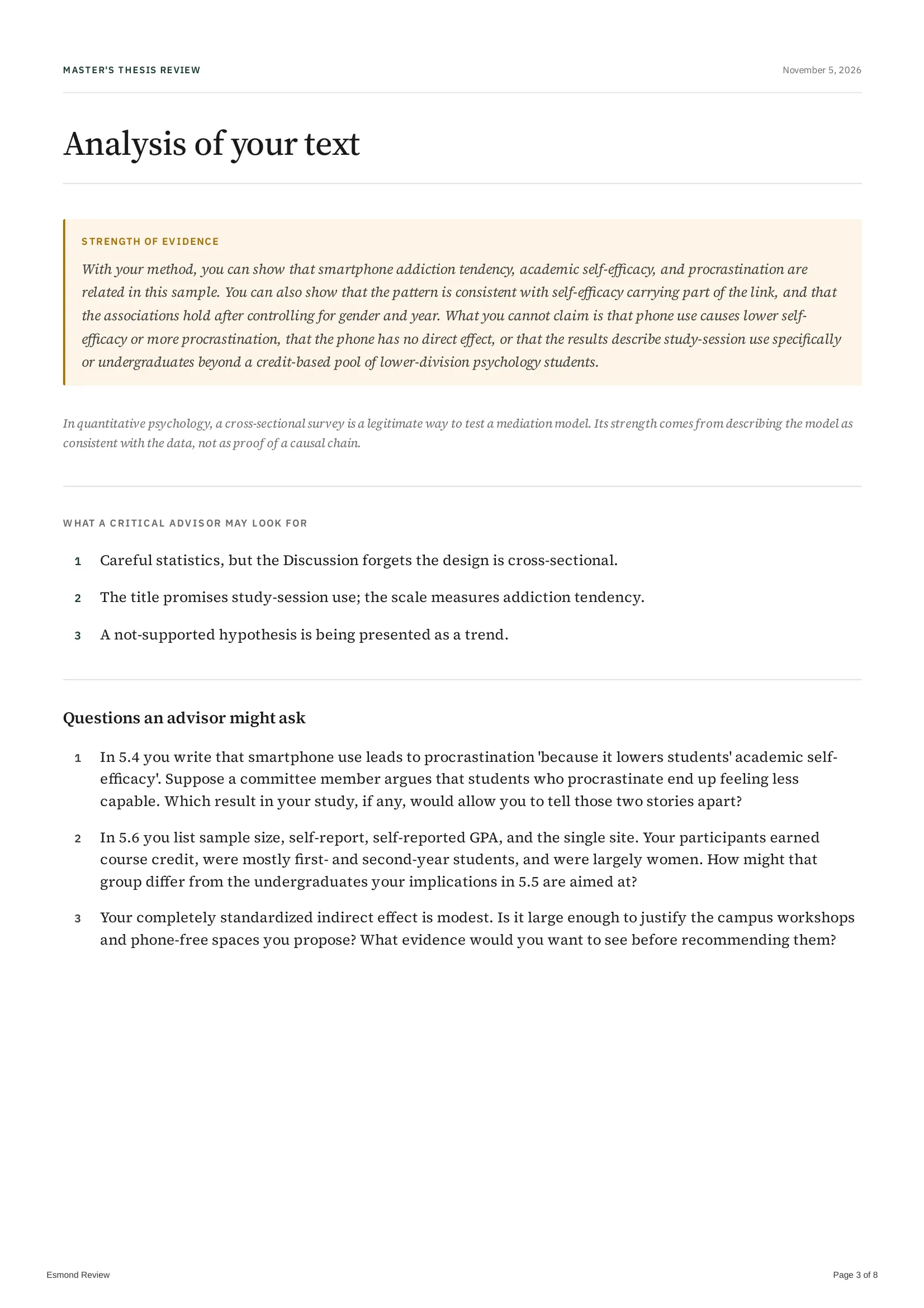
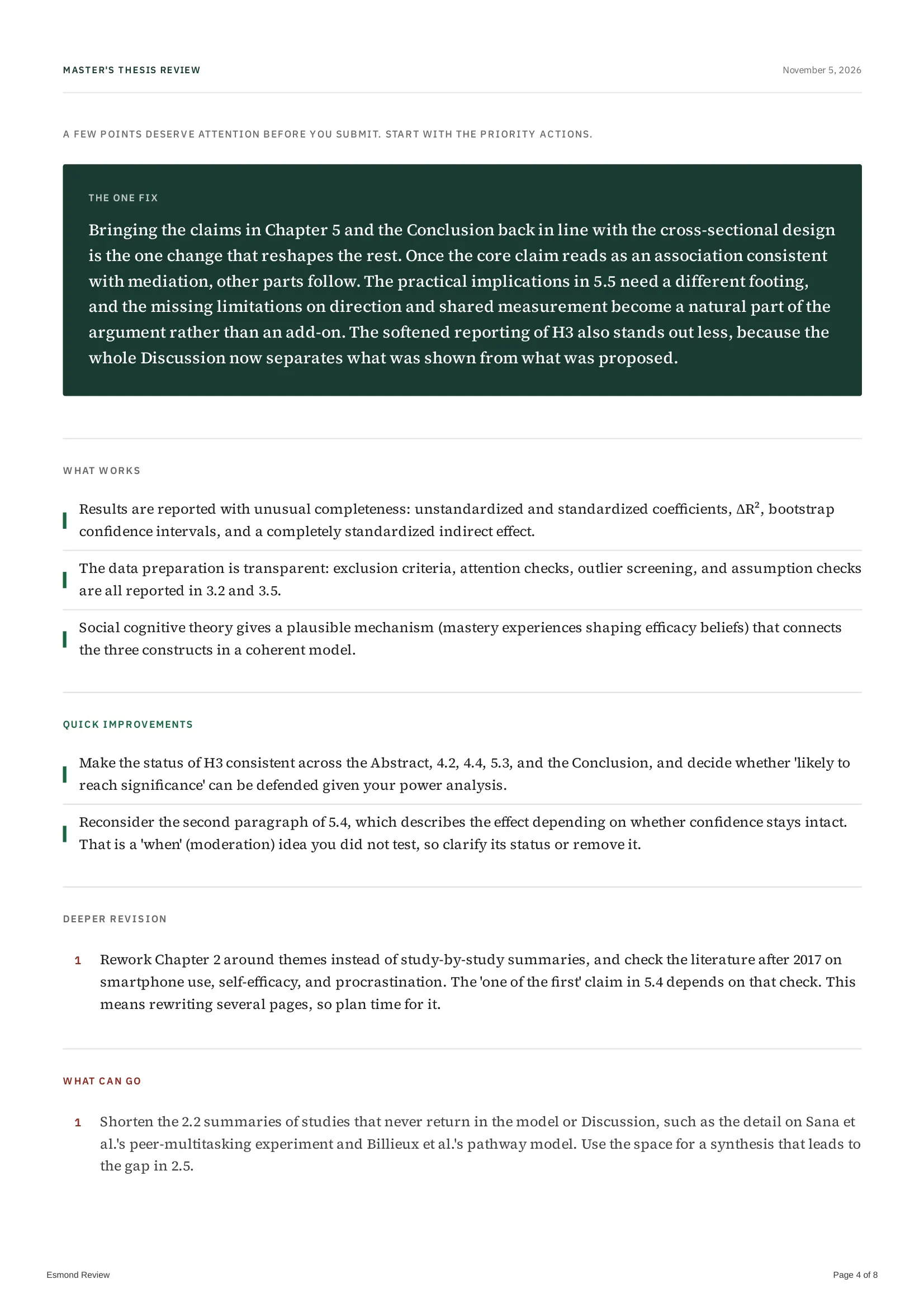
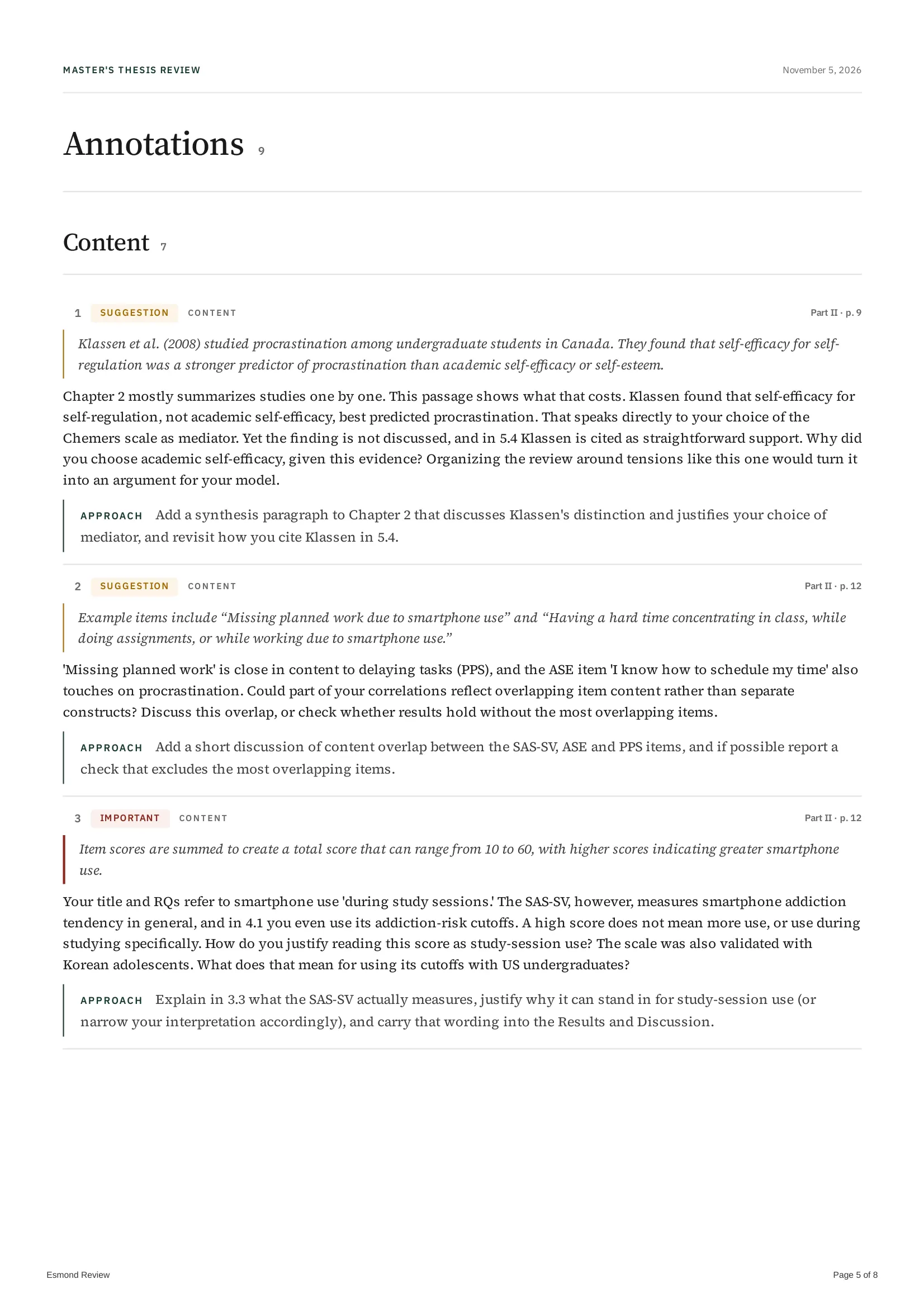
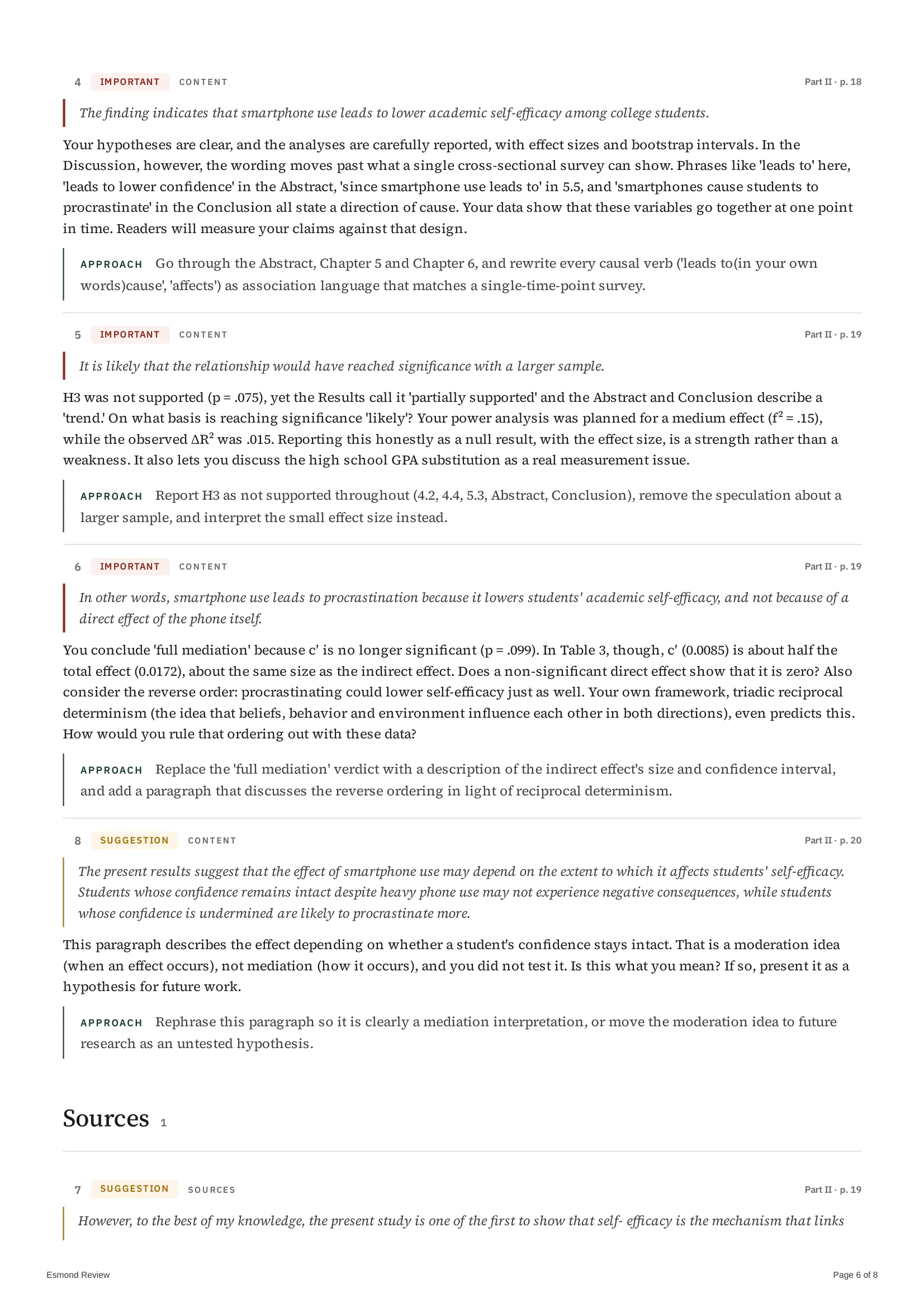
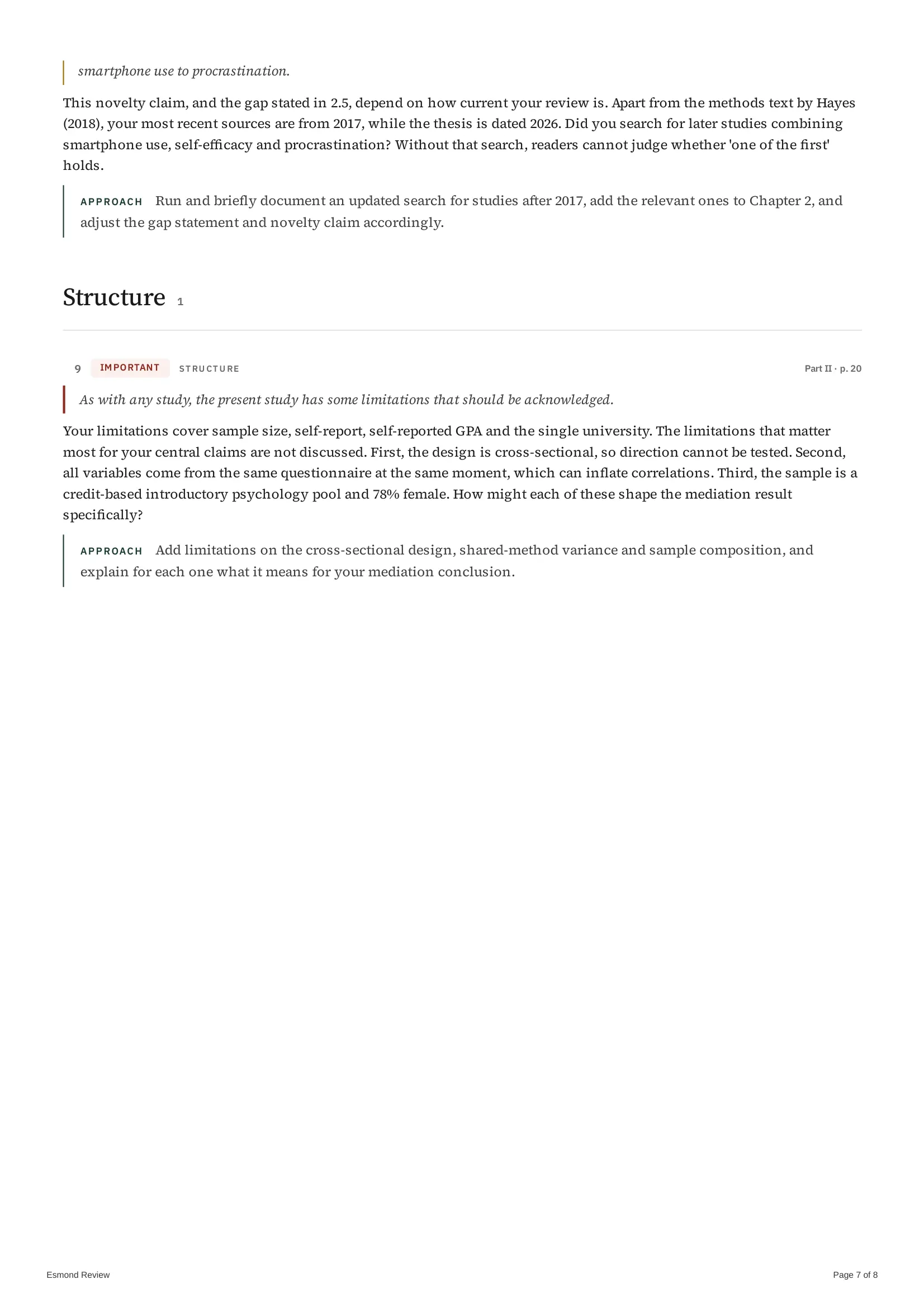
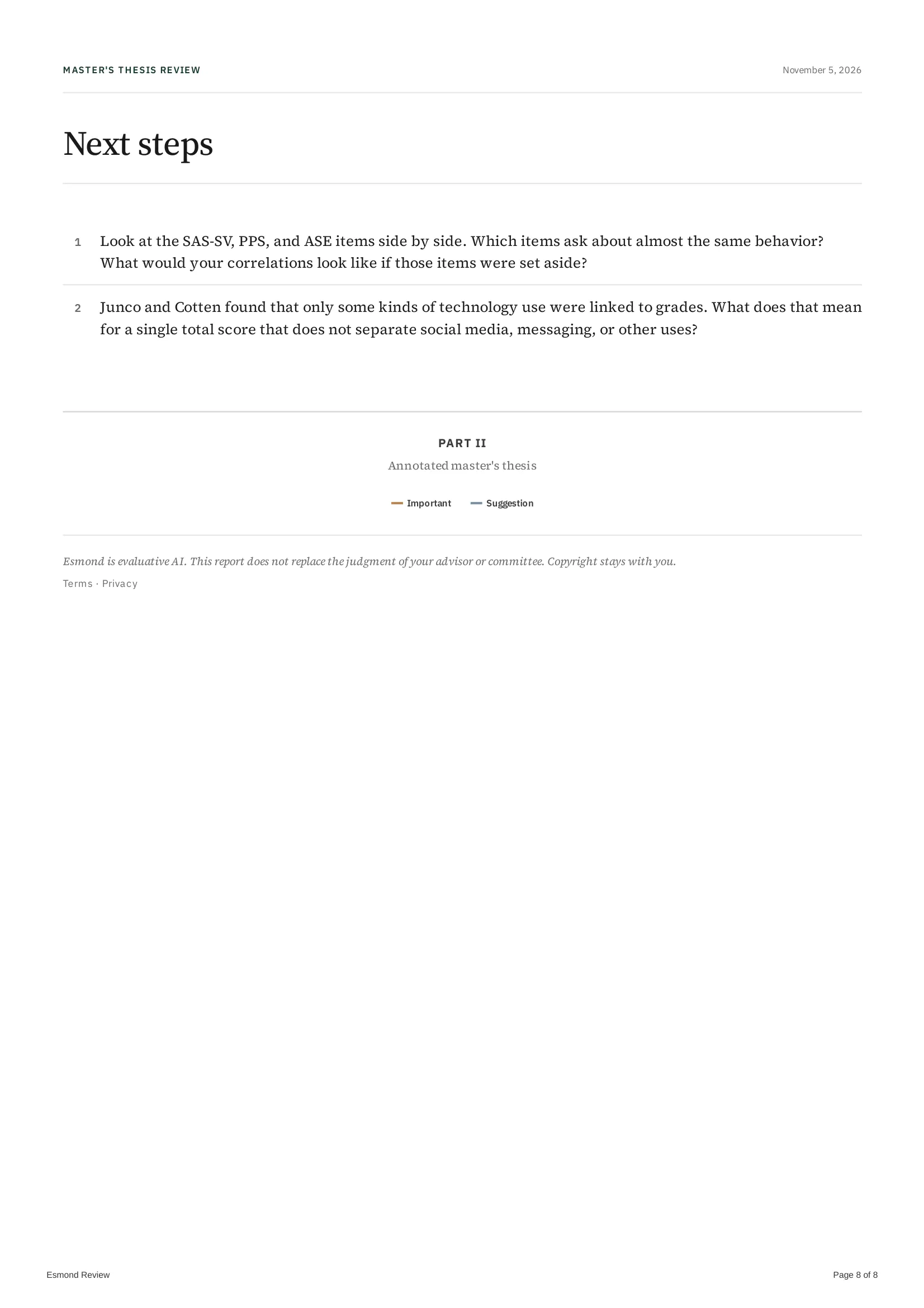
Esmond can flag, in the text you upload, what a social work reader may question: implications for practice that go beyond the findings, service users' experience described only through practitioners, a placement setting whose consent and access are not explained, laws cited without a country or year, and a values framework that the rest of the dissertation does not use. The sample report shows how comments are presented, and how Esmond works describes the process.
Upload the whole draft if you can: Esmond then reads the chapters against each other, for example whether the conclusion answers the question the introduction asked. A single chapter gets a review of that chapter only.
Esmond doesn't check your draft against your ethics approval, agency agreements, or current legislation, and it doesn't verify your data. The choices about what to revise are yours.
Read on November 21, 2026.
Last revised
Get your paper evaluated before you submit