Abstract
An education dissertation is read for the fit between a question about teaching or learning, its school context, and its claims. When teachers research their own class, readers look for how insider bias, power over pupils, and consent of pupils and parents were handled. Learning theory should shape instruments and analysis, policy documents count as intentions, and one class with a teacher-made test describes change without isolating its cause.
An education dissertation at bachelor's or master's level often studies a classroom the student teaches in, which raises questions of consent, insider bias and how far one class can carry a claim. This page sets out what readers in education look for chapter by chapter, what changes when you are both teacher and researcher, how theory and policy documents should be used, and how far a small intervention study can take a claim. Guidance from universities in Canada, Finland, Sweden, Malaysia, and the US is quoted.
In short
Education research studies teaching, learning, and the institutions around them, and much of it happens in real schools with real pupils. That gives the field its typical designs: action research in the student's own classroom, case studies of one school or program, interviews with teachers or school leaders, questionnaires to pupils or parents, small intervention studies, and analysis of curriculum or policy documents. Each design answers a different kind of question, and readers check that the one you chose fits yours.
The University of Ottawa's Faculty of Education sets the bar for a master's thesis in one sentence: “A master’s thesis must show that the student truly applies a scientific approach to research and understands the main questions and doctrine related to the chosen topic.” At the University of Gothenburg, the course syllabus for the master's thesis in education describes the thesis as follows: “A master’s thesis is a carefully argued scholarly text that presents an original argument that is carefully documented from clearly identified primary or secondary sources.”
For the literature review chapter on its own, see the education literature review page. For the practice-based doctorate in the US, see the EdD Dissertation in Practice page.
The chapters follow the familiar order, with a framework that can sit in more than one place. The Faculty of Education at Universiti Malaya notes in its guidelines for dissertations: “Note: The conceptual and theoretical frameworks can be included here or as seen appropriate in other sections of the thesis.” The table adds a column for the questions that come up when the study takes place in your own classroom.
| Chapter | What readers in education look for | Extra question in action research |
|---|---|---|
| Introduction | A problem of teaching or learning in a described context: level, subject, type of school, education system | Why this problem in your class, and what you had already tried |
| Literature review and framework | Studies on the problem and a learning theory that shapes the question | Which earlier studies the intervention builds on |
| Methodology | Design, participants, setting, instruments, procedure, analysis, ethics | Your double role, how you limited its influence, and how consent was handled |
| Findings | Results for each research question, with data from every source named in the methods | What happened in each cycle, including what didn't go to plan |
| Discussion | Findings set against the literature and the framework, with alternative explanations | What the findings say about your practice, and what they can't say about other classes |
| Conclusion and implications | An answer to the research question, and implications scaled to the study | The next cycle or change in your teaching, with its reason |
Practitioner research is a recognized route in education programs, and it has its own logic. The action research handbook of Eastern Illinois University's Department of Teaching, Learning, and Foundations describes it like this: “Action research is conducted within the teacher’s educational setting and is intended to inform and improve a teacher’s practice.” The same handbook sets a limit for its exempt review category: “The exemption may only be used for studies about normal educational practices.”
Being teacher and researcher at once raises three questions readers will ask. First, insider bias: you designed the intervention, taught it, and judged its results, so say how you checked your reading of the data, for example with a colleague who coded part of it or with pupil work assessed blind. Second, power: pupils depend on you for their assessment and their daily life in class, so explain how they could decline without consequence, and keep research data apart from the assessment of their work. Third, consent: pupils who are minors need permission from parents or guardians and their own agreement in words they understand. At Eastern Illinois University, for example, the approvals for action research include the school building or district administrator and a letter of notification to parents.
Ethics approval sits between the proposal and the data. Ottawa's guide states: “Once the research proposal has been approved, the student will submit a request for ethics approval for any research involving human subjects to the Office of Research Ethics and Integrity”. In a small school, a description such as "the only male teacher in the mathematics department" identifies a person even without a name, so check your context section with that in mind.
A learning theory (sociocultural theory, cognitive load theory, self-determination theory, constructivism) earns its place when it decides something: what you observe, which questions are in the interview guide, which codes you use, how you explain a result. A theory chapter that never comes back after chapter 2 reads as decoration.
Policy documents (a national curriculum, a ministry strategy, a school's inclusion policy) show what is intended. They can be your data, in a policy analysis, or your context. They are not evidence that a practice works. The University of Helsinki's assessment criteria for the master's thesis in education ask for “Separation between information presented in a source for the thesis and the author’s own interpretation”, which applies as much to a curriculum document as to a study.
Small intervention studies need careful claims. A class that does better on a teacher-made test after six weeks may have improved because of the intervention, because pupils learn over six weeks anyway, because a new activity is exciting for a while, or because a test you designed matches what you taught. Without a comparison group, a pre-test and post-test in one class describe change; they don't isolate its cause. Effect sizes from small studies and researcher-made tests also tend to be larger than those from large studies with standardized tests; the education literature review page explains how to read them.
Some universities publish their assessment criteria for education theses. Helsinki's list for the master's thesis in education includes, among other components, “Links between the conclusions drawn and the results as well as their comprehensiveness, plausibility and originality”. Applied to an education dissertation, assessors check:
These fragments are made up. None of them comes from a real dissertation.
Your supervisor knows the program's expectations and the ethics process; bring specific questions about your design and your claims. A critical friend (a colleague at your school or a fellow student) can read your coding or observation notes and challenge your interpretation, which also addresses insider bias. The education librarian can help with database searches in ERIC and similar databases, and writing support at your university can read for structure. Your school's leadership may want to see findings before they are shared; agree on that early.
Comments on a draft you produced are feedback; a chapter that someone else produces for you is not your own work. Before you share a draft outside your program, check what your institution allows for outside feedback and AI tools; see can I get AI feedback on my thesis and what supervisors expect from a master thesis.
For the final chapter, see what goes in a thesis conclusion; for a list that applies to any field, see the thesis checklist before you submit.
Introduction with the problem and its school context, literature review with a theoretical or conceptual framework, methodology, findings, discussion, and conclusion with implications. In action research, the findings are often organized by cycle. Your program's handbook decides the exact chapters.
Some education programs allow practitioner or action research, and they set conditions: ethics approval, permission from the school, consent from parents and agreement from pupils, and a plan for handling your double role. Eastern Illinois University's handbook, for example, limits its exempt review category to studies about normal educational practices. Ask your supervisor what your program requires.
Look in your own faculty's repository and library, where dissertations met your program's rules. Read them for how the context is described, how consent was handled, whether the framework is used in the analysis, and how cautious the claims are. Treat them as a view of the standard, never as text to reuse.
Action research, case studies, interviews and focus groups, classroom observation, questionnaires, small intervention studies, and document or policy analysis, often combined. The choice follows from the question: describing practice, explaining it, evaluating a change, or analyzing policy.
From your supervisor first, then a critical friend, the library, and writing support at your university. Outside feedback depends on what your institution allows. Esmond reads a draft you upload and comments on its content, method, and sources.
Esmond evaluates every assignment before you submit. It never writes it.
Esmond is an AI tool that doesn't write for you. If your course doesn't allow any AI tools, don't use Esmond for that work. If you're unsure, ask your instructor or advisor.
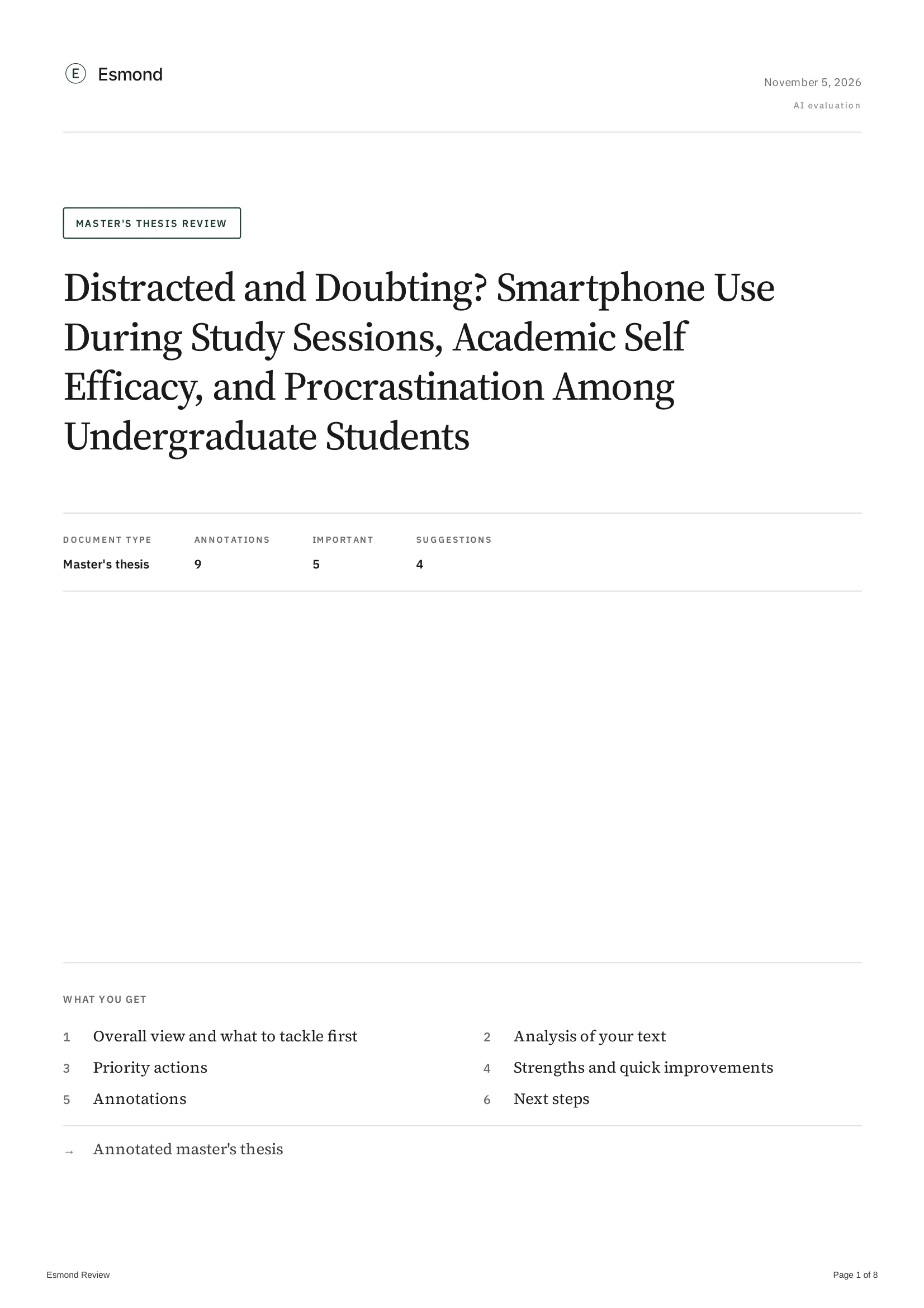
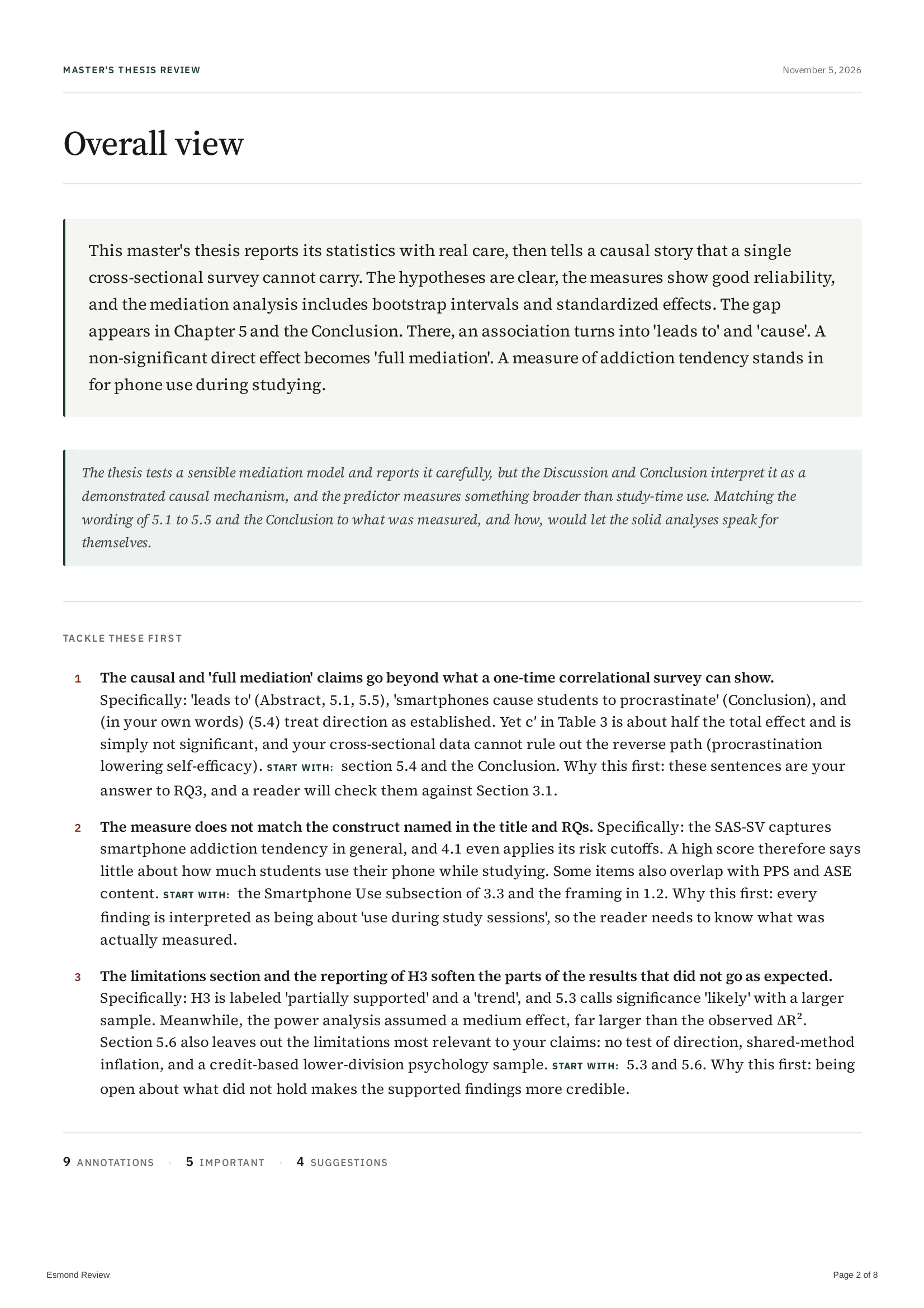
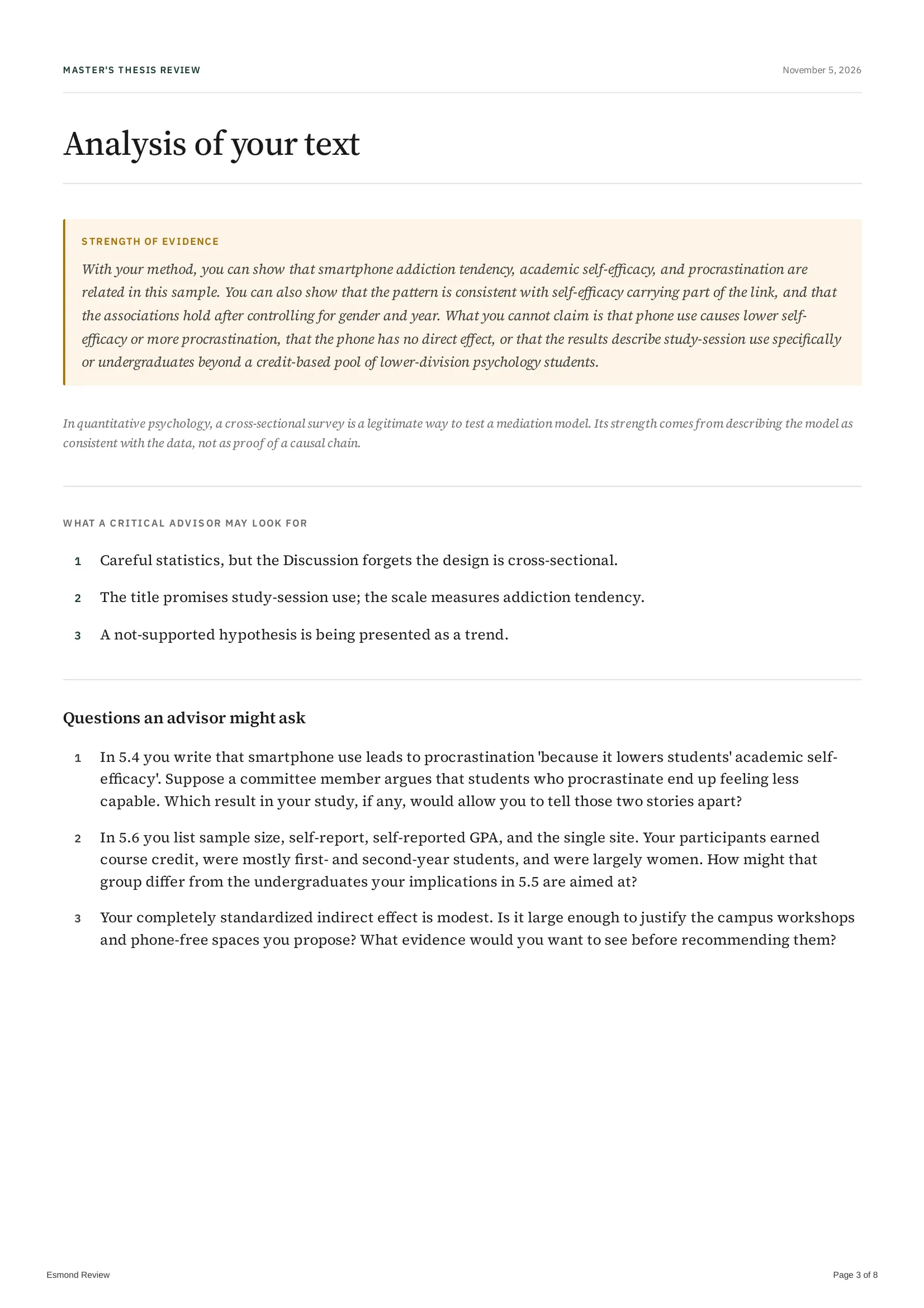
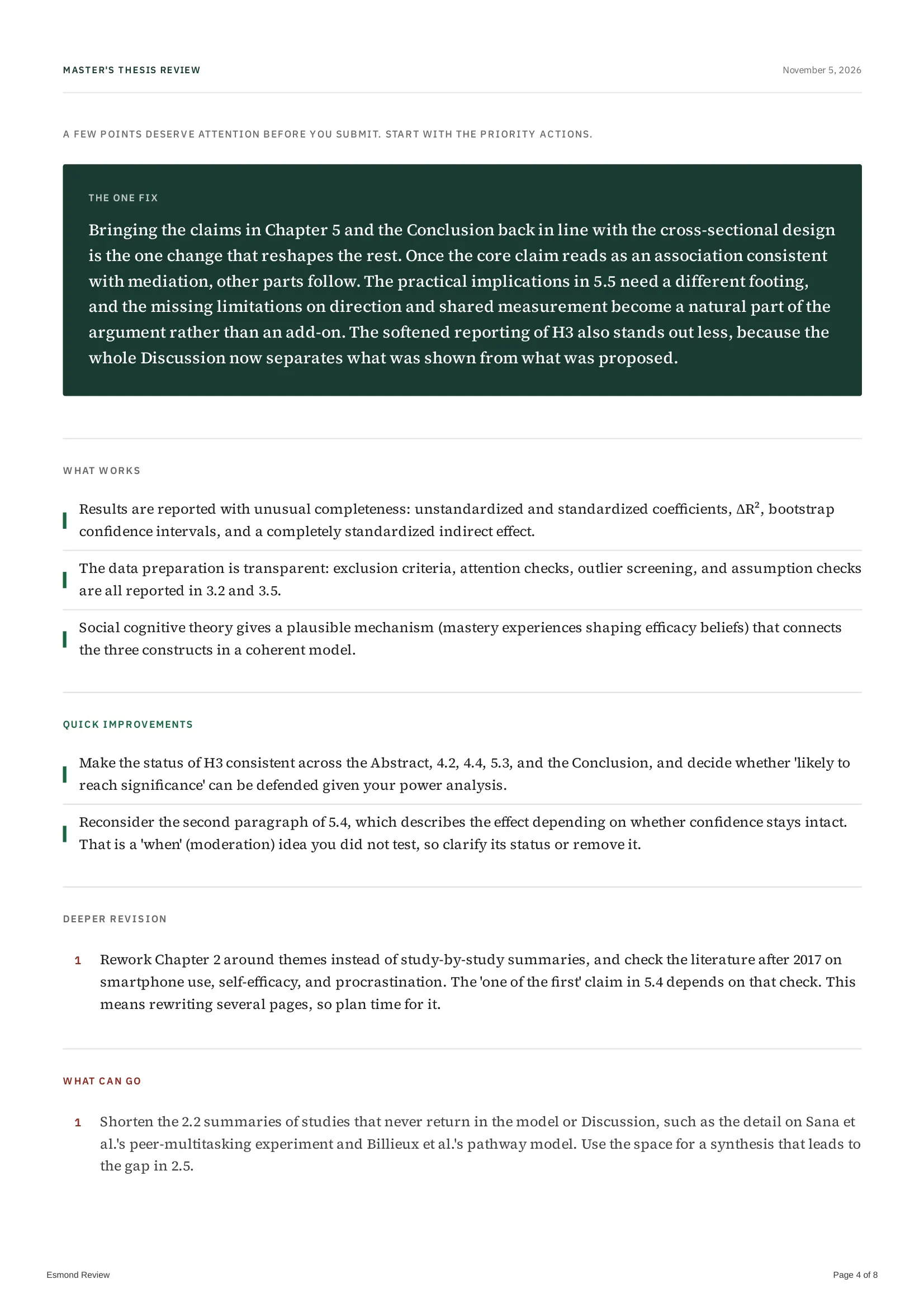
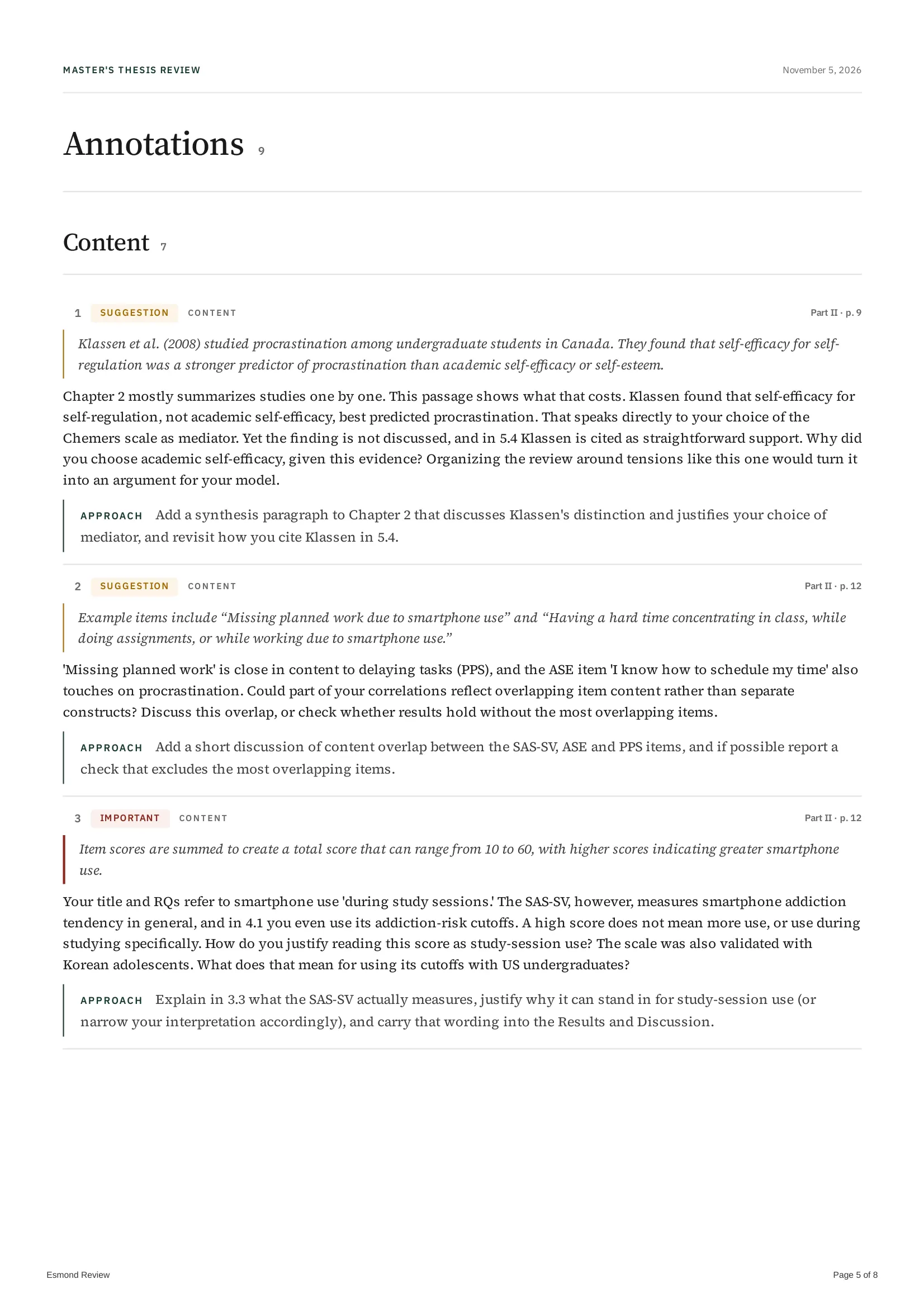
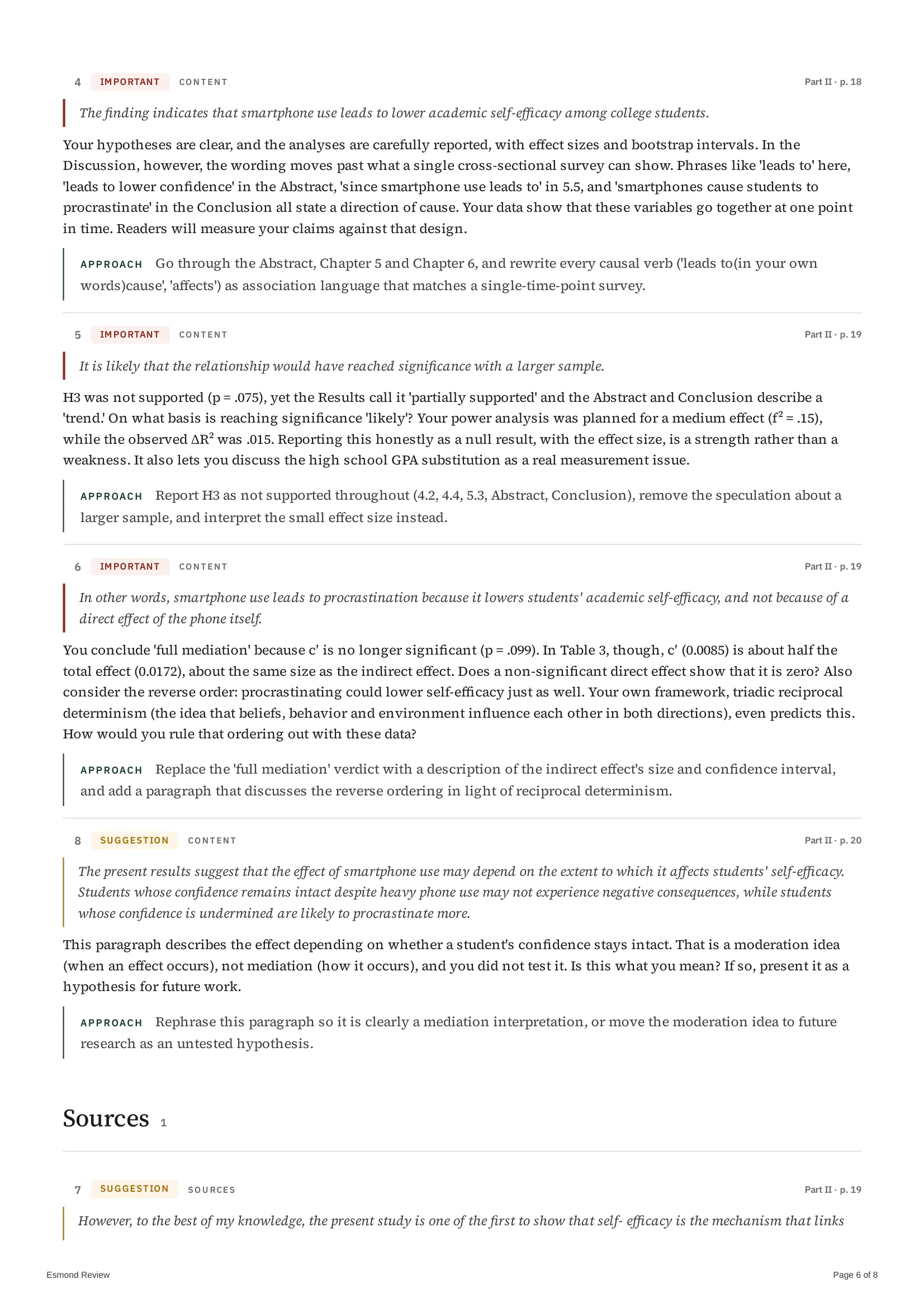
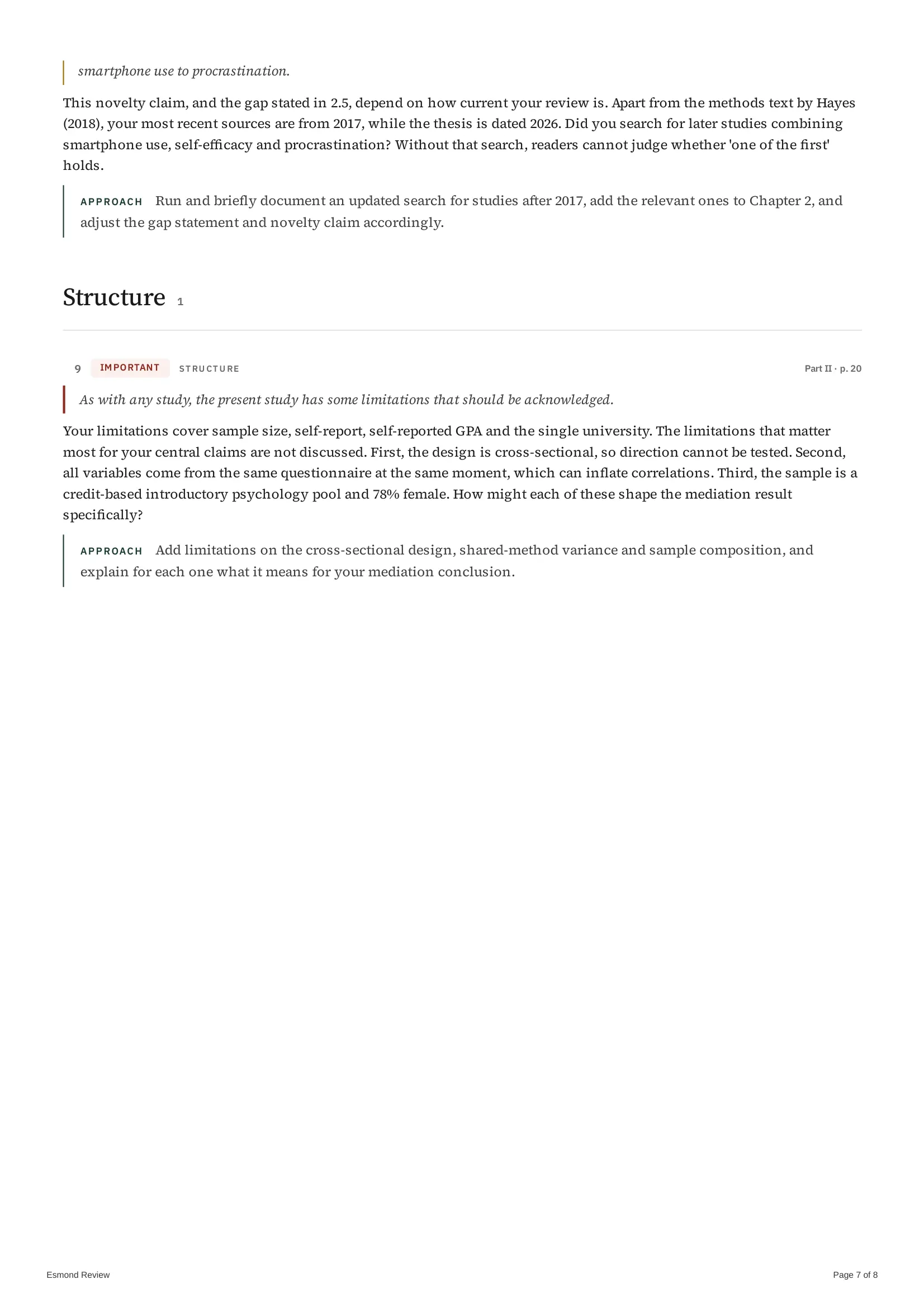
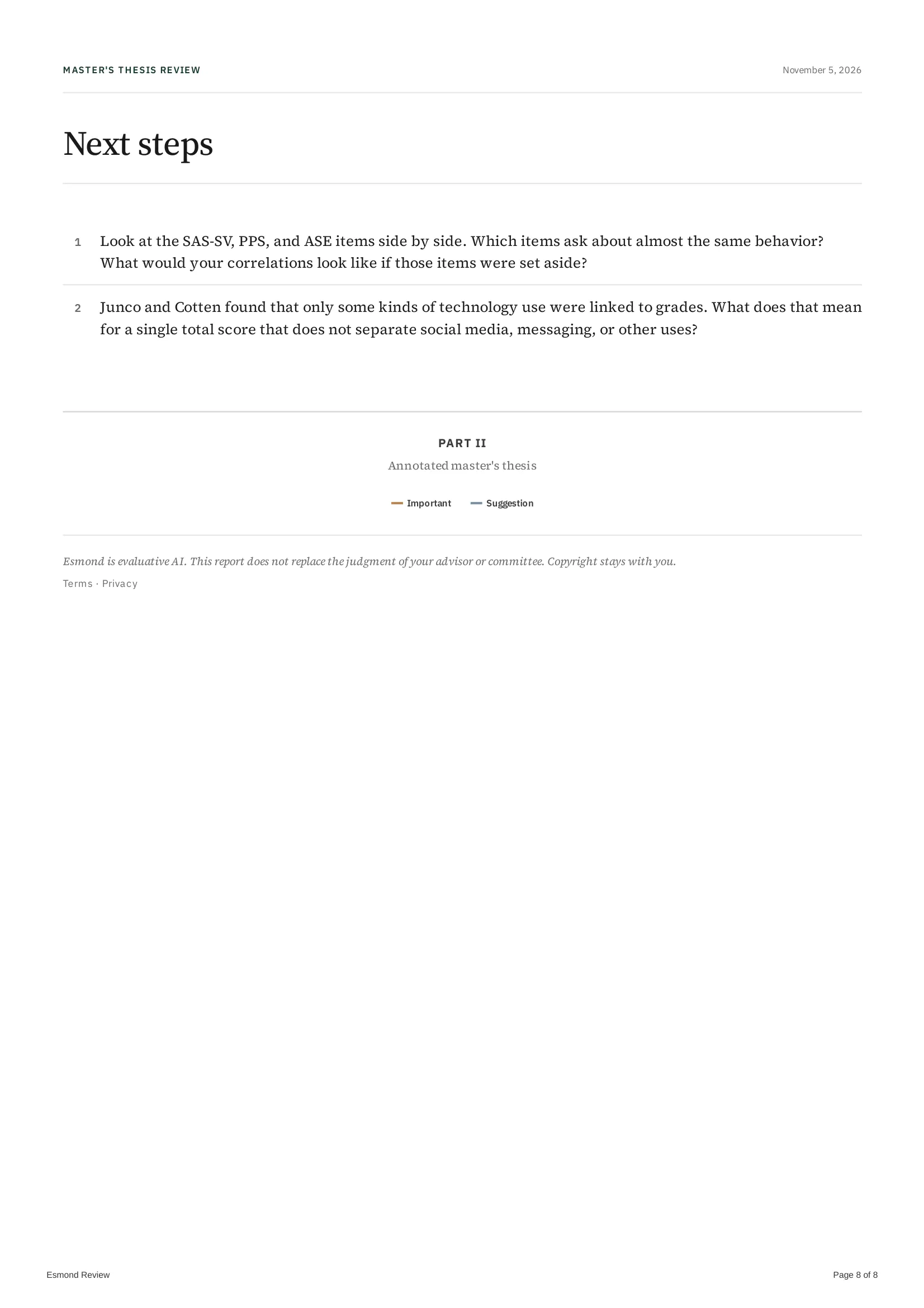
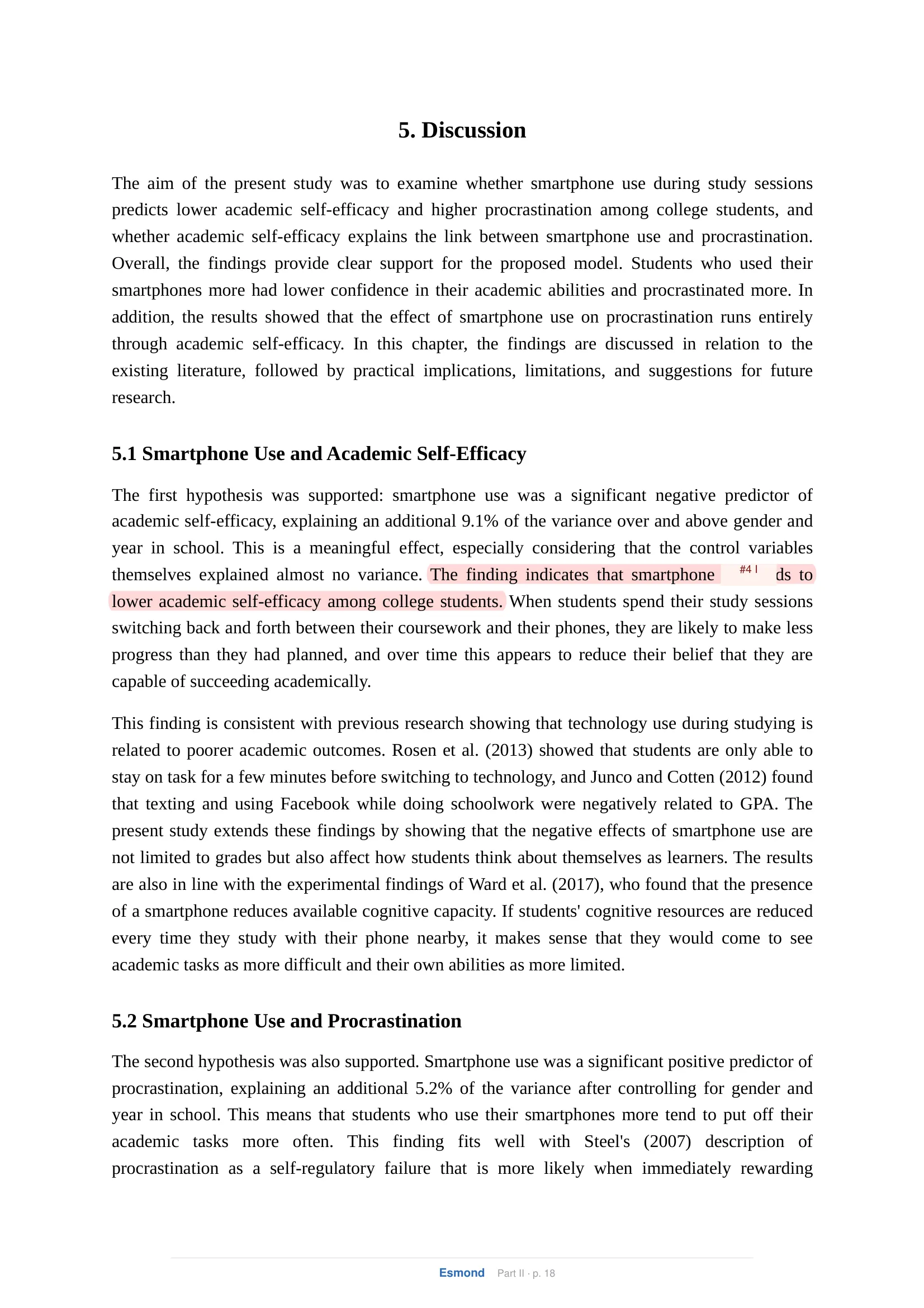
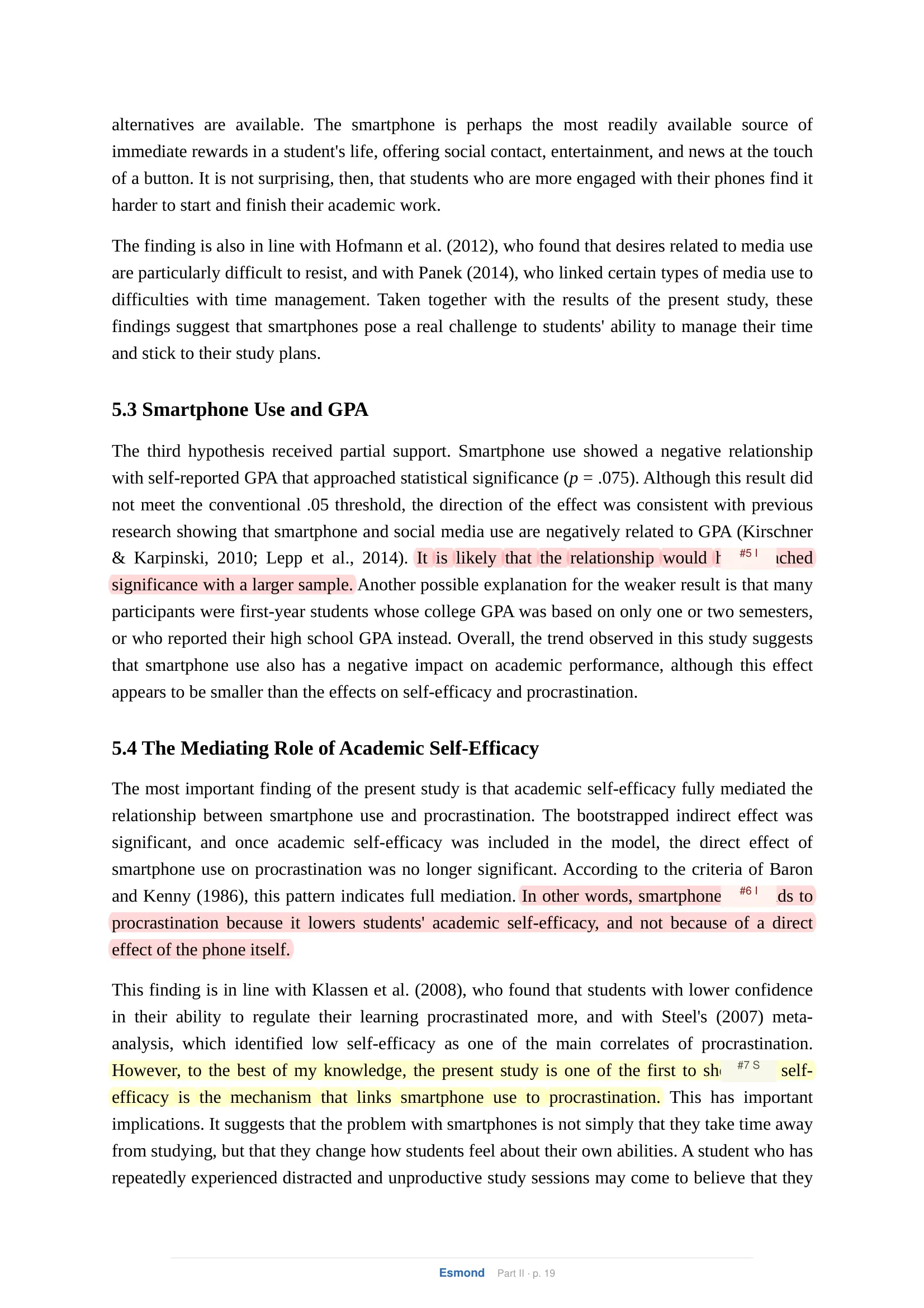
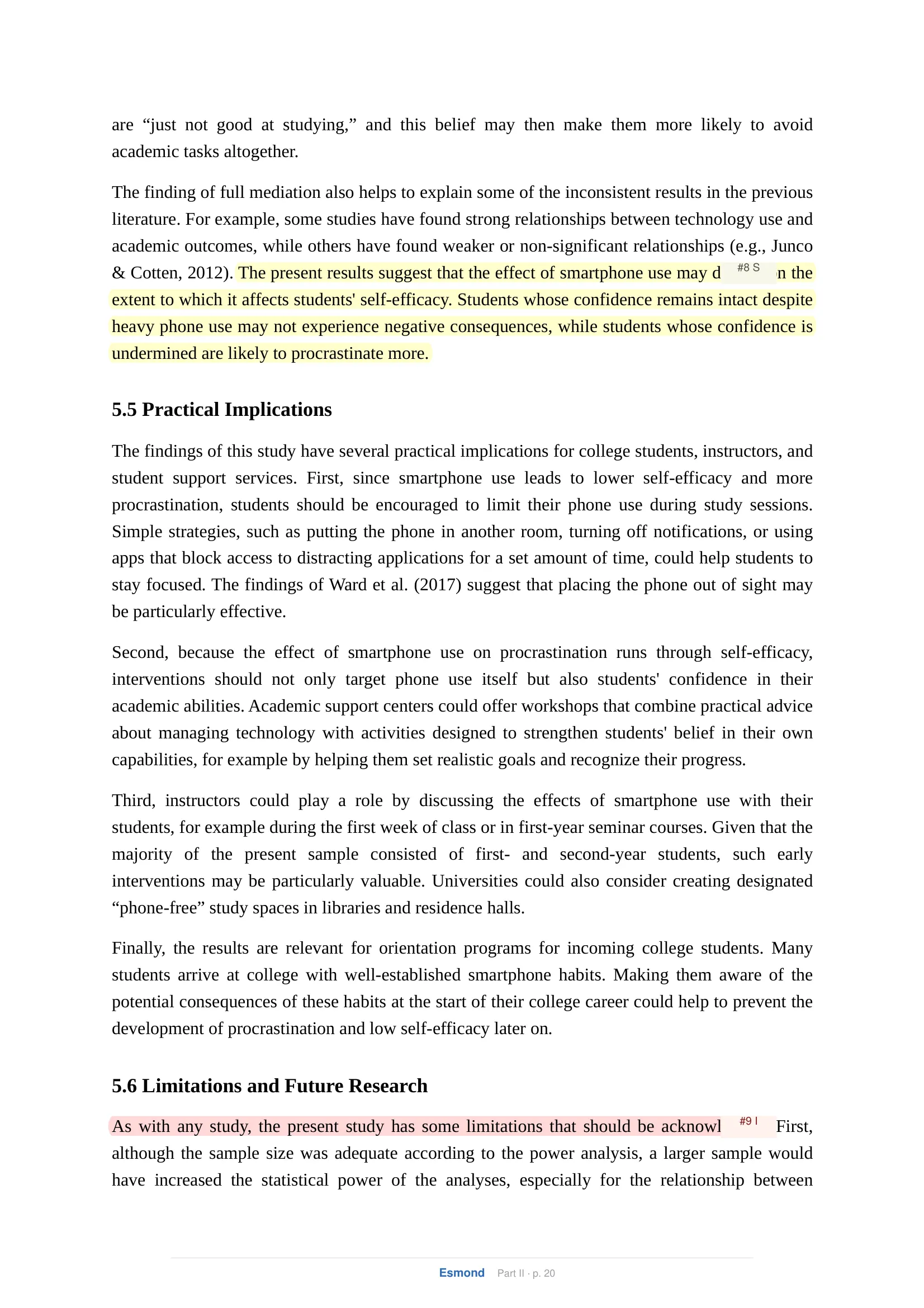
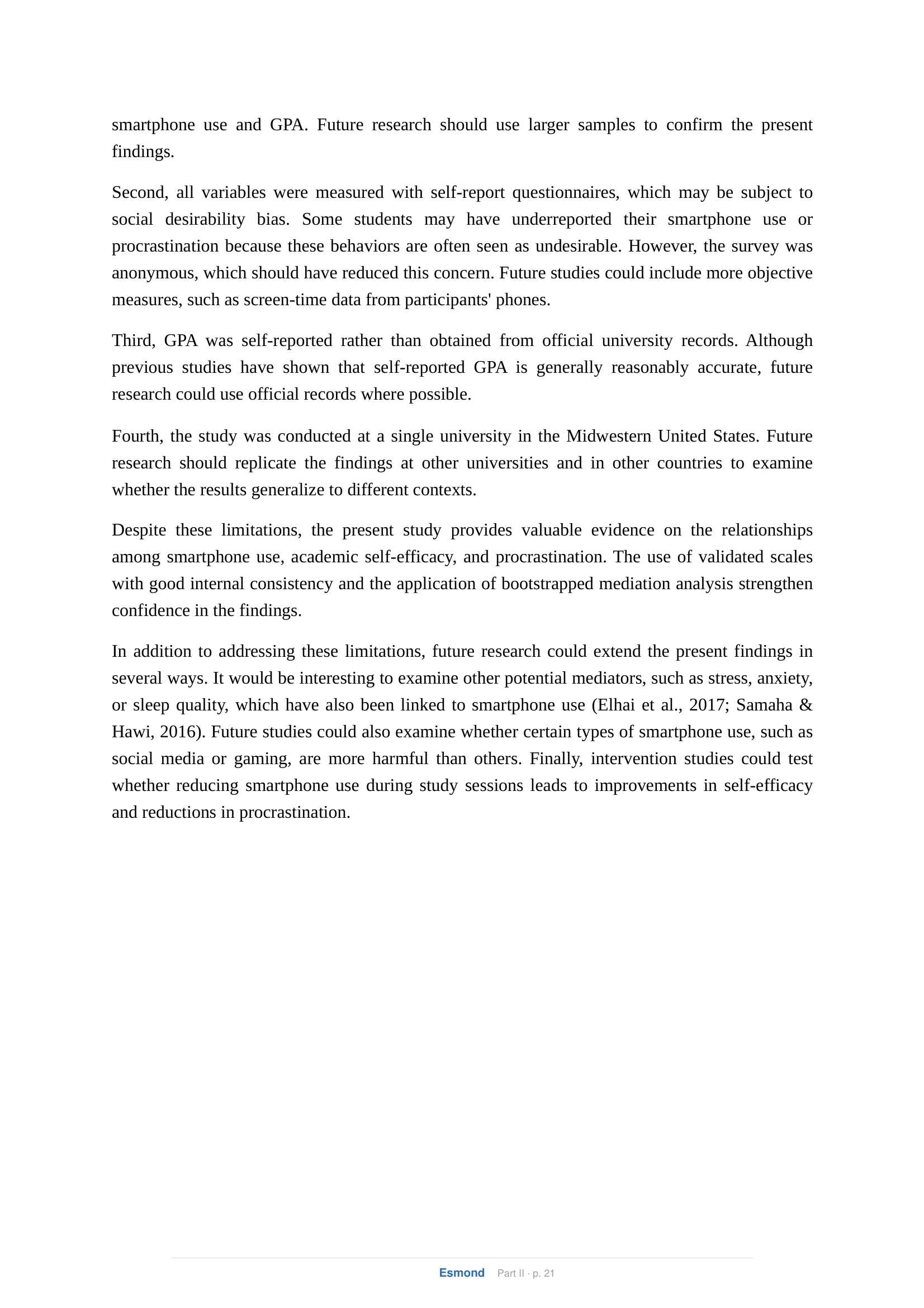
Esmond reads the draft you upload. It can flag, in the text, what an education reader may question: participant numbers that differ between chapters, a learning theory that disappears after the framework chapter, a policy document cited as proof that a method works, effect claims that one class and a teacher-made test can't carry, and consent or ethics procedures that don't cover everyone in your findings. The sample report shows the format, and how Esmond works walks through the process.
Upload the whole draft if you can: Esmond then reads the chapters against each other, for example whether the conclusion answers the question the introduction asked. A single chapter gets a review of that chapter only.
Before you upload a draft anywhere, anonymize pupil, parent, teacher, and school details as your ethics approval requires. Esmond doesn't check your ethics approval or consent forms, recalculate your test results, or compare the draft with your faculty's template. The changes you make are yours to decide.
Read on November 21, 2026.
Last revised

Get your paper evaluated before you submit