Abstract
In the Canadian department guides quoted here, an honours thesis runs over two terms with a faculty supervisor and a second reader. Length is set per department: Memorial's Earth Sciences handbook puts it at no more than 60 pages, UBC's AMNE guidelines at about 10,000 words. Readers check that the conclusion answers the proposal's question, that claims carry evidence, and that counter-arguments are answered.
An honours thesis in a Canadian undergraduate program is a supervised research project, read by the supervisor and in some departments by a second reader. This page sets out what departments mean by an honours thesis, how the parts differ between an empirical project and an argument-based one, what length the guides quoted here give, and what a supervisor and second reader look for before they sign off. Guidance from UBC, Mount Saint Vincent, McGill, Memorial, and Waterloo is quoted.
In short
In Canada, the honours thesis is an undergraduate research project, placed in the final year of an honours degree in the guides quoted here, done under one faculty member's supervision and assessed as a course. The guides quoted on this page agree on the frame and differ on the details. At Memorial University of Newfoundland, the Earth Sciences handbook describes a thesis documenting an independent field or laboratory study, spread over two courses, and adds: “Your supervisor will choose a second reader who will evaluate your thesis.”
Waterloo's School of Psychology describes the same idea from the student side: “This course can be seen as 'mini-grad school' as you will be working with a supervisor to produce your own piece of research.” At McGill, the Geography honours course runs over two consecutive terms with a supervisor and a reader, and at Mount Saint Vincent University in Halifax, the nutrition honours thesis splits into a proposal term and a term for the study and a public defense. If you study in the US, where the comparable project is often called a senior thesis, see what is a senior thesis. If your program also offers a non-thesis route, capstone vs. thesis sets out the difference.
A course paper answers a prompt someone else set, within a few weeks, for one instructor who knows the reading list. An honours thesis asks you to set the question, decide which sources or data can answer it, carry the argument over several chapters, and convince a second reader who was not in your meetings. Habits that serve a 4,000-word seminar paper, such as a broad opening, a survey of positions, and a conclusion that restates, wear thin over 40 pages.
UBC's Department of Ancient Mediterranean and Near Eastern Studies (AMNE) in Vancouver puts the expected effort at the level of a demanding six-credit fourth-year seminar, at least 312 hours over two terms. Its list of standards for a passing thesis includes “Shows awareness of counter-arguments” and, for sources, critical engagement with the primary sources the topic calls for, along with the main recent scholarship. A course paper can skip both; an honours thesis cannot.
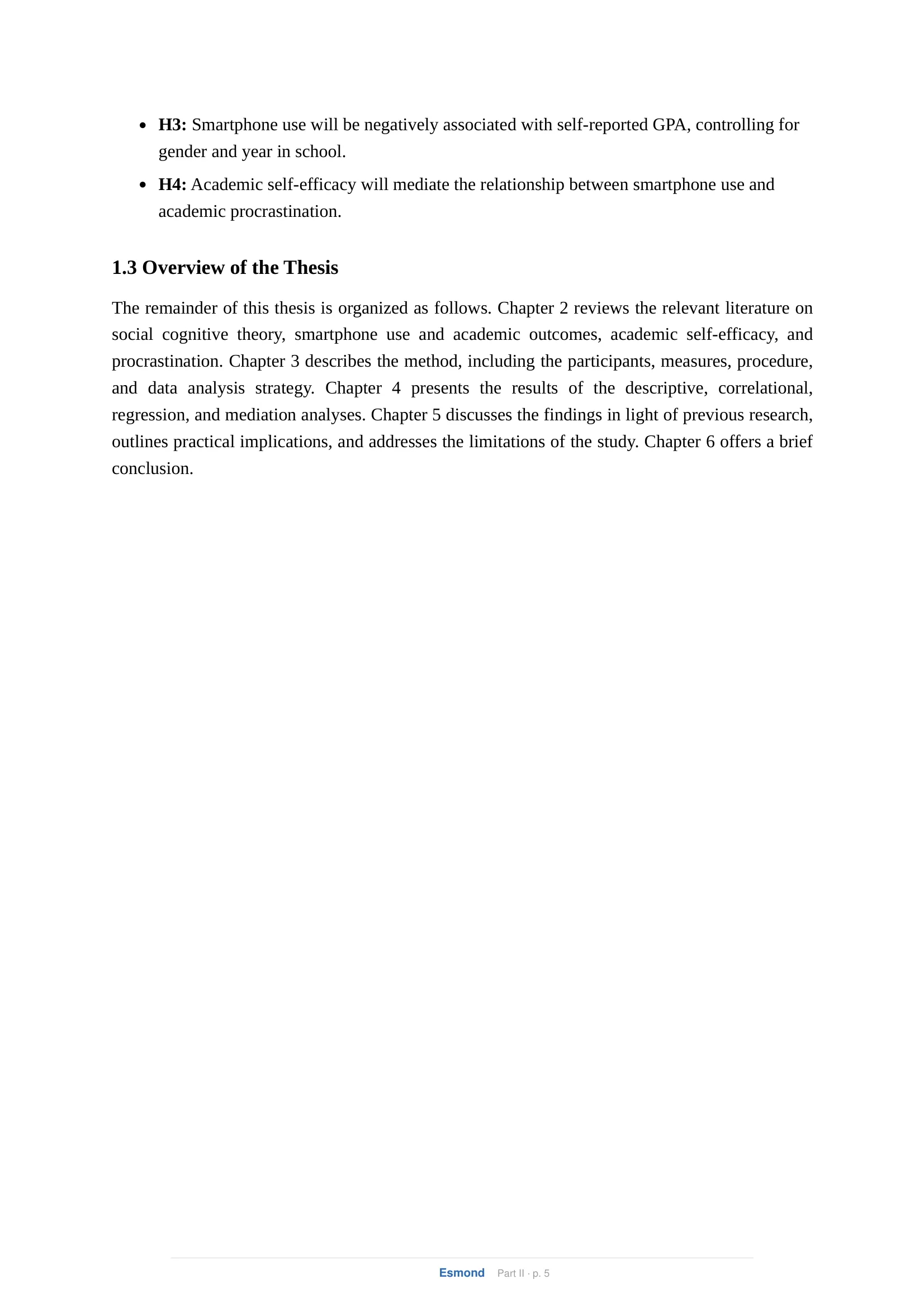
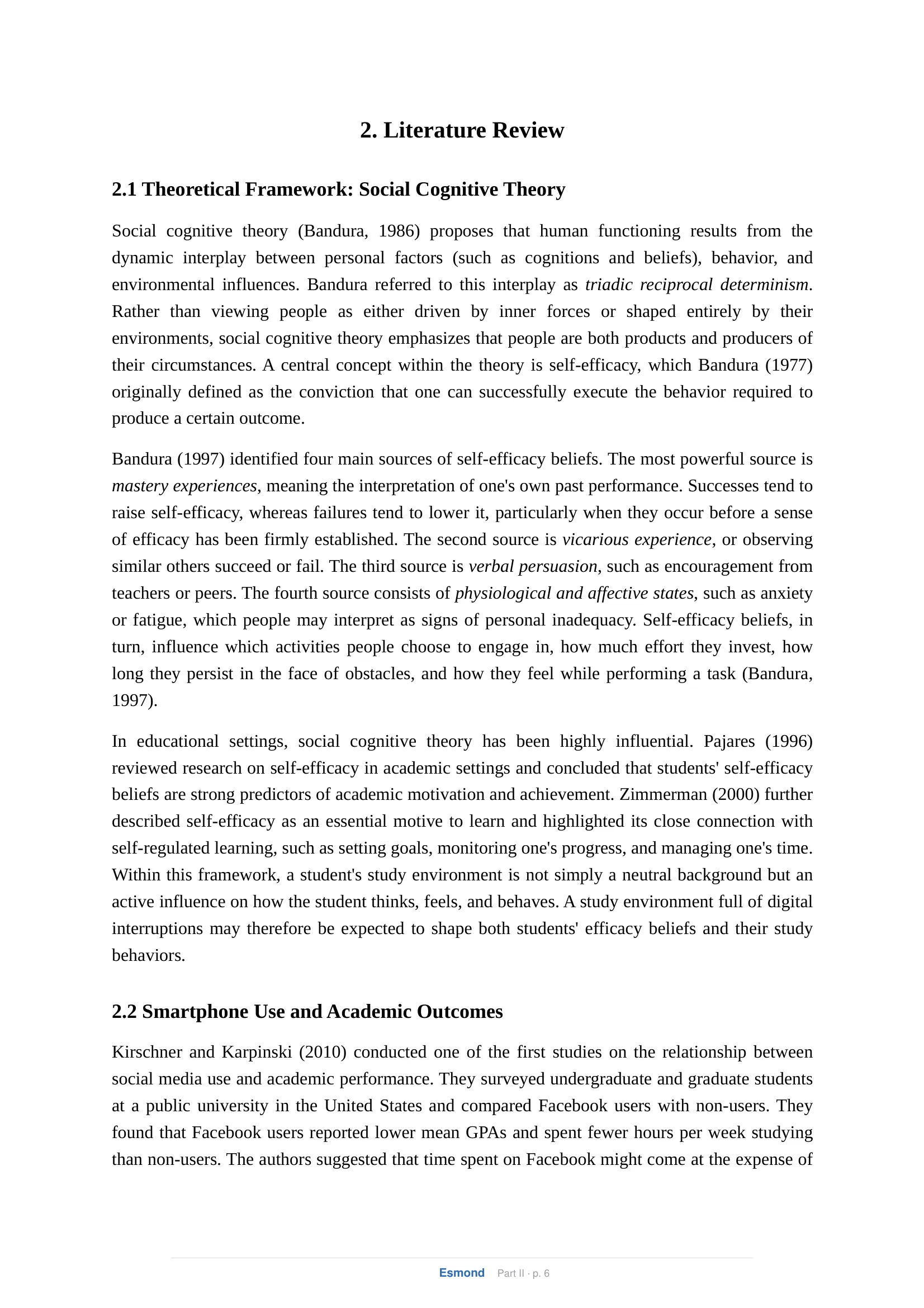
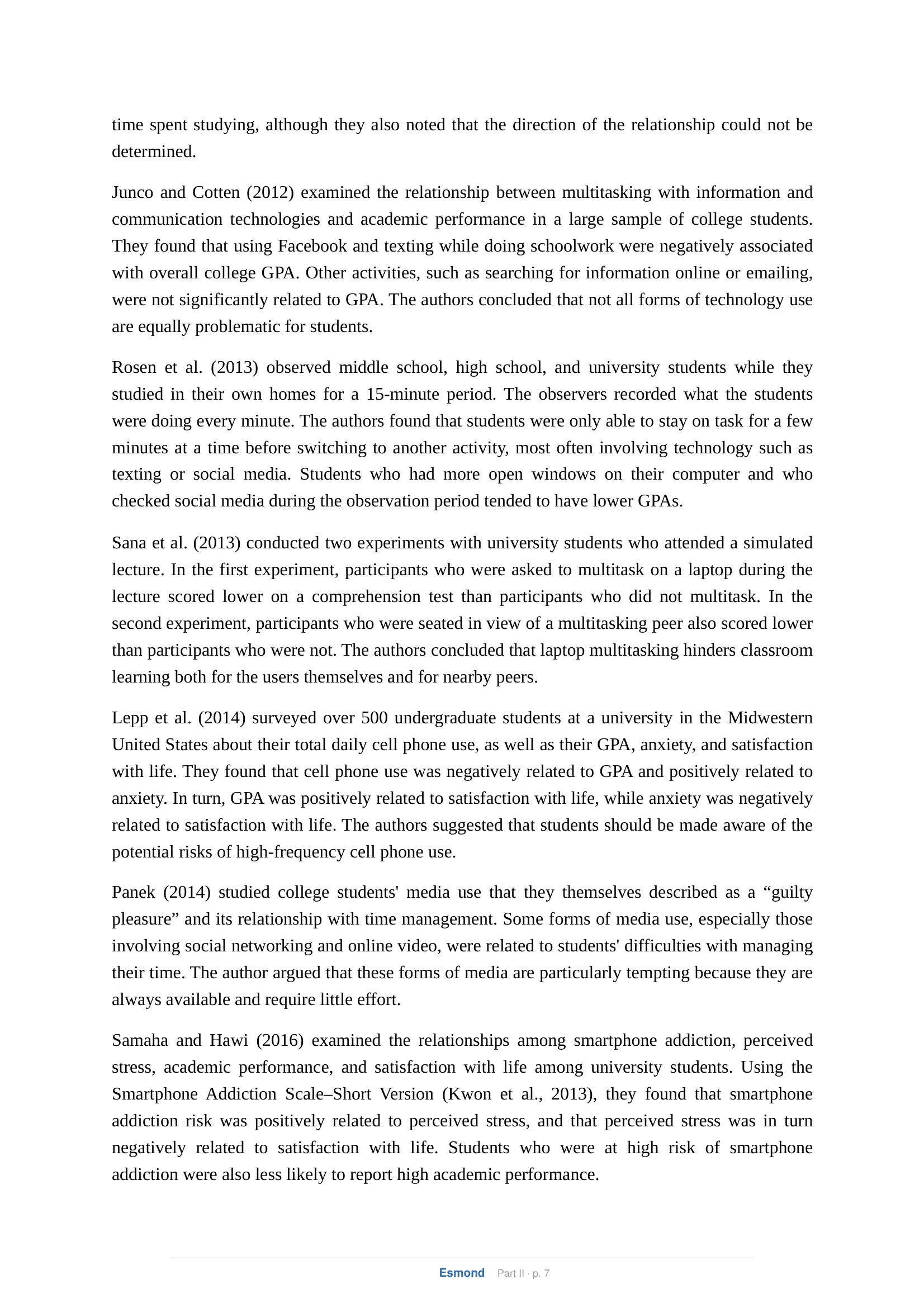
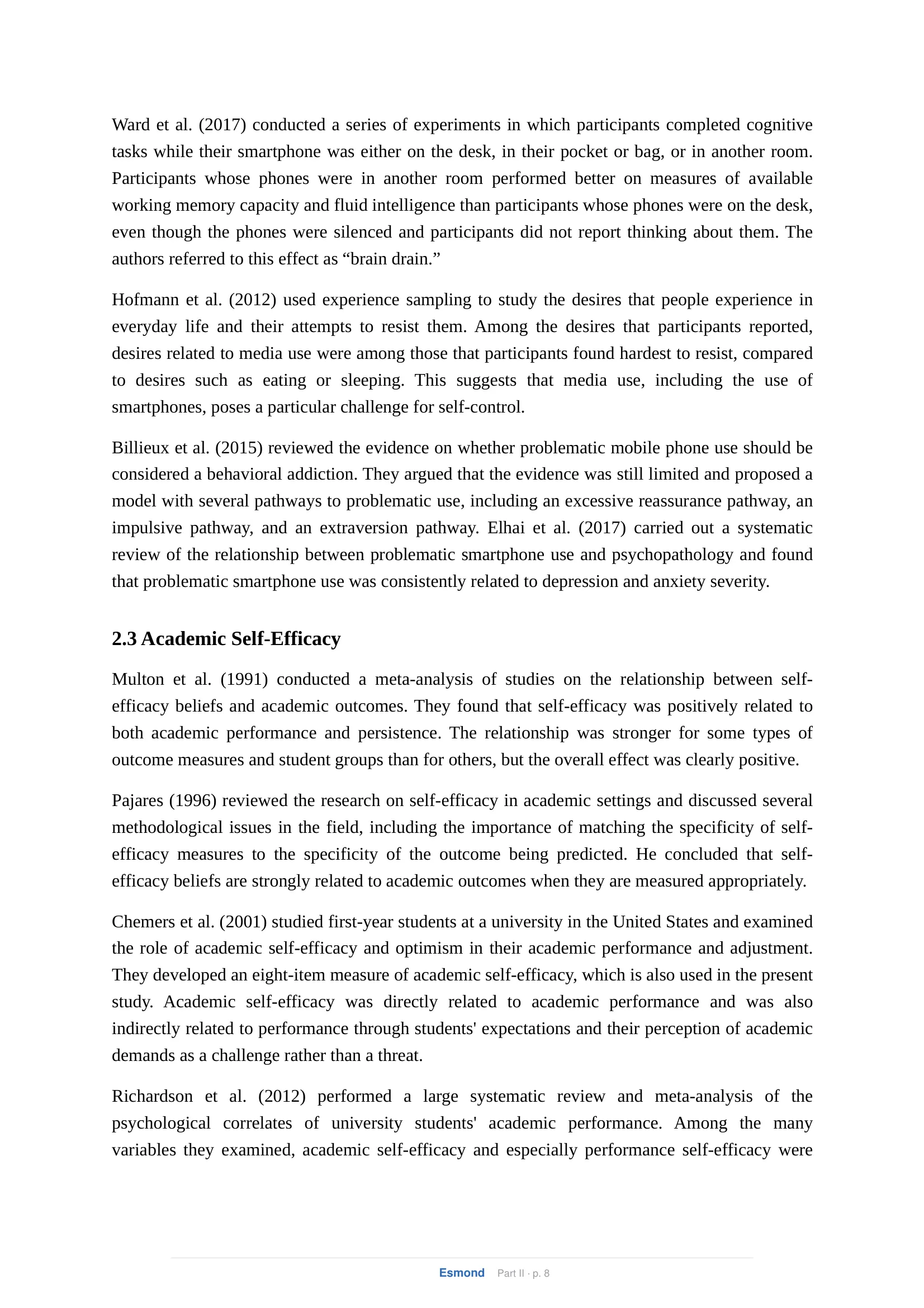
The order of the parts depends on the field. Empirical theses in the sciences and social sciences follow the report shape of a journal article; theses in history, classics, or literature build an argument across thematic chapters. Field and laboratory sciences add a study area or samples section. The table shows both main shapes and what readers check in each part.
| Part | Empirical thesis | Argument-based thesis | What readers look for in it |
|---|---|---|---|
| Introduction | Problem, question, hypotheses or objectives | Problem, thesis statement, the scholarly debate you enter | One question or claim the rest of the thesis can be held to |
| Background | Literature review that leads to the question | State of scholarship, often spread over the chapters | Recent work on the topic, and a reason your question is still open |
| Method or approach | Design, participants or samples, measures, analysis plan, ethics approval | Corpus of primary sources, how you read them, why these ones | Whether someone could check your steps or your source selection |
| Core chapters | Results, reported without interpretation | Two to four chapters, each advancing one part of the argument | Evidence for each claim, and chapters that build on each other |
| Discussion | What the results mean for the question, limitations | Counter-arguments and their answer | Claims that stay within what the evidence carries |
| Conclusion | Answer to the question, next research step | What the argument has established | An answer to the question asked in the introduction |
There is no common length; each department sets one. Memorial's Earth Sciences handbook (2018): “A well-written honours thesis normally will be no more than 60 pages in length (excluding figures, tables and appendices, but including bibliography).” UBC's AMNE guidelines: “The final essay will normally be about 10,000 words in length, including footnotes but excluding bibliography and appendices.”
Format rules come from the same place. McGill's Geography outline is explicit about the model: “NOTE: the Honours thesis you will produce must be a thesis by thesis (also called monograph model), not a manuscript/article-based thesis.” When a search for an honours thesis template leads you to another school's file, check it against your own department's title page, citation style, and length before you copy any layout.
UBC's AMNE and Mount Saint Vincent ask for a proposal in the first term, McGill Geography for a signed form with a title and a 150-word summary before the course starts, and readers treat the proposal as the contract the final thesis is checked against. A workable proposal names one question, shows why it is still open, describes how you will answer it with the time and data you actually have, and lists the first sources.
At UBC's AMNE, the proposal is short: a working title, a description of the topic and the aims of the paper (300 to 500 words), and an initial bibliography of one to two pages, signed off by the supervisor and the second reader in September. At Mount Saint Vincent, the nutrition proposal is closer to the first half of the final thesis: statement of the research problem, literature review, theoretical framework, methodology, plan for analysis, ethical considerations, and a budget where needed. The next step there is public: “Present the proposal through a public thesis proposal presentation.” Projects with human participants then go to research ethics review before anyone is contacted.
An honours thesis proposal example from your own department shows the expected level of detail. What to look for: how narrow the question is, whether the method fits two terms, and how much literature is already in place.
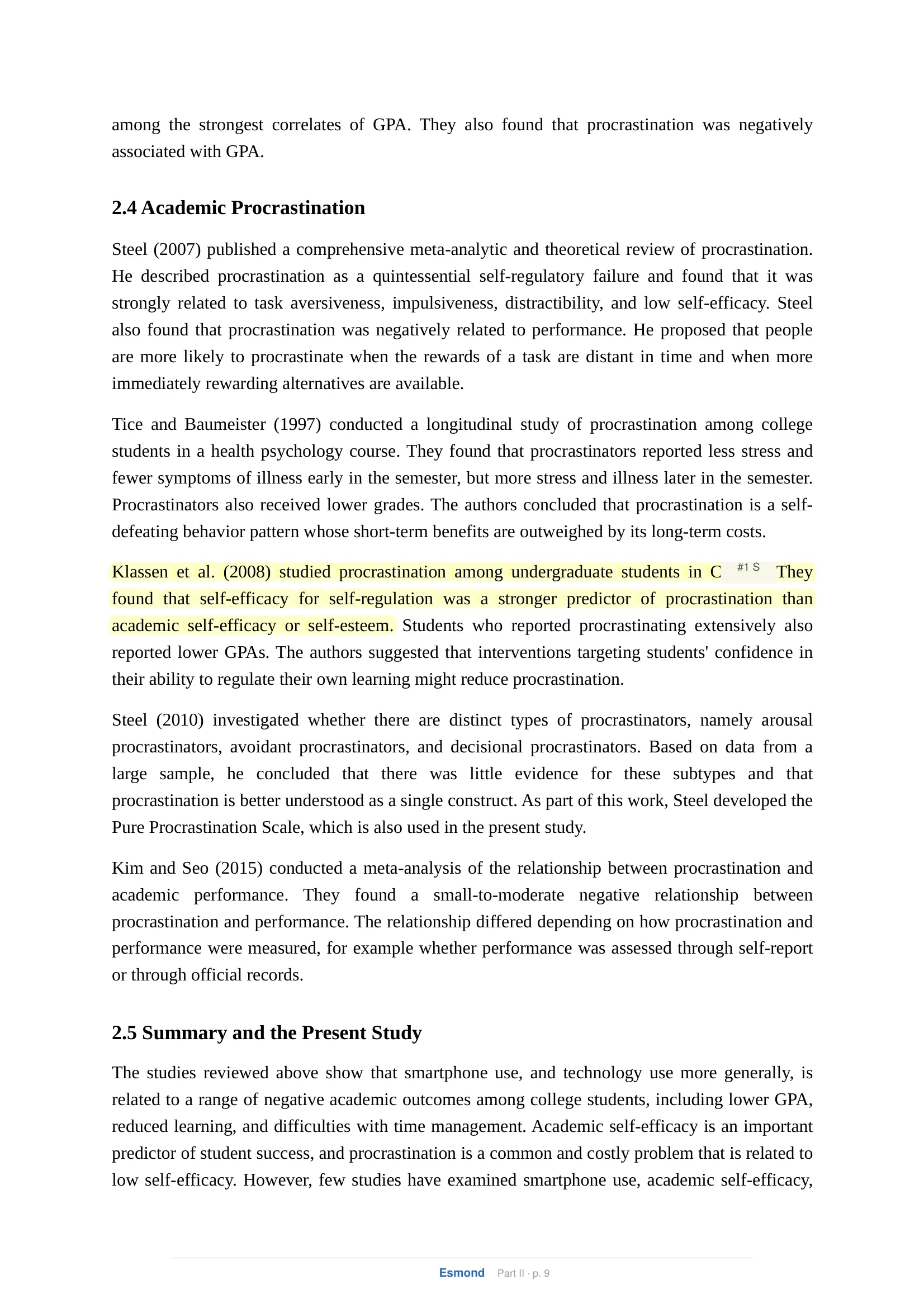
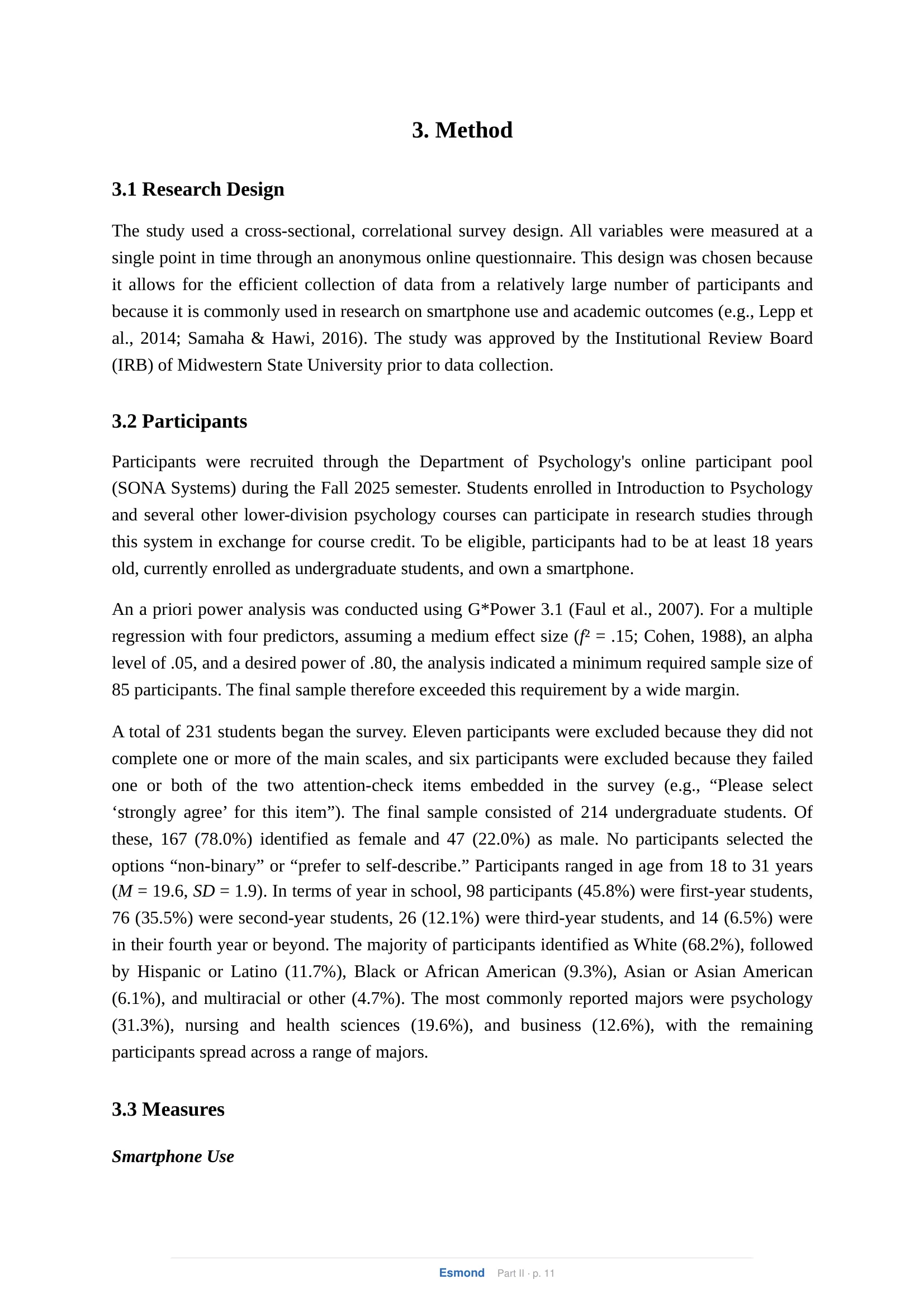
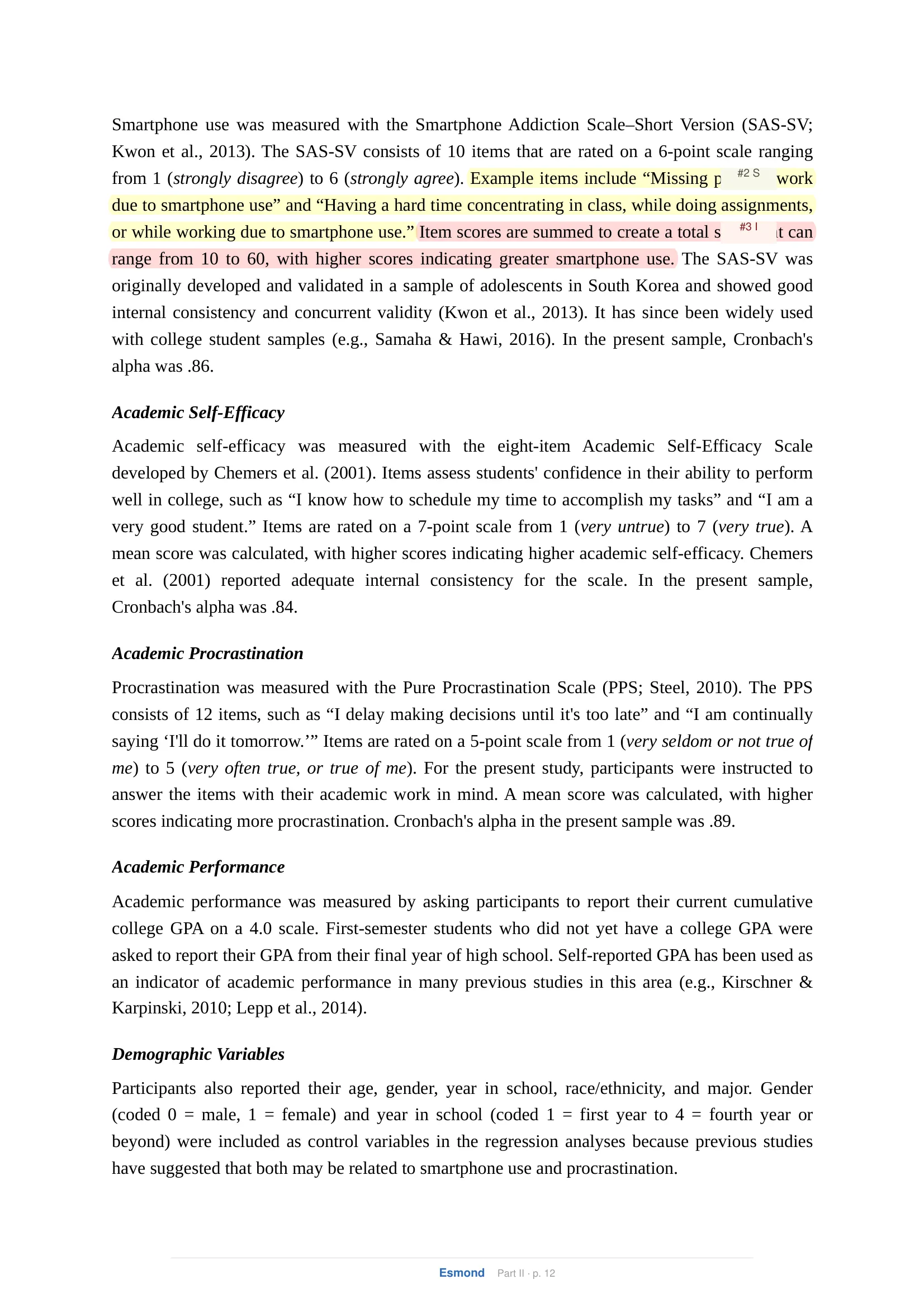
The two readers have different roles. McGill's Geography outline: “The Reader plays a secondary role in thesis advising process.” The same outline asks students to plan at least three drafts or versions for the two evaluators. At UBC's AMNE, “The second reader should have the opportunity to comment on at least one full draft of the thesis prior to the final submission.” A second reader comes to the text without the background from your meetings, so gaps your supervisor no longer notices become visible. What both readers check, across fields:
These fragments are made up. None of them comes from a real dissertation.
Your supervisor is the first and main reader, and the guides quoted here build supervisor meetings and draft deadlines into the year. The second reader often comments on a full draft. Beyond those two, your university's writing center can read a draft with you, the library helps with search strategies and citation managers, and some honours programs hold cohort meetings where students present work in progress to each other, as McGill Geography does.
Outside feedback is a separate question, and the rules sit with your course and department. Feedback on your own draft leaves the work yours; text produced by someone else, a person or a tool, is not your own work. For AI tools, Canadian rules differ by institution and often by course, and some departments ask you to discuss any use with your supervisor first. Ask your supervisor before you use any AI tool on your thesis, including one that only comments. Using AI for your thesis in Canada quotes several schools, and is AI feedback on a thesis cheating? sets out where the line runs.
For a broader pass through the whole document, see the thesis checklist before you submit. The citation checker compares your reference list with your in-text citations.
It depends on the department. Memorial's Earth Sciences handbook (2018) says an honours thesis is normally no more than 60 pages excluding figures, tables, and appendices; UBC's AMNE guidelines say about 10,000 words including footnotes. Check your own department's guide.
An empirical thesis follows the report shape: introduction with the question, literature, method, results, discussion, conclusion. An argument-based thesis in the humanities has an introduction with a thesis statement, two to four chapters that each carry one step of the argument, and a conclusion. Your department may prescribe the order.
Start with your own department. Some keep past theses in the library: Memorial's Earth Sciences handbook notes that the thesis becomes part of the department and university libraries' collections. Look at how narrow the question is, how the method is described, and how the conclusion returns to the question.
In the guides quoted here, at least a working title, the topic and aims, and a first bibliography; in empirical fields also the method, the analysis plan, and ethical considerations. UBC's AMNE asks for 300 to 500 words plus a one- to two-page bibliography.
Both psychology departments run the thesis as a course over two or more terms, with a supervisor and a second faculty reader. The psychology honours thesis page quotes their guides.
Yes: your supervisor and often your second reader comment on drafts, and your university's writing center can read drafts too. For outside or AI feedback, ask your supervisor first. Esmond reads a draft you upload and comments on it without adding text.
Esmond evaluates every assignment before you submit. It never writes it.
Esmond is an AI tool that doesn't write for you. If your course doesn't allow any AI tools, don't use Esmond for that work. If you're unsure, ask your instructor or advisor.
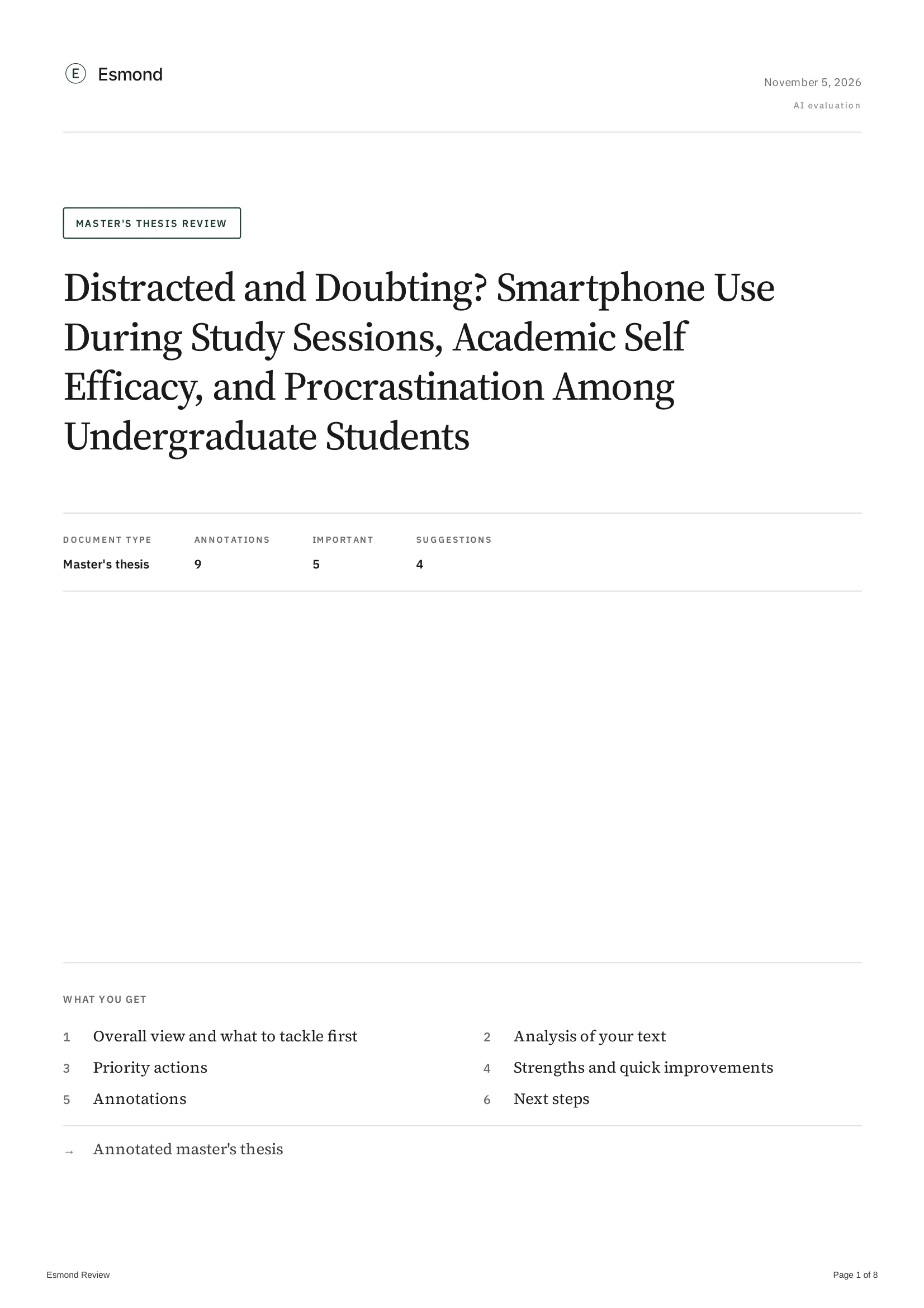
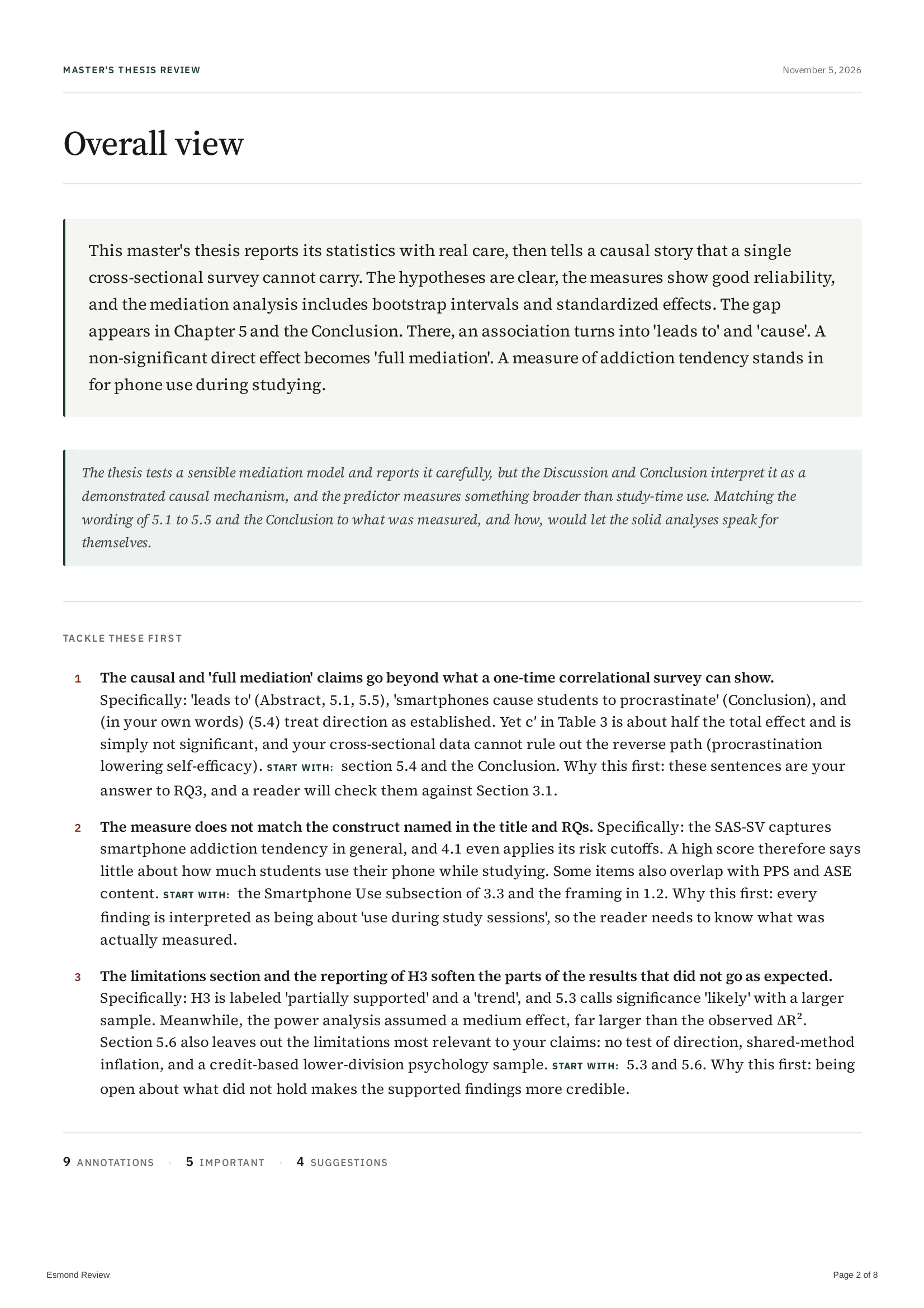
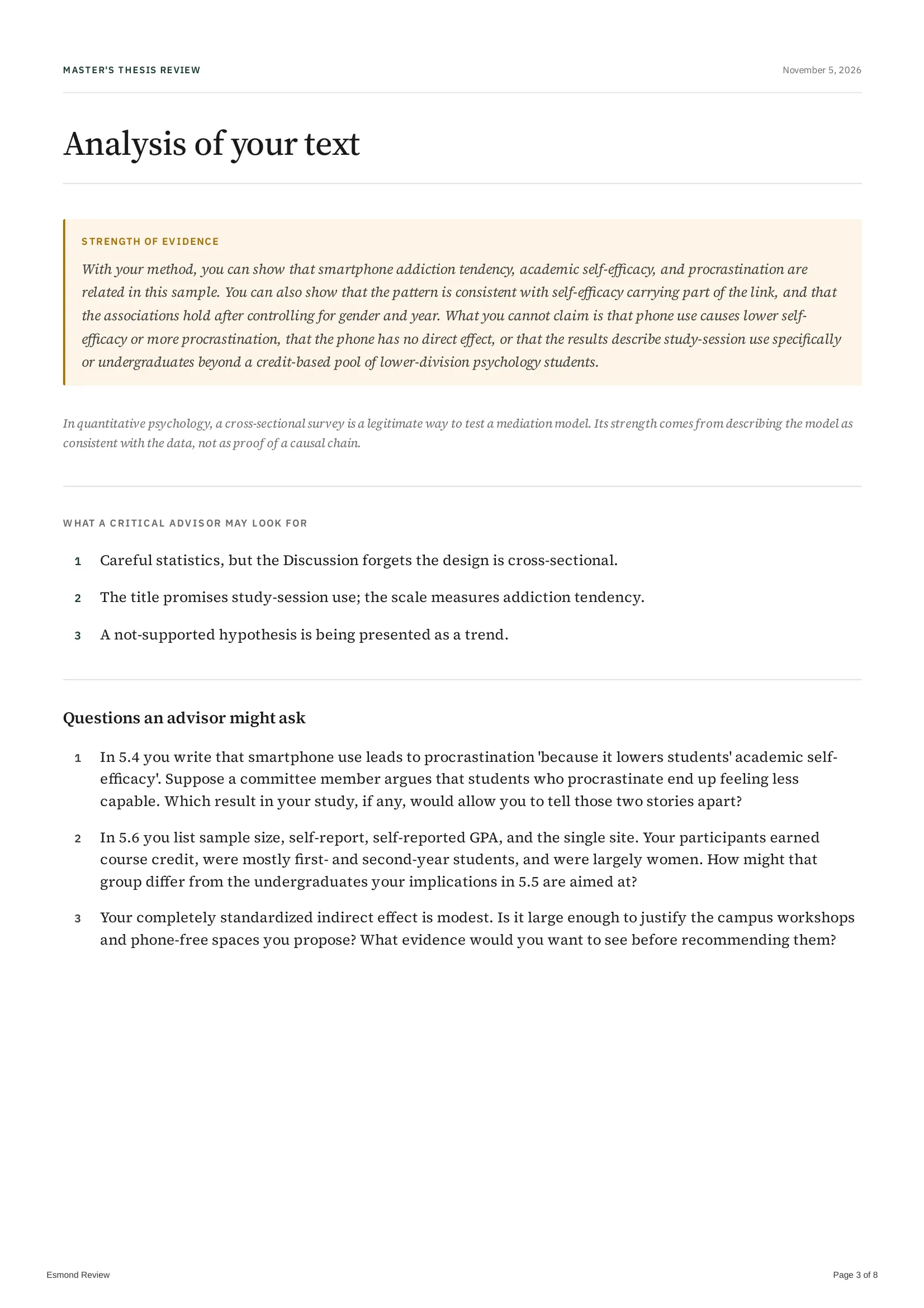
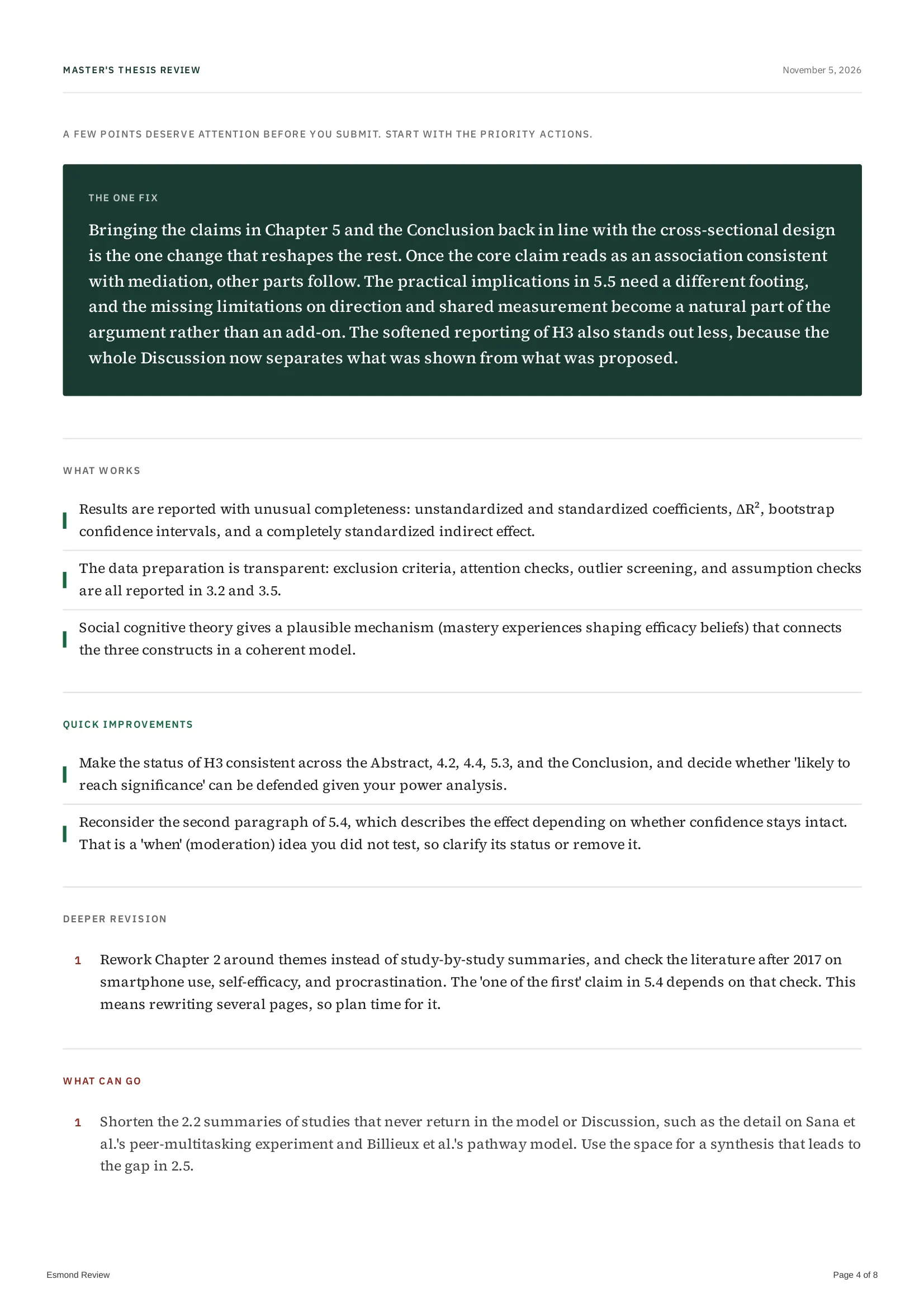
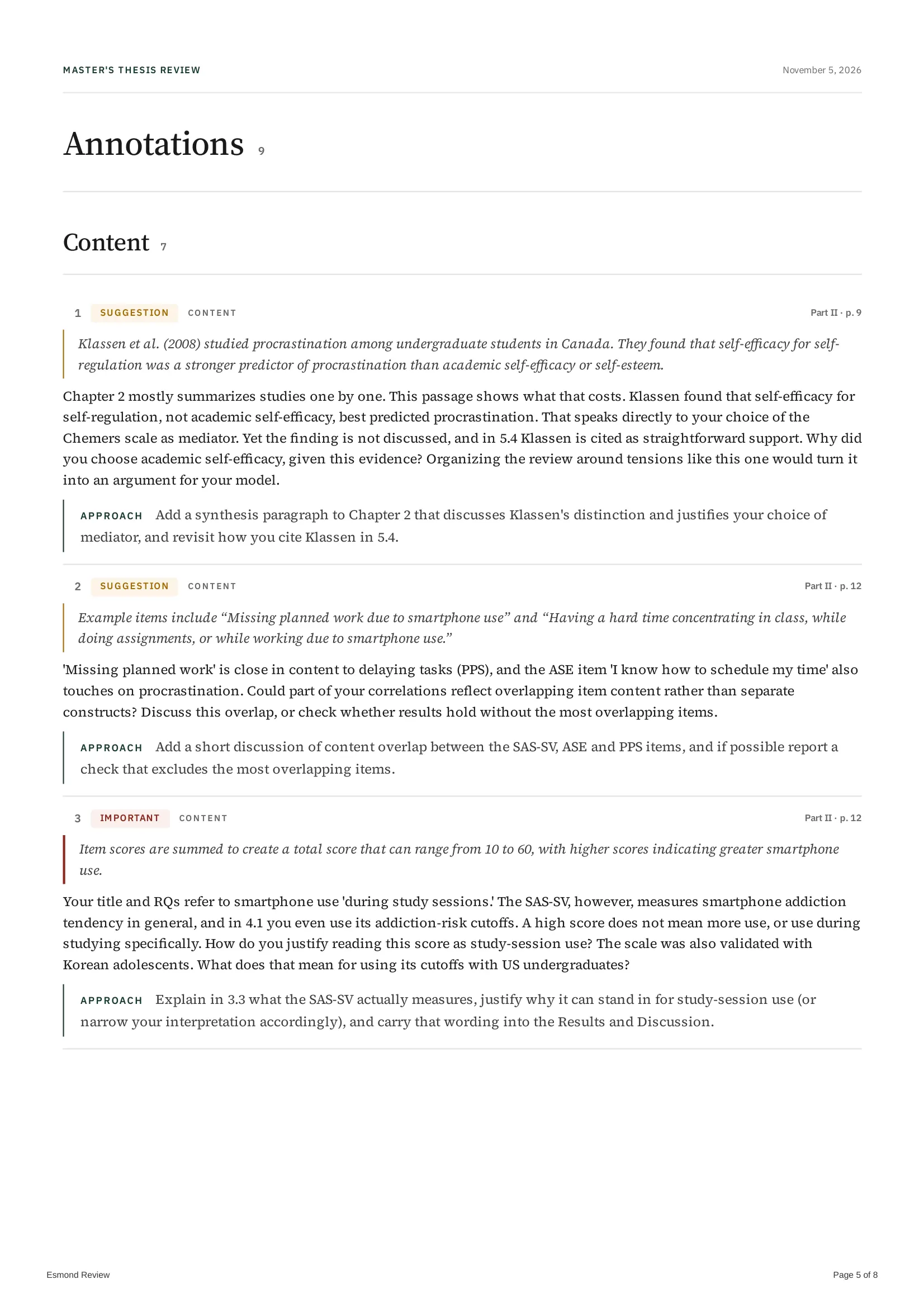
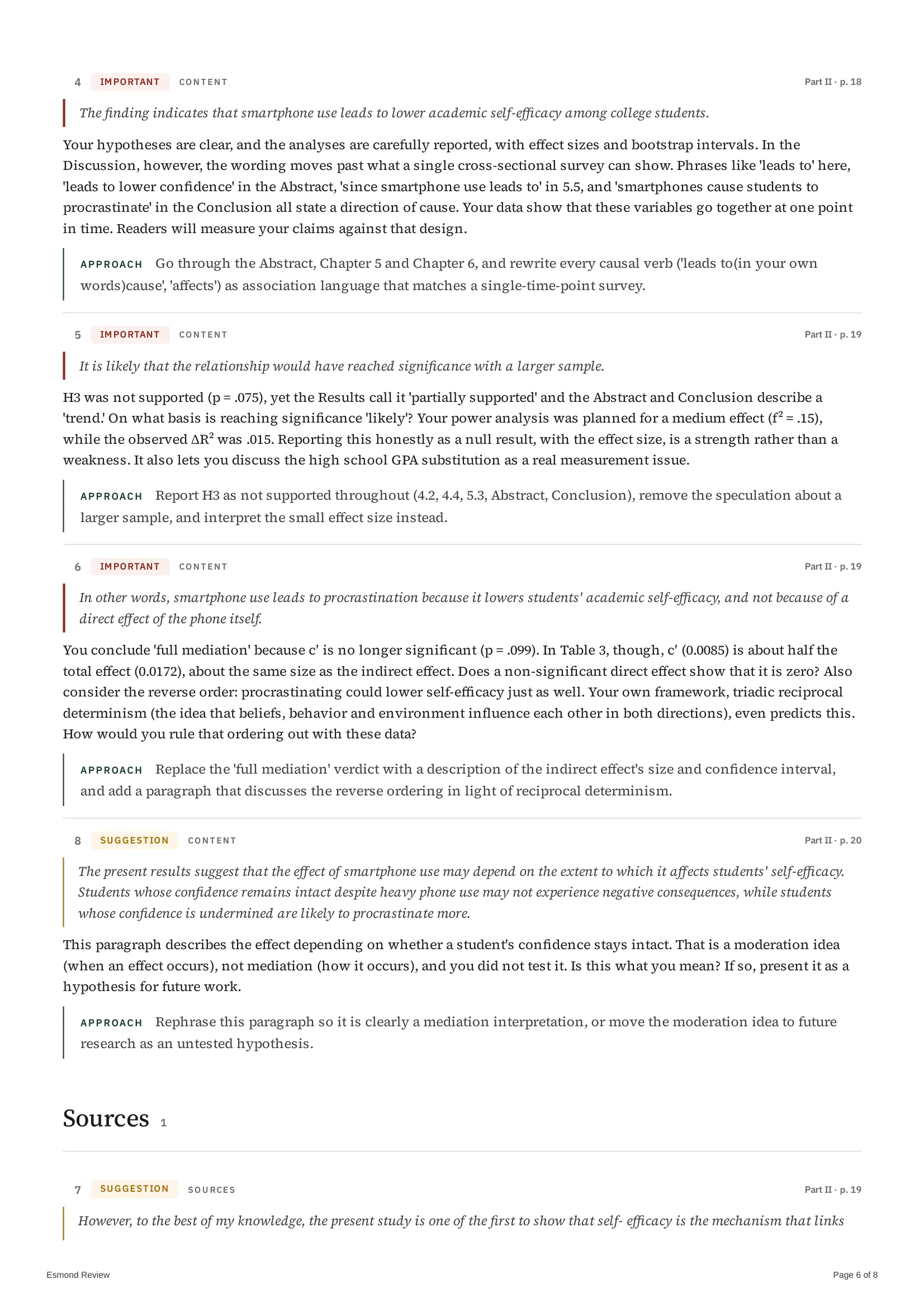
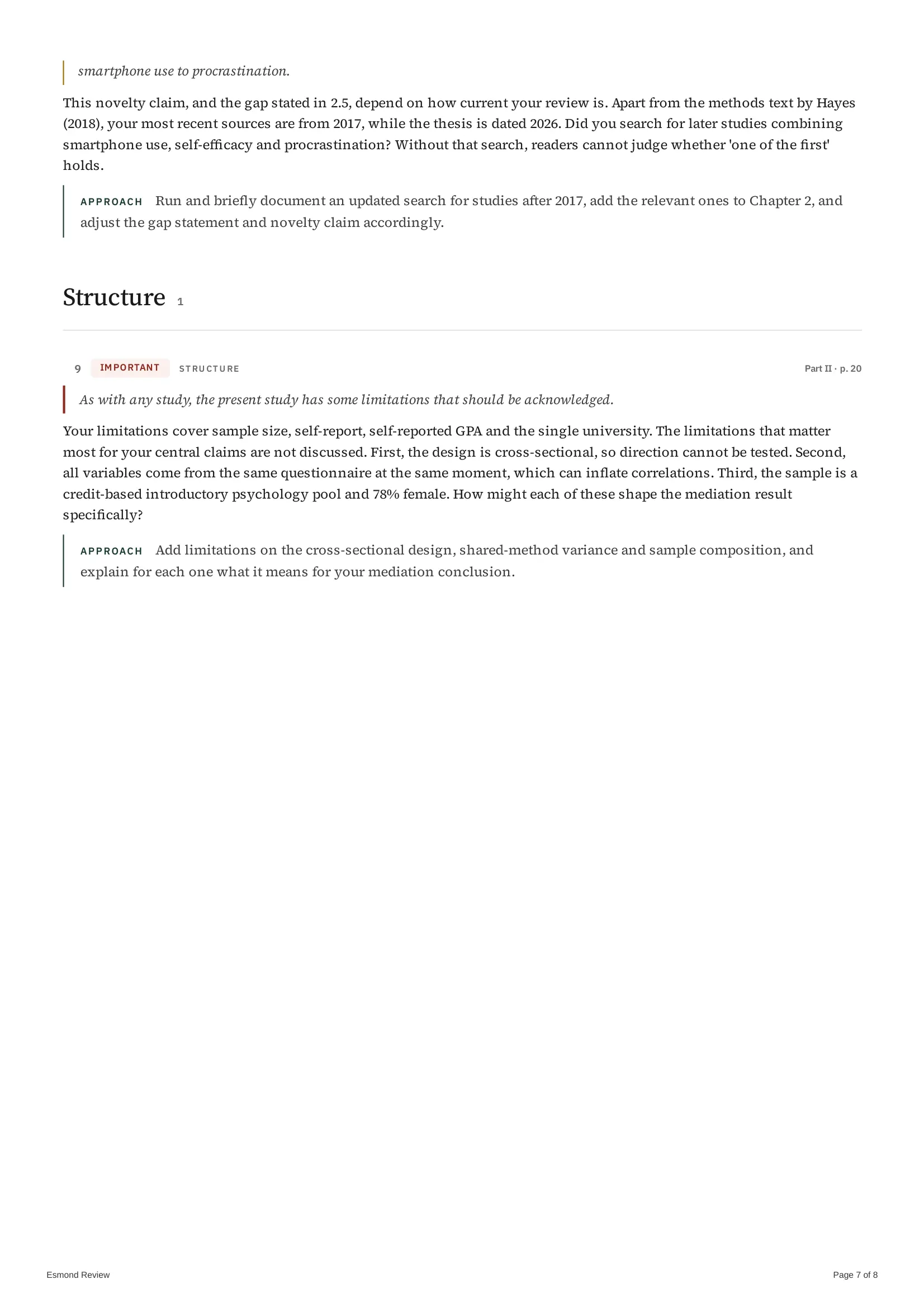
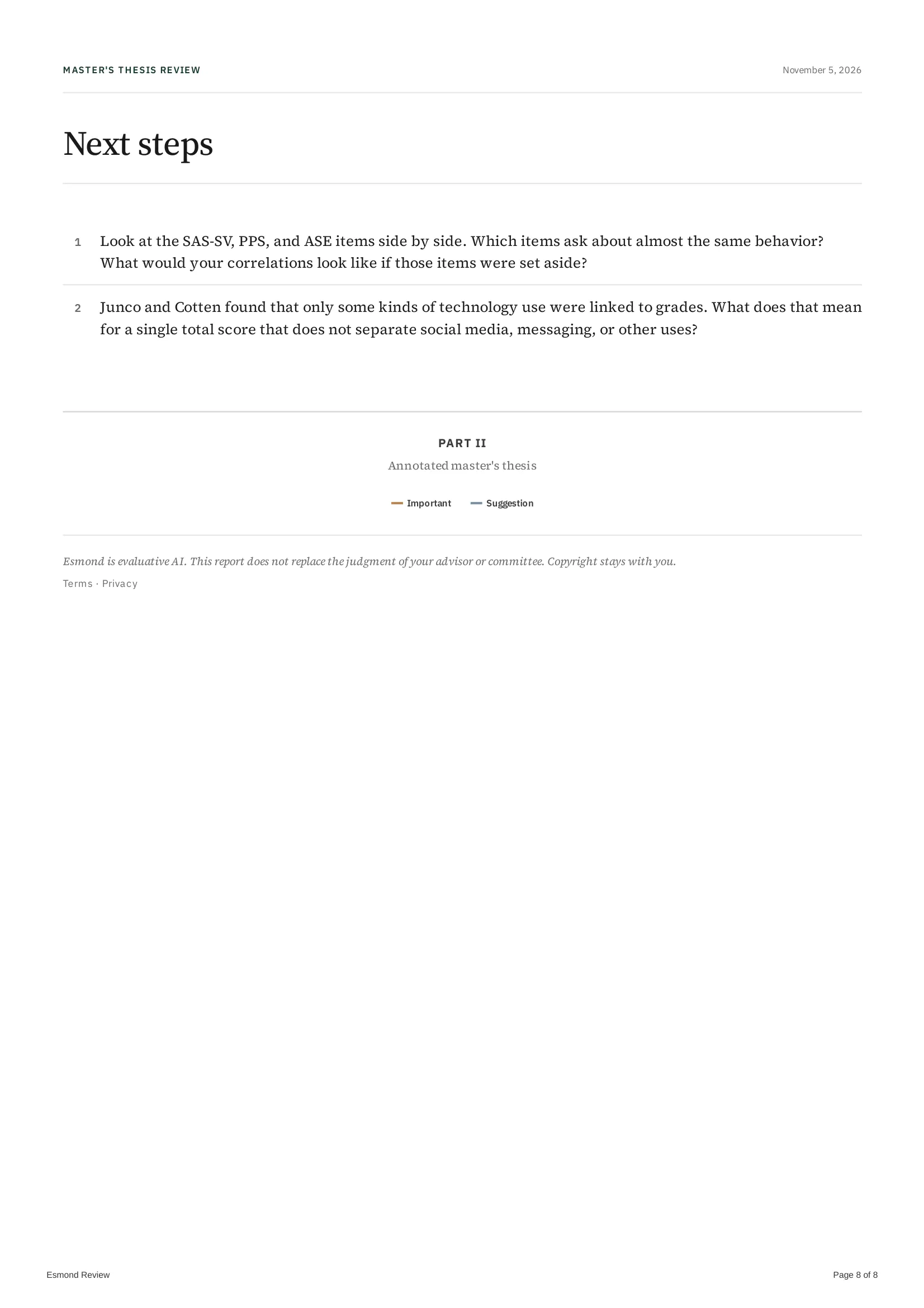
Esmond reads your honours thesis draft from within your field. It can flag, in the text you upload, what a supervisor or second reader may question: a conclusion that answers a different question than the introduction asks, a chapter that promises an analysis it does not deliver, claims that have no citation, or a citation your text does not connect to the claim, numbers that differ between abstract and results. The sample report shows the format, and how Esmond works describes the steps.
Upload the whole draft if you can: Esmond then reads the chapters against each other, for example whether the conclusion answers the question the introduction asked. A single chapter gets a review of that chapter only.
Esmond does not check your thesis against your department's template, length rule, or ethics approval, and it does not say how the thesis will be assessed. You decide what to change.
Read on November 21, 2026.
Last revised
Get your paper evaluated before you submit