Abstract
The research component of a South African honours degree runs from a proposal to ethics clearance, data collection, and a report of roughly 6,000 to 12,000 words in the guides quoted here. Rhodes Geography states that ethics applications cannot be considered retrospectively. Wits' School of Education does not assess its BEd Honours project on new knowledge, and Cornerstone Institute moderates honours research internally and externally.
The honours research report is the supervised research component of a South African honours degree (BA, BSocSci, BCom, BEd, BSc Honours), preceded by a research proposal. This page covers what the research component of an honours year is, what a proposal contains, why ethics clearance shapes the calendar, how the report is structured, and what supervisors and moderators check. Guides from Rhodes, Wits, Cornerstone Institute, Unisa, MANCOSA, and Nelson Mandela University are quoted or cited.
In short
Honours in South Africa is a postgraduate degree after the bachelor's, normally one year full-time, and the honours degrees in the guides quoted here include a supervised research component alongside coursework. The name varies: research report, research project, research essay, or, in Nelson Mandela University's Business Management department, a mini-treatise. Wits' School of Education describes its BEd Honours project this way: “It is a relatively limited and focused project which attempts to address a research question (and some related sub-questions) either in an empirical or a conceptual way.”
That scope sets the reader's expectations. The same handbook continues: “Thus, while research in general (as discussed above) may involve the discovery of new knowledge, an Honours Research Project does not have this as an assessment criterion.” What counts instead, in its words, is an understanding of the research problem and its history, knowledge of a suitable method, and a logically structured, coherent report with correct citation. At master's level, the research becomes a dissertation; the UNISA AI rules page covers that stage at Unisa.
The proposal comes first and is assessed or presented before the research may start. Rhodes University's Department of Geography lists what it must contain: a problem statement or research question, usually one aim, objectives or hypotheses, a literature review, a description of the study area where relevant, data collection methods for primary and secondary data, analysis techniques, a work plan with a timetable, and a reference list. The same guide puts an honours proposal at normally no more than 3,500 words, about six to nine pages of text. At Rhodes Geography, proposals are often also presented as a departmental seminar.
Wits' School of Education asks that the research question be clear, focused on a limited area, and complex enough to be arguable, and that the topic be doable within the time for the proposal, ethics clearance, research, and report. In 2022, Unisa's College of Graduate Studies ran honours research training on the same steps; its stated aims included to “Provide information about the research process, the functions, and components of the research proposal as well as the research report.” At MANCOSA, the student portal follows the same order: a topic goes for approval, then the proposal, which the supervisor signs off, then chapter reviews, and finally the research report.
When you look at an honours research proposal example or template from another university, check it against your own department's list. A proposal that a reader can act on states one question, objectives that each lead to data, a method for each objective, and a timetable that leaves weeks for ethics review.
At Rhodes Geography and Wits' School of Education, research with human participants needs ethics clearance before data collection; your department's rules decide the details. Rhodes Geography: “This application cannot be considered retrospectively.” At Wits' School of Education, a conceptual project based on texts still needs an ethics waiver application, and the report's title page carries the protocol number: “The title page should contain the title of your research project, your name and student number, the name of your supervisor, and quite importantly, the Ethics Protocol Number you received from the Ethics Committee.”
At Cornerstone Institute, proposals go to the institute's Research and Ethics Committee before the student continues: “During the approval process, the committee checks primarily for adherence to all ethical guidelines and appropriateness and feasibility of the research proposals.” Wits' School of Education lists the conditions it expects for research with participants: informed and voluntary participation, the right to withdraw, anonymity of participants and institutions, and raw data kept confidential, stored securely, and destroyed when the project is complete. A report typically also describes permission from the schools, companies, or clinics where data were collected.
Rhodes Geography and Wits' School of Education set out similar sequences. On length, Rhodes Geography sets honours research reports at normally 6,000 to 12,000 words, including the reference list but not the appendices and preliminaries. The Wits BEd Honours project runs from 8,000 to 10,000 words. The table shows the empirical shape and the conceptual variant Wits allows.
| Part | Empirical report | Conceptual report | What readers look for in it |
|---|---|---|---|
| Title page and declarations | Title, supervisor, ethics protocol number, plagiarism and AI declaration where required | Same, with the ethics waiver reference | Ethics reference present; declaration signed |
| Abstract | Purpose, method, main findings, conclusion | Purpose, argument, conclusion | Findings stated, not only the topic |
| Introduction | Context, aim, research question and sub-questions, rationale | Same | One question the report can answer in the time available |
| Literature review | The debate that shows why the study is needed | The debate the argument enters | An argument across sources, not a summary per author |
| Methodology | Approach, sampling, data collection, analysis, ethics | How texts or concepts were selected and read | Enough detail for another researcher to repeat the study |
| Findings and discussion | Results per objective, then interpretation against the literature | Chapters that build the argument | Each objective answered; claims within the data |
| Conclusion | Answer to the question, limitations, recommendations | What the argument establishes | No new material; recommendations that follow from findings |
| References and appendices | Department style; instruments, consent forms | Department style | Every citation in the list and every list entry cited |
Cornerstone Institute describes how honours research is assessed: “Faculty supervisors bear primary responsibility for the assessment of research projects, but honours level research is also subject to internal and external moderation.” At MANCOSA, the student portal includes a step for submitting the final research report for external assessment. So the report is read by someone who supervised it and by others who did not. Typical checks, to set against your department's guide:
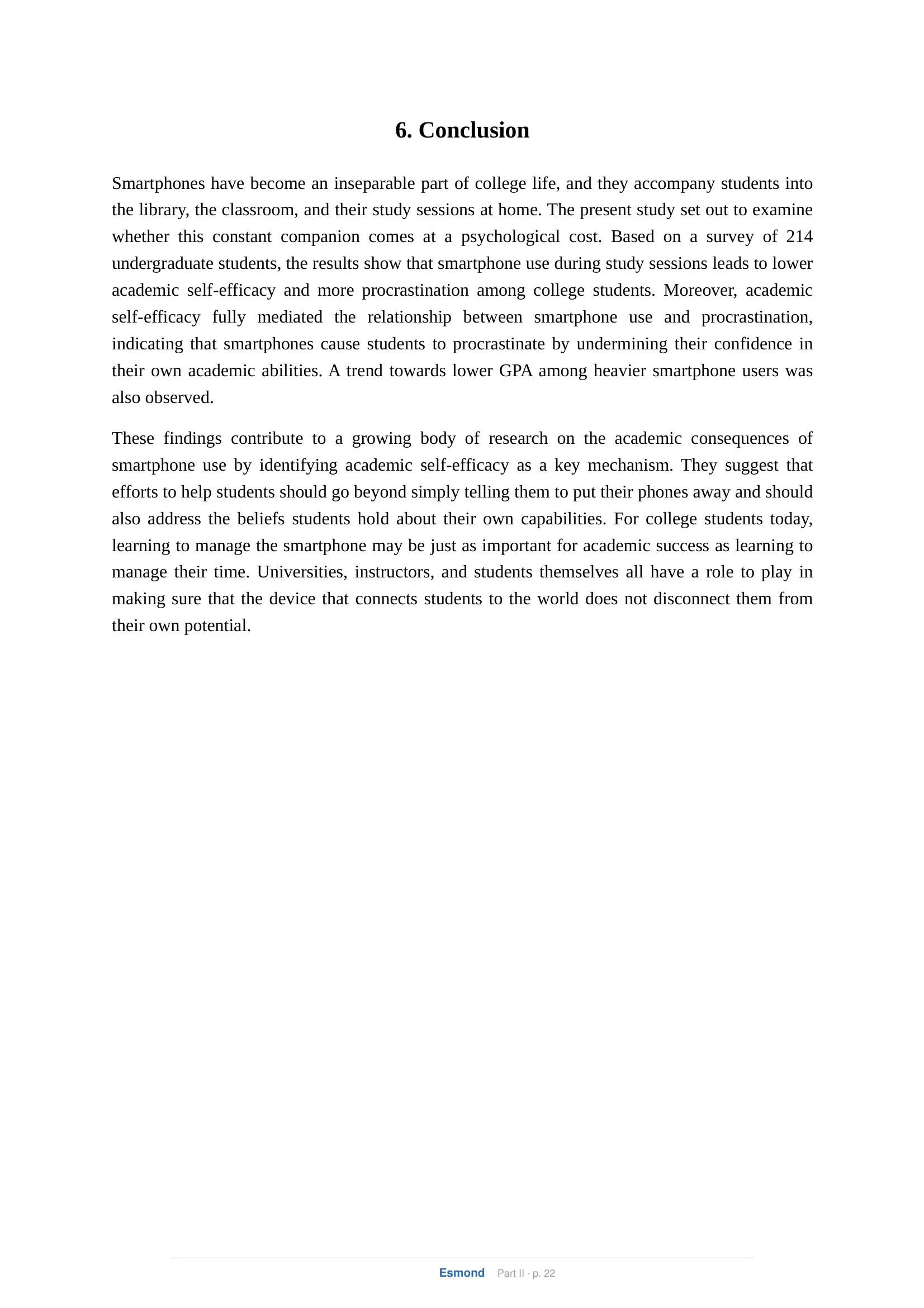
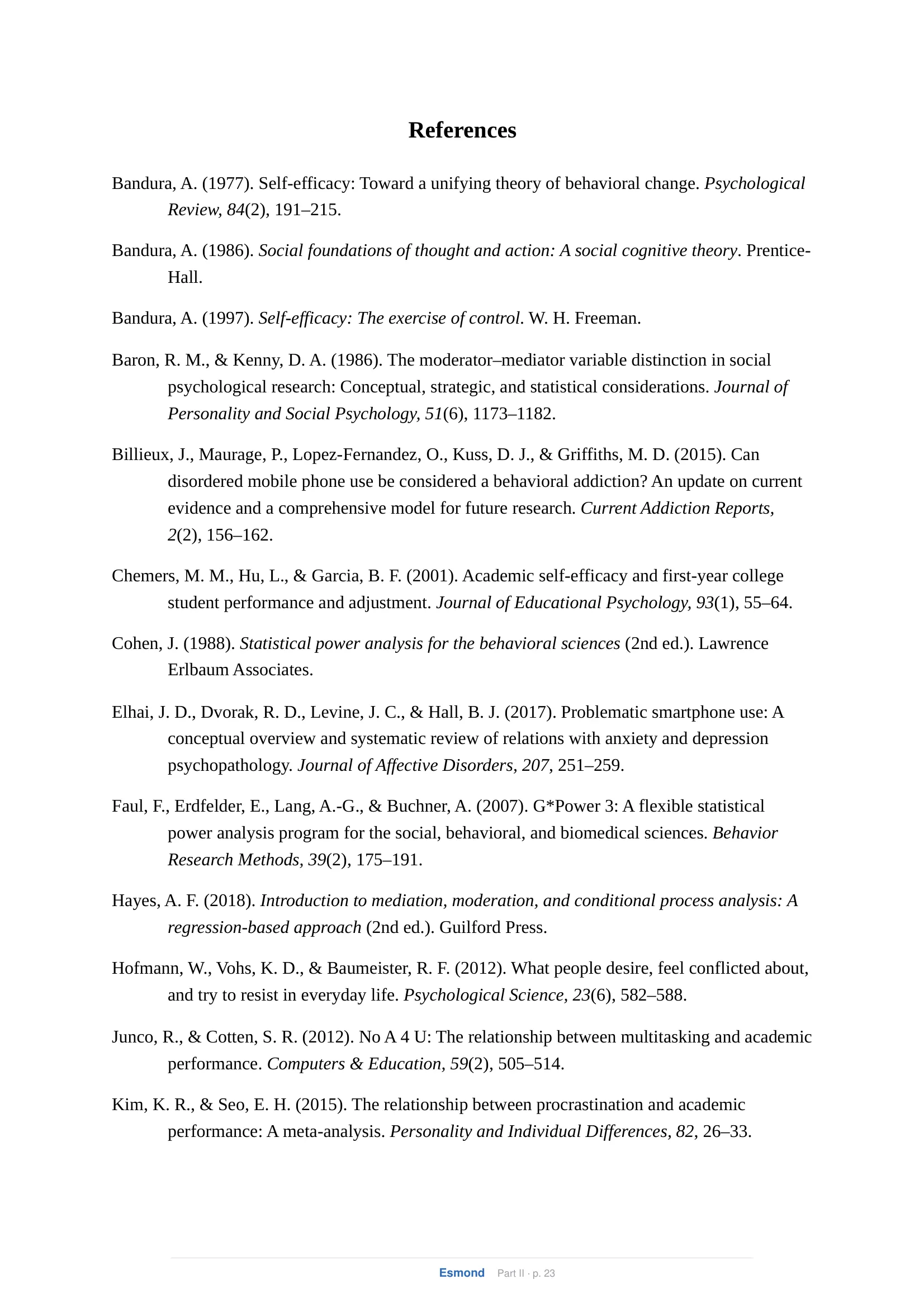
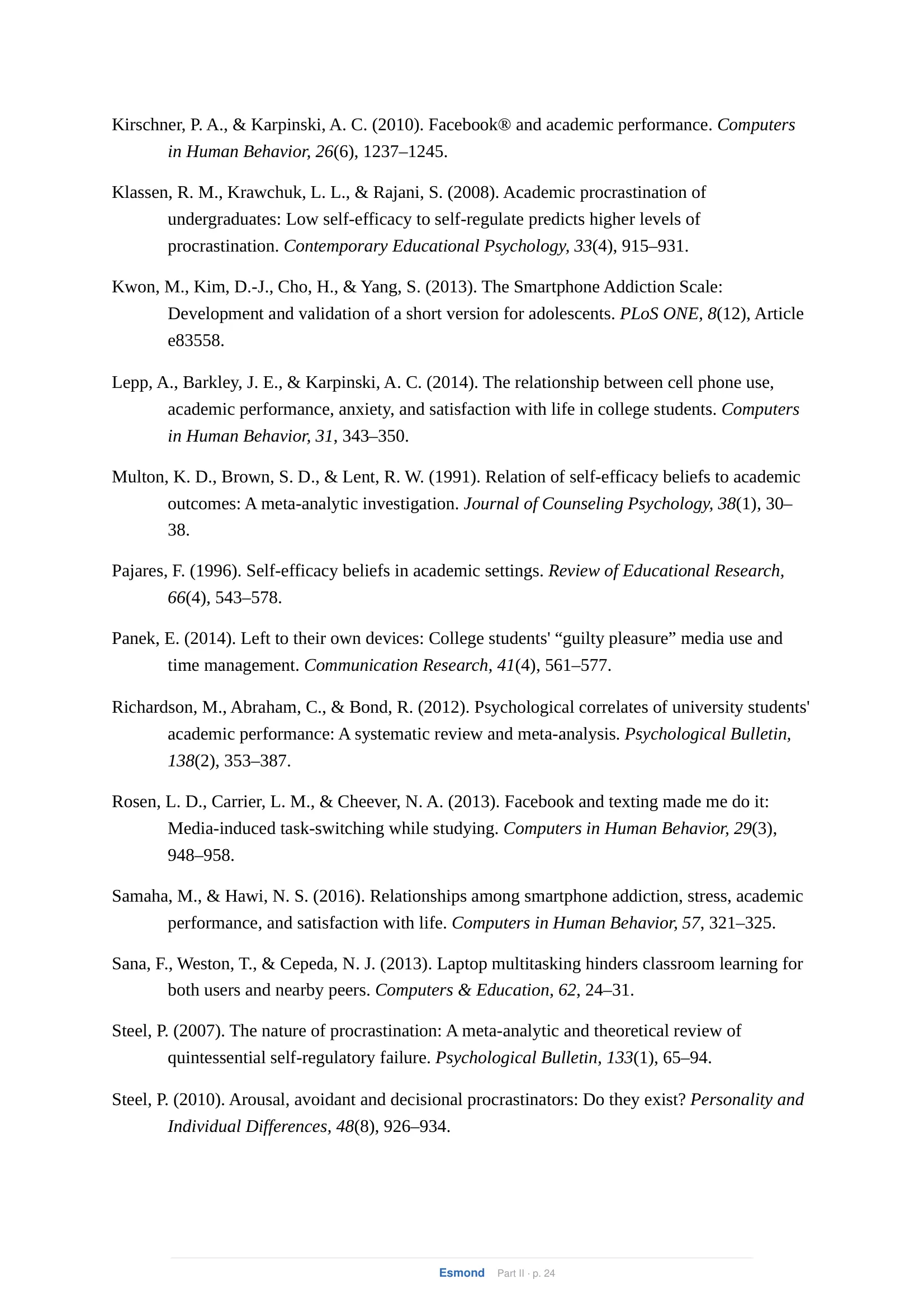
These fragments are made up. None of them comes from a real dissertation.
Your supervisor reads the proposal and the drafts; Cornerstone lists feedback on the analysis of the literature and data, the structure of the argument, and the presentation of the research among the supervisor's tasks. Proposal seminars, as at Rhodes Geography, give feedback from staff and other students. The library helps with searches and referencing, a writing center can read drafts, and Unisa's 2022 honours research training covered the library, academic writing skills, the literature review, and ethics. Nelson Mandela University's Business Management department publishes examples of honours mini-treatises, which show finished reports in that field.
Feedback on your own draft keeps the work yours; a report produced by someone else, a person or a tool, is not your own work. AI rules are set per institution and often per course. Rhodes Geography gives each course or assignment its own AI statement: “It will clearly state when it is allowed and when it is not.” It adds a data rule: “You should not enter confidential data, including non-public research data, into publicly available generative AI tools”. Ask your supervisor before you use any AI tool on your report, including one that only comments, and keep interview transcripts and participant data out of it. The UKZN and Wits pages quote those universities' declaration rules.
The citation checker compares your reference list with your in-text citations, and the thesis checklist before you submit covers the general checks.
The research component of a South African honours degree: a supervised study on a limited question, reported in about 6,000 to 12,000 words in the guides quoted here (Rhodes Geography 6,000 to 12,000; Wits BEd Honours 8,000 to 10,000). Departments call it a research report, research project, research essay, or mini-treatise.
At Rhodes Geography: a research question, one aim, objectives or hypotheses, a literature review, the study area where relevant, data collection and analysis methods, a work plan, and references, in no more than about 3,500 words. Your department's list decides.
Ask your supervisor or the honours coordinator for examples from your own department; Nelson Mandela University's Business Management department publishes honours mini-treatises online. In an example, look at how objectives return in the findings and how the methodology reports sample and ethics.
Your department is the place to ask. At Cornerstone Institute, psychology honours proposals go to the Research and Ethics Committee, which checks ethics, appropriateness, and feasibility, while the supervisor checks whether the project and method suit the qualification. A model proposal shows those points answered.
At Rhodes Geography and Wits' School of Education, research with human participants needs clearance before data collection; Rhodes Geography states the application cannot be considered retrospectively, and Wits' School of Education also asks conceptual projects for an ethics waiver application. Your department's rules decide.
Yes, from your supervisor first. For outside or AI feedback, check your course's rules and ask your supervisor. Esmond reads a draft you upload and comments on it without adding text.
Esmond evaluates every assignment before you submit. It never writes it.
Esmond is an AI tool that doesn't write for you. If your course doesn't allow any AI tools, don't use Esmond for that work. If you're unsure, ask your instructor or advisor.
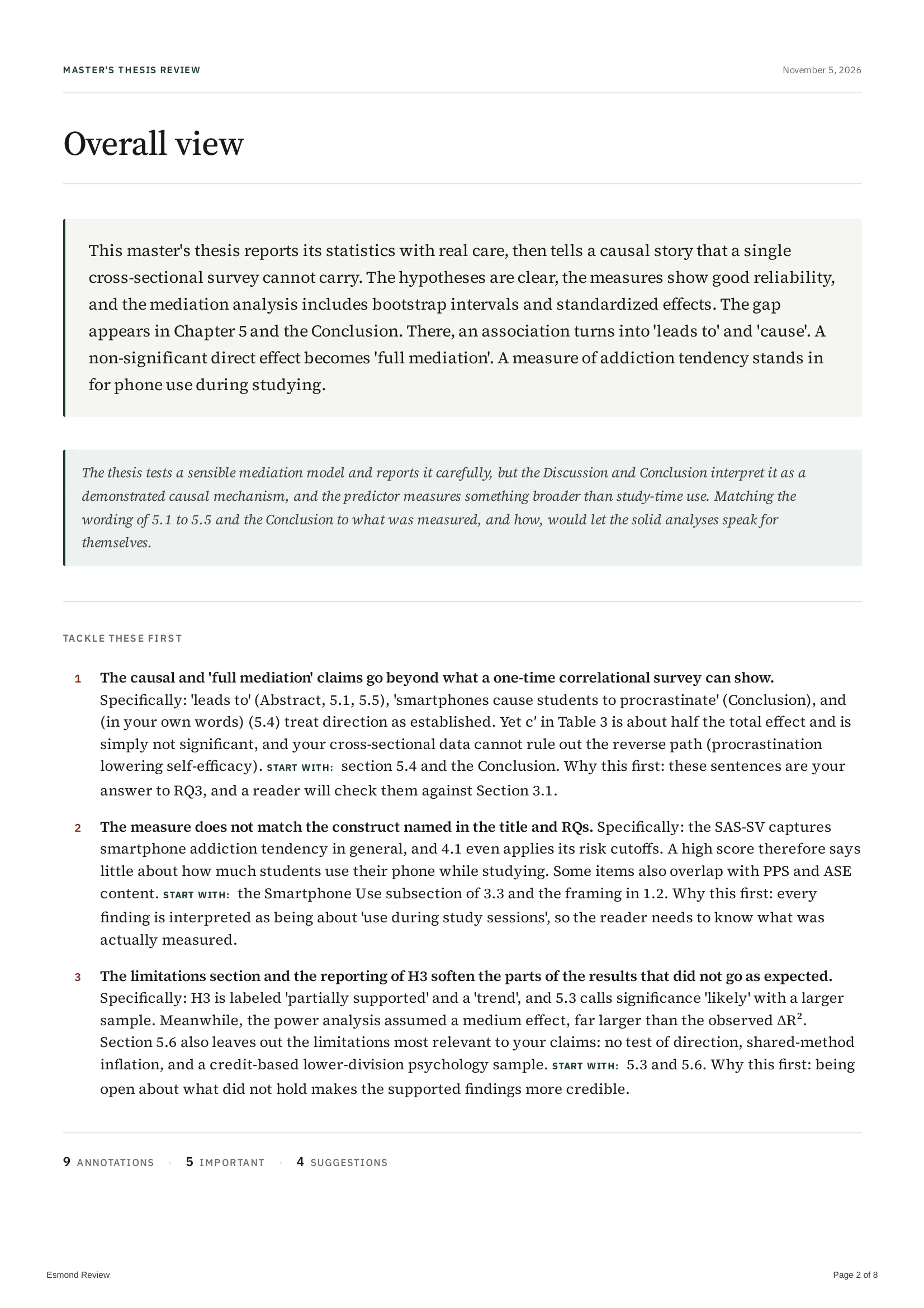
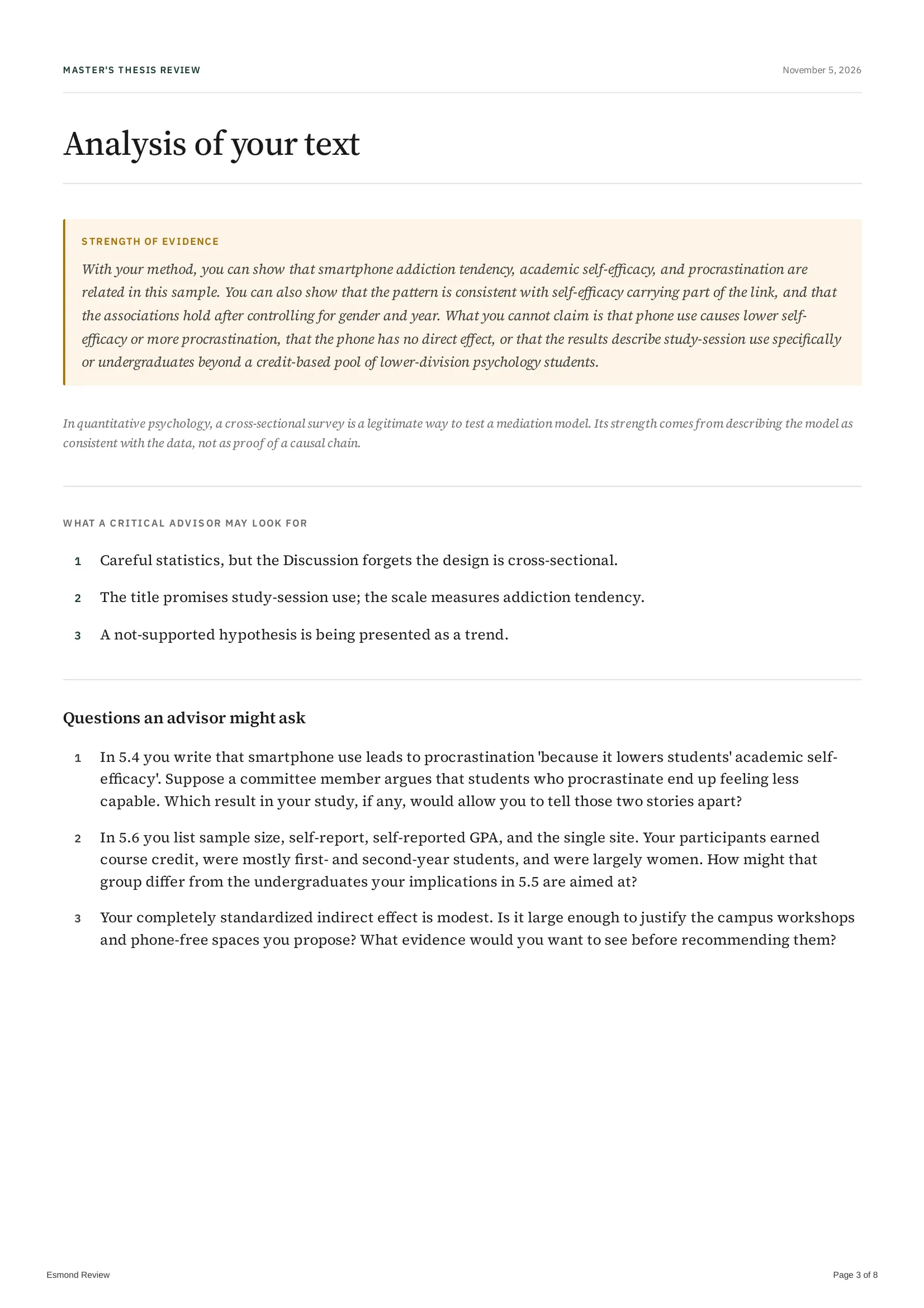
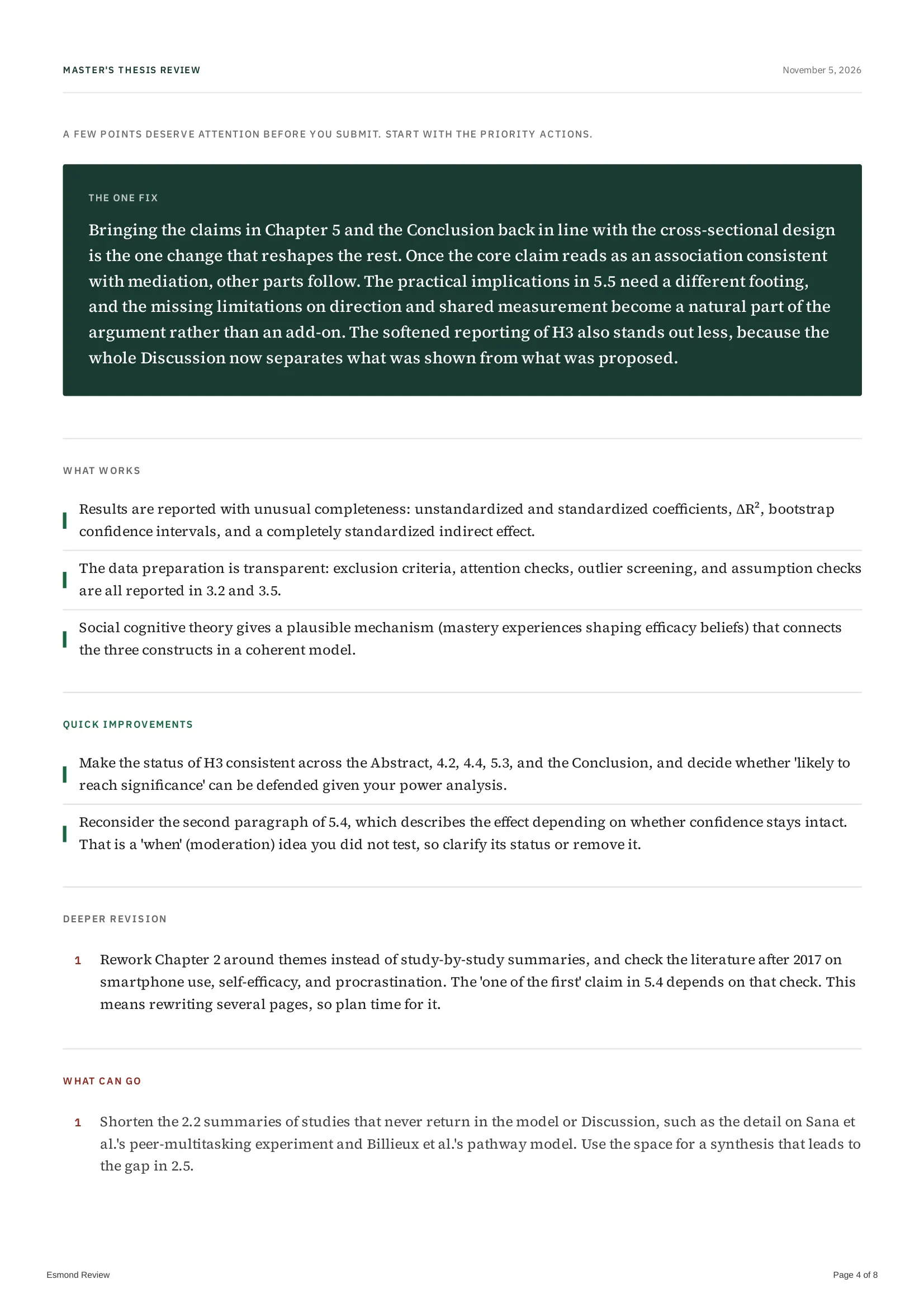
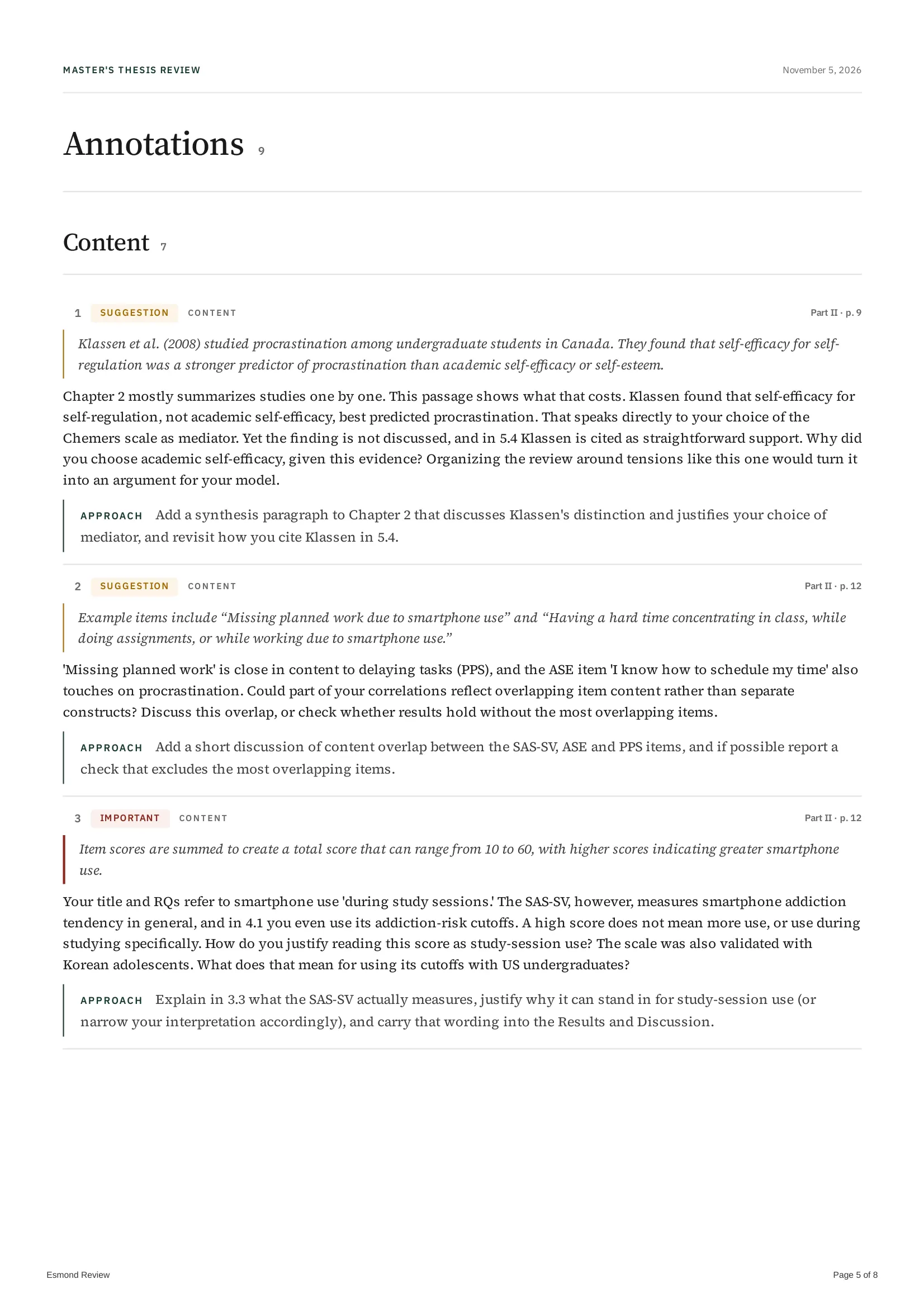
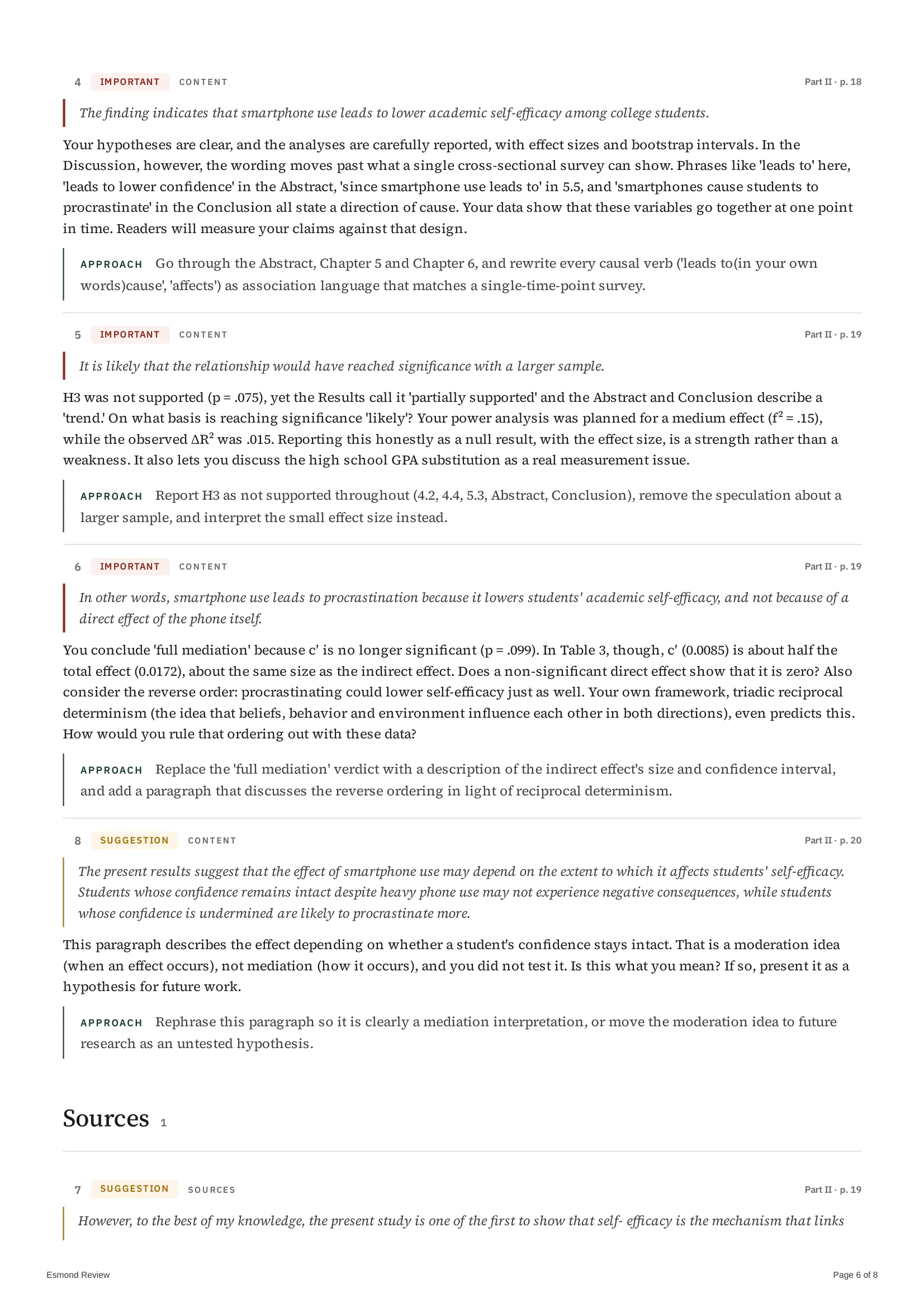
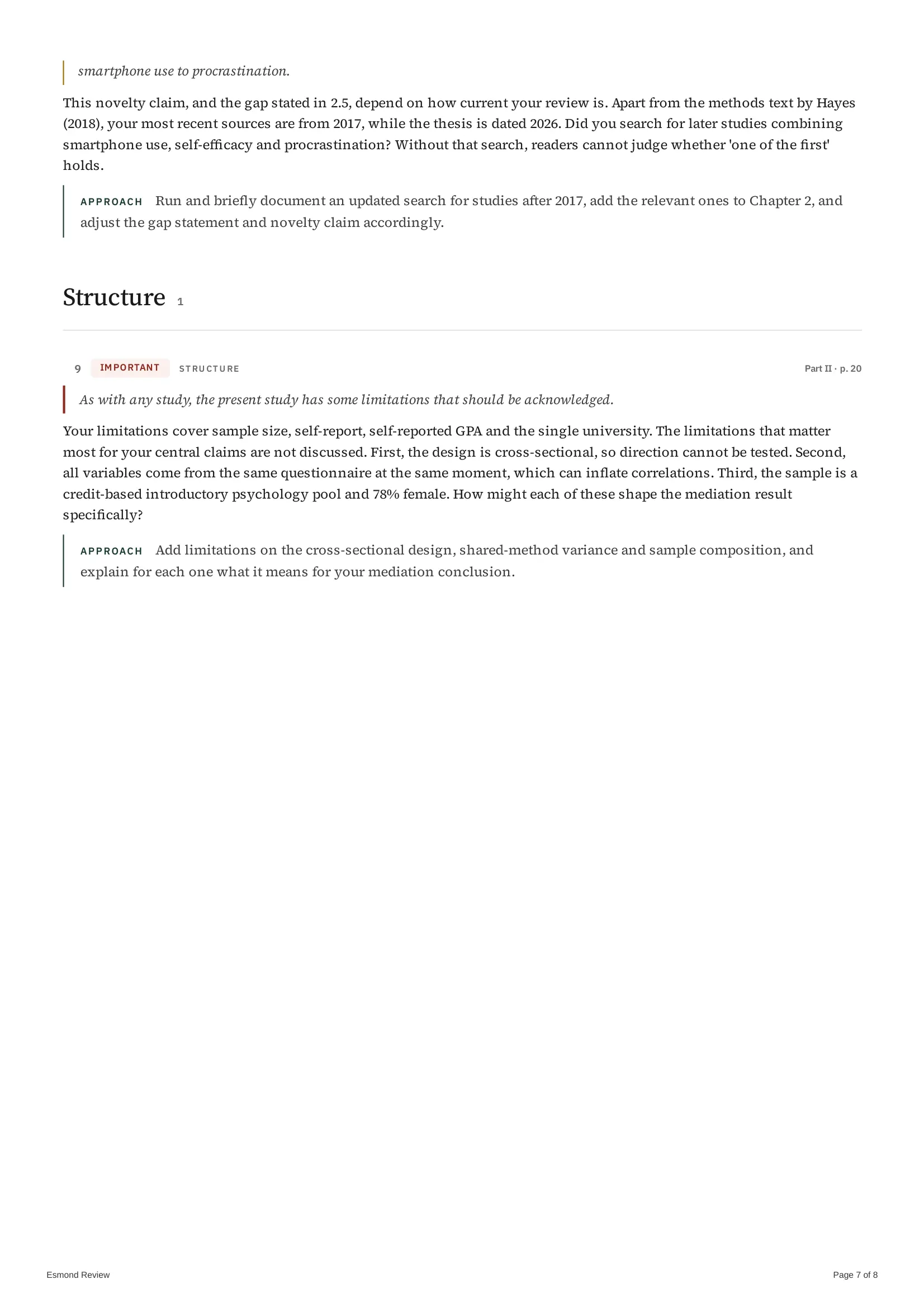
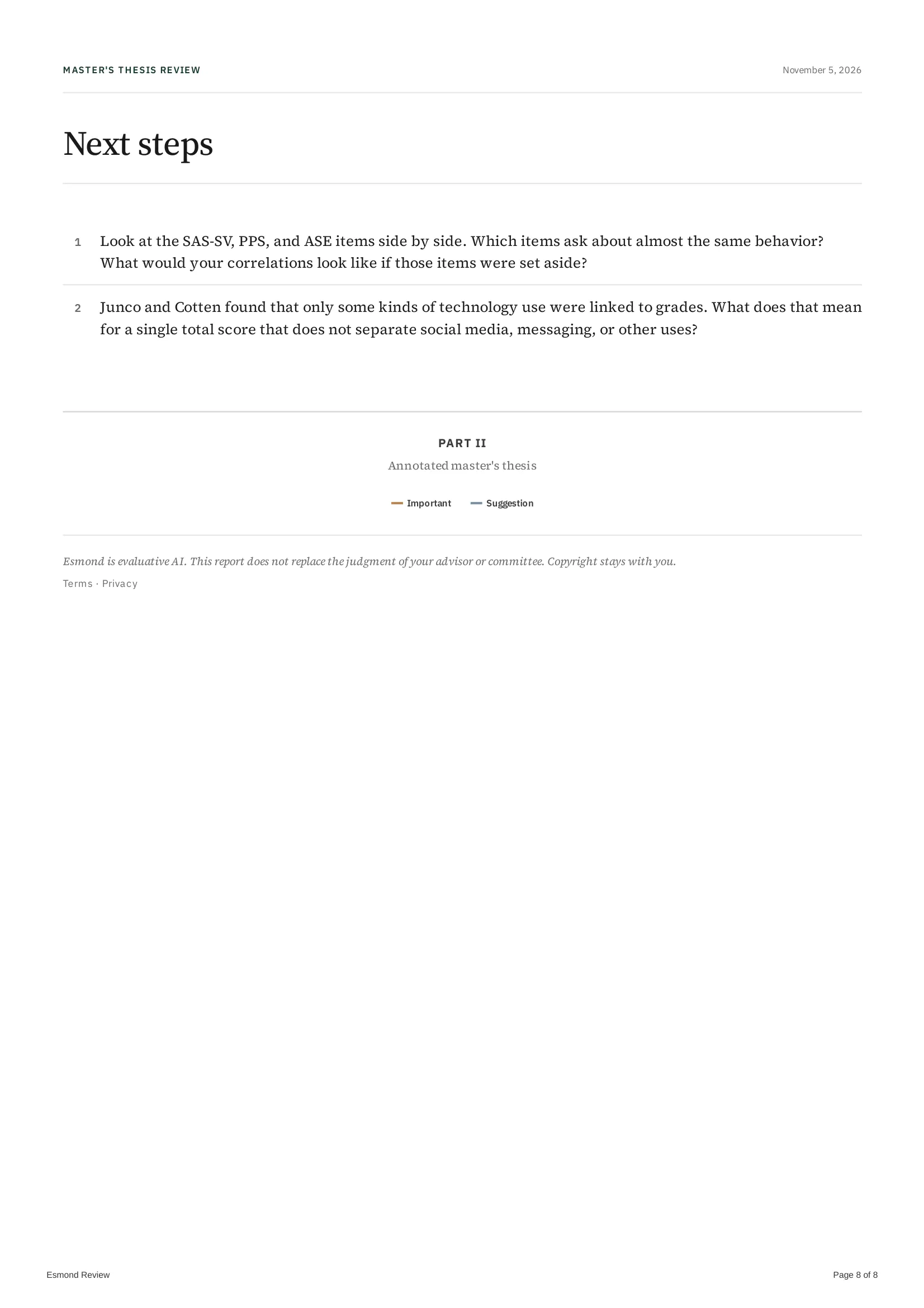
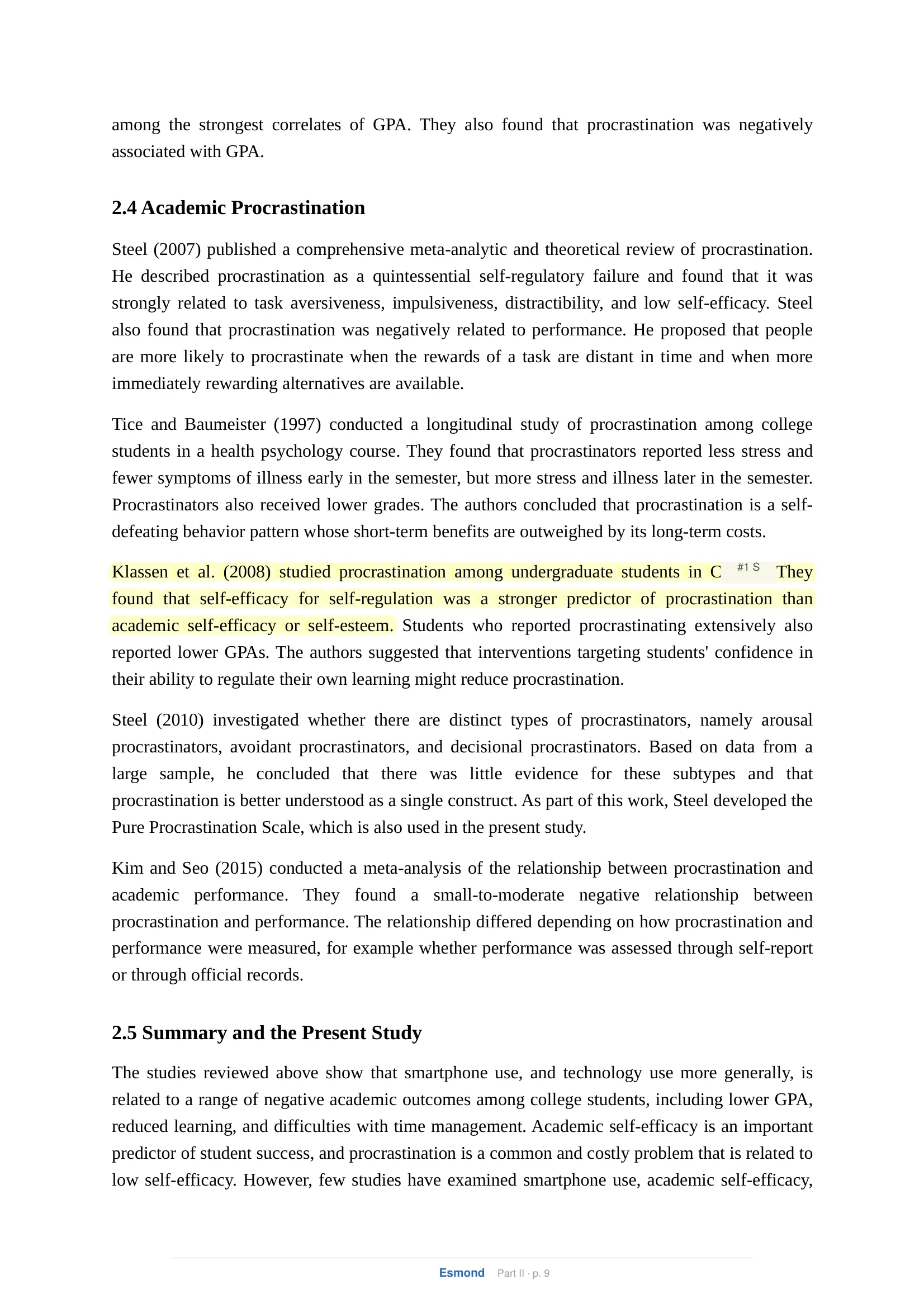
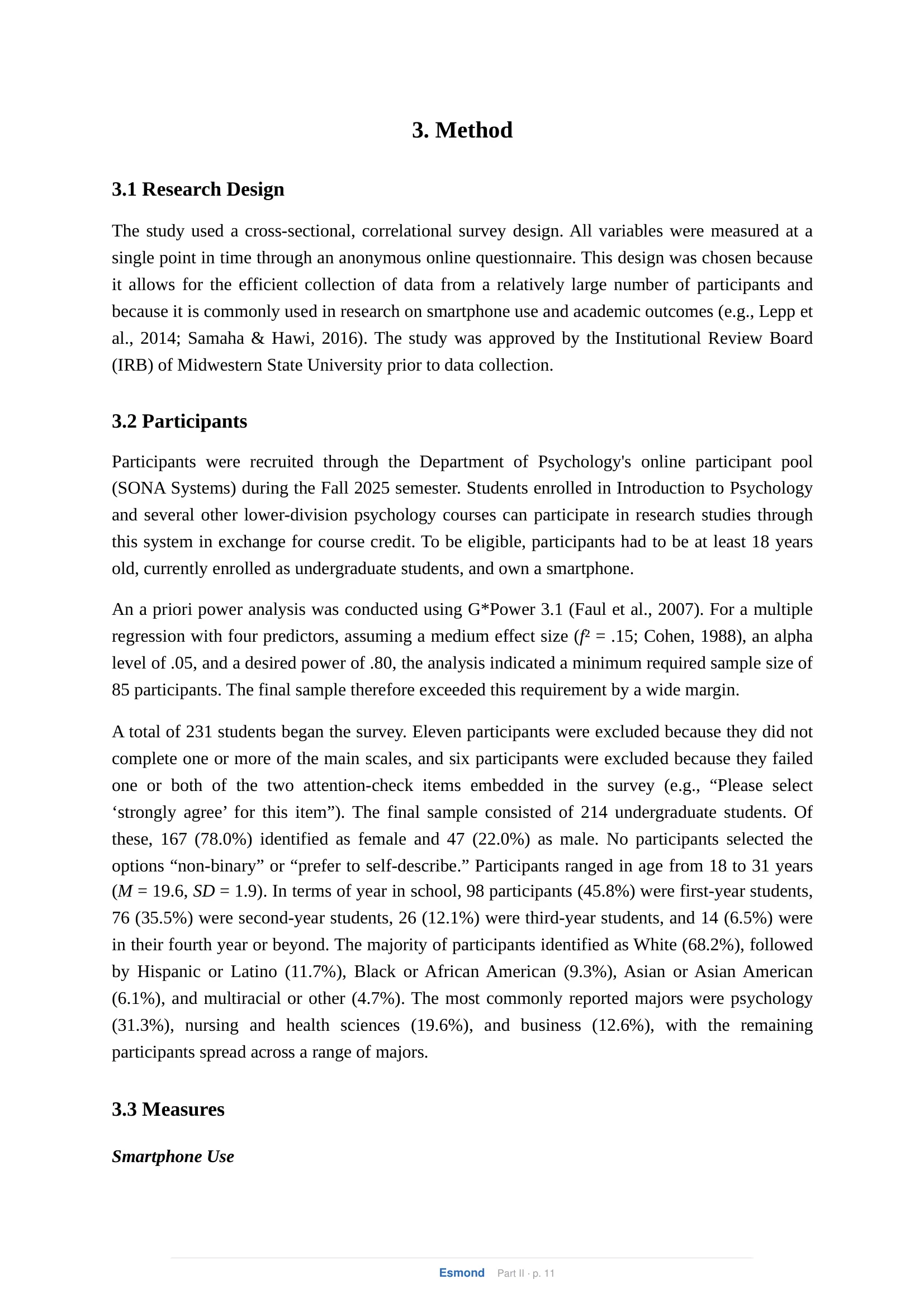
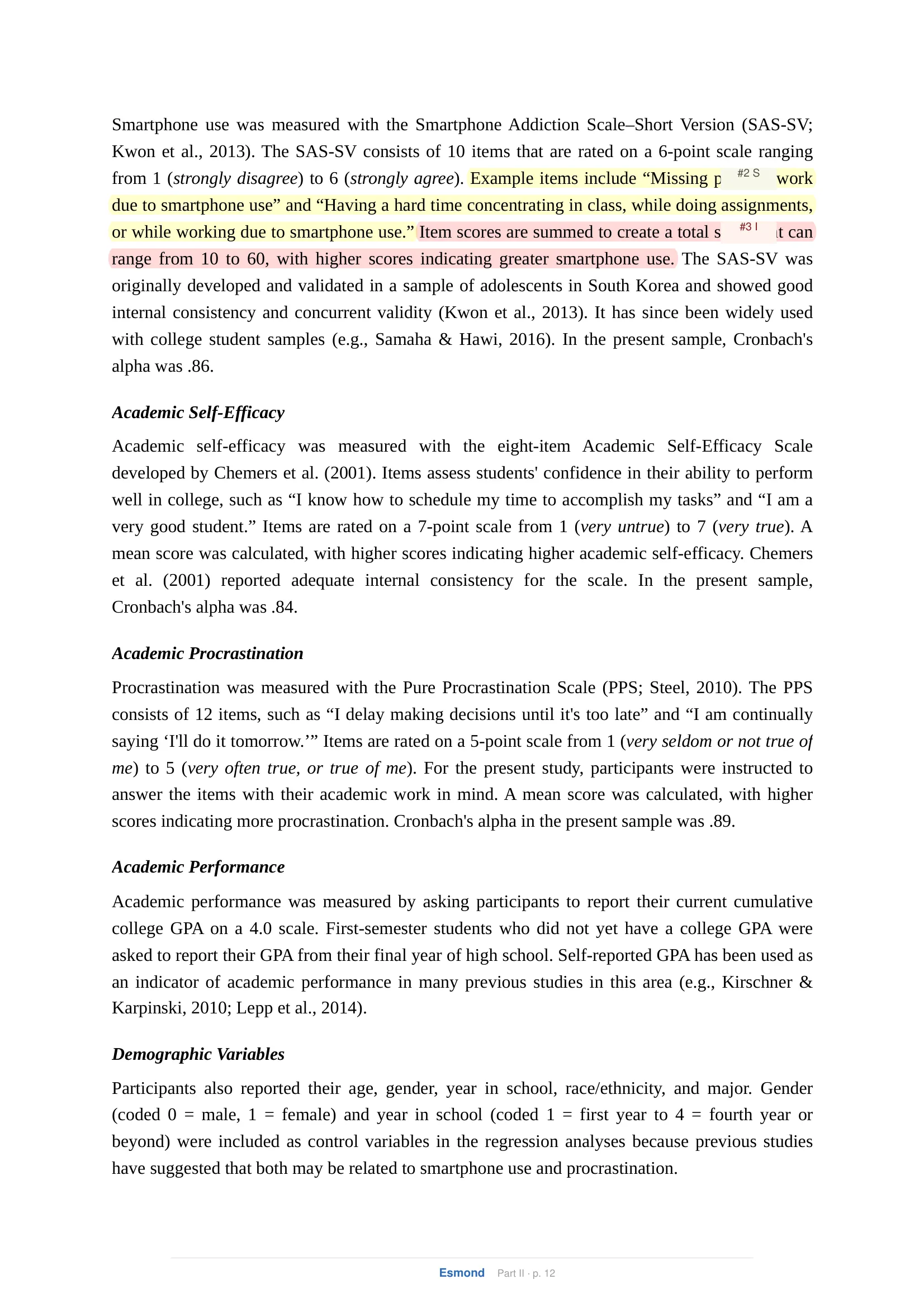
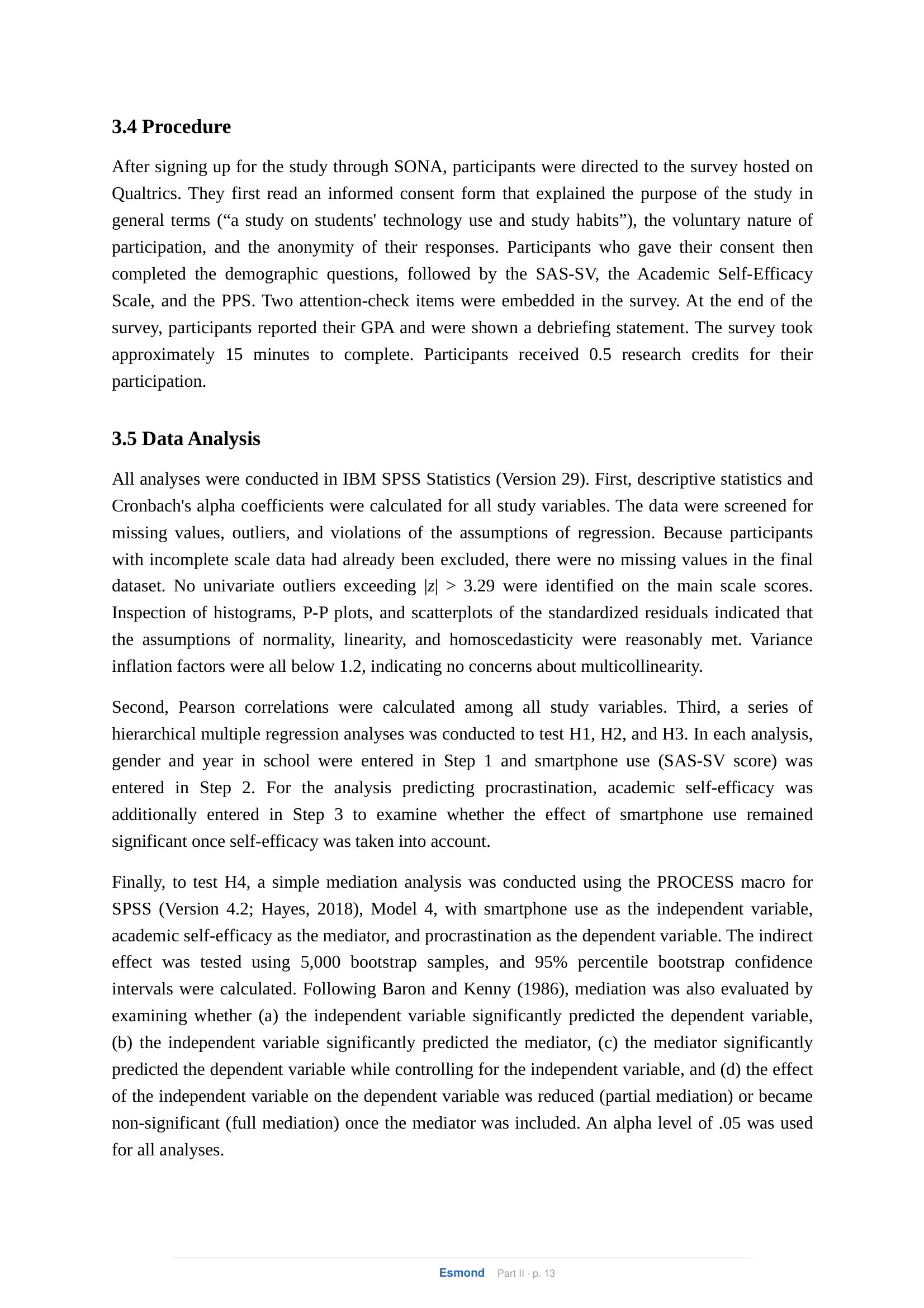
Esmond reads your honours research report or proposal against the conventions of your field. It can flag, in the text you upload, objectives that do not come back in the findings, a sample size that changes between chapters, participants who are not mentioned in the methodology, recommendations without a finding behind them, and claims of cause from a single survey. The sample report shows the format, and how Esmond works describes the steps.
Upload the whole draft if you can: Esmond then reads the chapters against each other, for example whether the conclusion answers the question the introduction asked. A single chapter gets a review of that chapter only.
Esmond does not check your ethics clearance, your department's template, or your word count, and it does not say how the report will be assessed. Upload the report text, not interview transcripts or participant data. You decide what to change.
Read on November 21, 2026.
Last revised


Get your paper evaluated before you submit