Abstract
Any generative AI use in a University of Lethbridge thesis or project is disclosed on a preamble page explaining how, where and why it was used, under section 28 of the graduate school's Policies and Procedures. Your supervisory committee may permit, limit or ban AI tools, and section 28 keeps you responsible for facts and citations and treats undisclosed use as an academic offense.
Yes, if you disclose it and stay within what your supervisory committee permits. The School of Graduate Studies (SGS) Policies and Procedures, version 5.2 of May 21, 2026, require a page in the thesis preamble headed "Uses of Generative AI in this Work" whenever generative AI played a part. Undisclosed use is an academic offense.
In short
ULethbridge sets its thesis rule on AI in the SGS Policies and Procedures, in a section titled Use of generative AI (section 28 in version 5.2, dated May 21, 2026). Any use of generative AI in producing a thesis or project is disclosed in the preamble, on a page headed "Uses of Generative AI in this Work". The section describes that page: “This page will explain how, where and why generative AI was used in the research presented or in the writing of the thesis.”
Section 28 then gives examples of uses that must be disclosed: organizing a literature review, generating hypotheses or research plans, and composing the text of the thesis or editing it. It calls the list not exhaustive. One exception: a thesis or project where generative AI was the object of study and was not otherwise used.
Ask your supervisor how the rule above applies to your thesis. If AI feedback on a draft is allowed, an online thesis review by Esmond comments on its content and adds no text to it.
Section 28 tells you to consult your supervisory committee if questions about appropriate use arise. The Student Code of Conduct gives the committee the power to decide. The university's page AI at ULethbridge, written for instructors, quotes section 5.2.1.10 of the code: “Instructors or Supervisory Committees shall clearly set out expectations and may choose to permit, limit, or ban the use of tools such as AI in research, assignments, and assessments in a program or Course.”
The next clause puts the duty on the student: “Students shall consult with their Instructors or supervisory committee on the appropriate use of AI tools and technologies.” The code adds that going against the committee's instructions on AI is an academic offense. So disclosure is always required, and the scope of use is your committee's call. Before you use Esmond or another AI tool on your thesis, ask your committee what it permits.
| Question | What section 28 says | What to note as you work |
|---|---|---|
| How | Explain how generative AI was used | The tool, the task, and what you did with its output |
| Where | In the research presented or in the text of the thesis | The chapter or section each use affected |
| Why | Explain why it was used | The reason, in one sentence per use |
| Which uses | Examples include literature review organization, hypotheses, research plans, composing or editing text; the list is open | A running log, so nothing gets lost by the end |
| Exception | Generative AI as the object of study, with no other use | A note in your methods that the tool was studied, not used |
Section 28 says the use of generative AI does not reduce your responsibility for the contents of the thesis, and it spells out what that means: “Students must verify that the material in the thesis is factual and that citations are correct.” A reference that a tool suggested and you never opened is your error once it appears in the thesis.
The section closes with the consequence: “The undisclosed use of generative AI in the creation of a thesis is an academic offence.” The sentence is about disclosure. On its wording, a use your committee permitted that is missing from the preamble page is still undisclosed.
Two other sections of the same document are worth reading next to section 28. Section 31 lets a student retain a copyeditor for grammar, spelling, punctuation and general style, on two conditions: written permission from the supervisor that outlines the work, and a statement in the preface or acknowledgments that the document was professionally edited. The copyeditor may not alter the content, structure or contributions.
Section 29 reserves the right of SGS staff and members to use plagiarism detection software at any stage, from proposal to final thesis, normally in a mode that does not add your work to the provider's database.
Hypothetical example, neuroscience. An MSc student uses a generative AI tool to draft analysis scripts for calcium imaging data, after her committee agreed to it. Her preamble page mentions only language editing. The committee asks at the defense: where on the page is the analysis code, and how did you test it?
Hypothetical example, education. A Master of Education student uses AI to suggest a structure for the literature review of a project on rural classrooms. The preamble page says AI organized the review, without saying where. Her supervisor asks: which sections follow the tool's structure, and why did you keep it?
Hypothetical example, management. An MSc student in management asks a tool for possible hypotheses on remote work and keeps one of them. Chapter two presents all hypotheses as drawn from the literature. A committee member asks: which hypothesis came from the tool, and which sources support it now?
We found no university-wide ban. The Student Code of Conduct lets your supervisory committee permit, limit, or ban AI tools in research, and SGS requires disclosure of any generative AI use in the thesis.
"Uses of Generative AI in this Work". The page sits in the preamble and explains how, where and why generative AI was used.
Section 28 requires the page when generative AI was used. It does not say whether a thesis without AI needs one. Ask your committee or SGS.
No. A human copyeditor needs written permission from your supervisor and a statement that the document was professionally edited. AI use, editing included, goes on the preamble page.
Esmond evaluates every assignment before you submit. It never writes it.
Esmond is an AI tool that doesn't write for you. If your course doesn't allow any AI tools, don't use Esmond for that work. If you're unsure, ask your instructor or advisor.
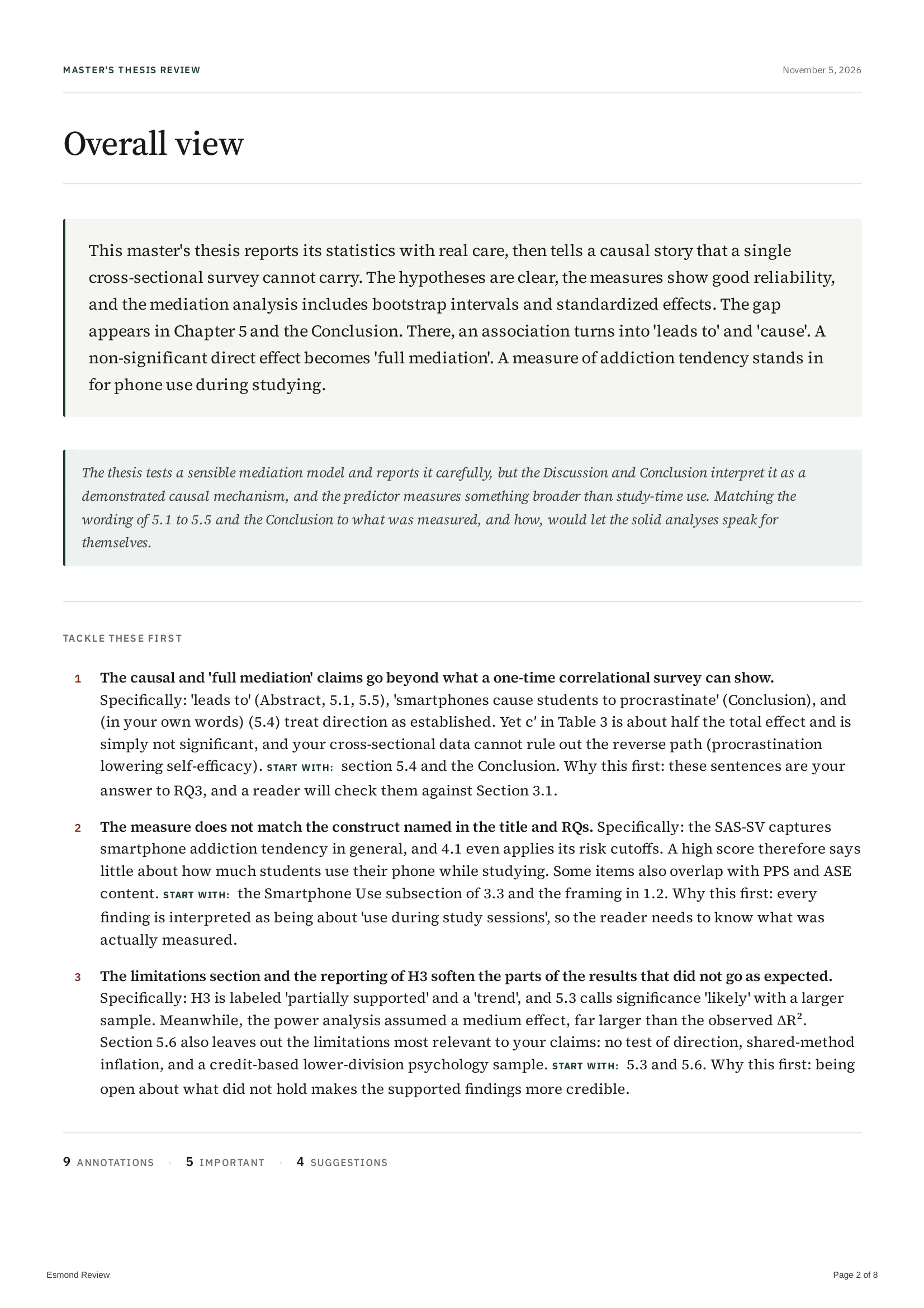
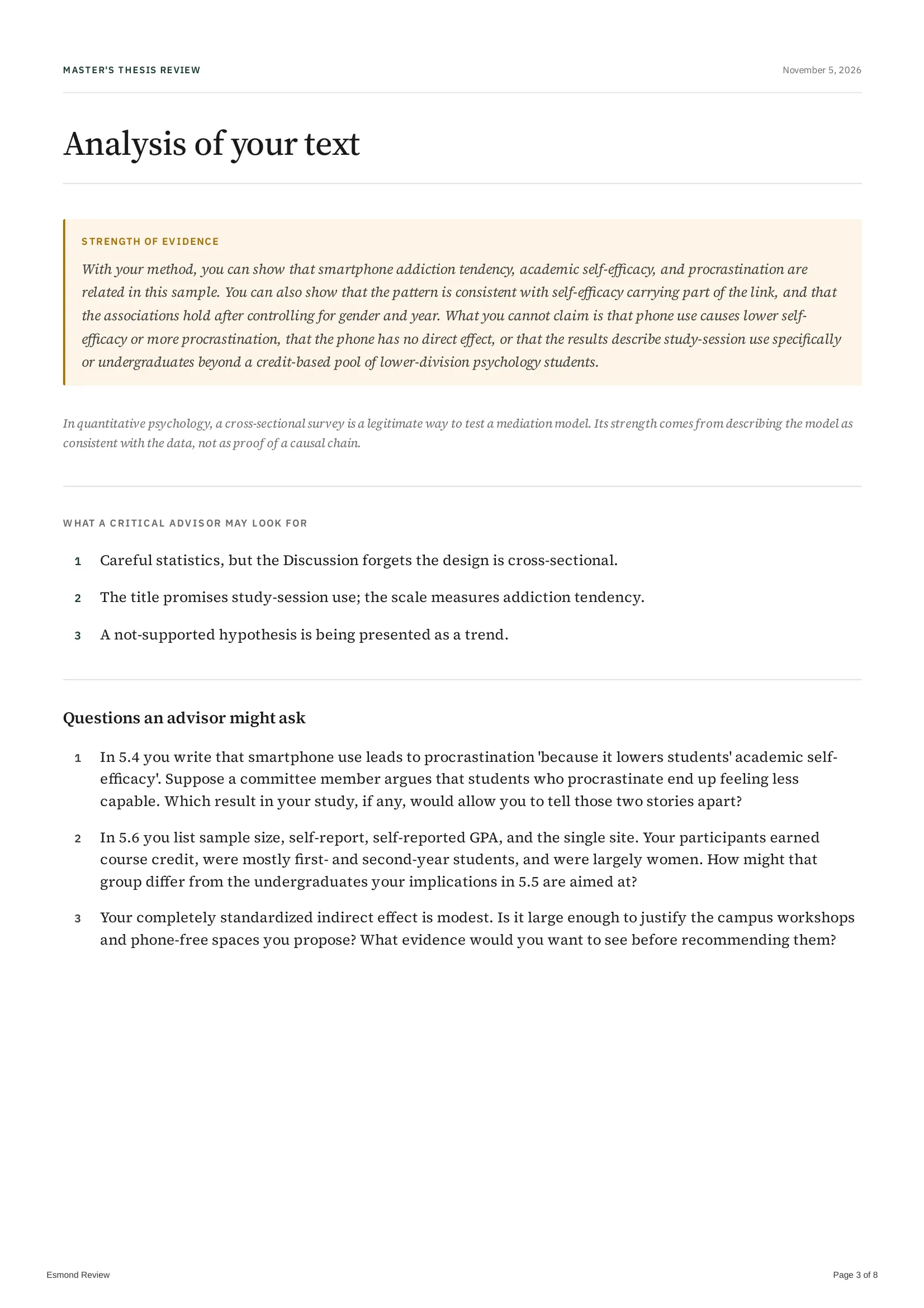
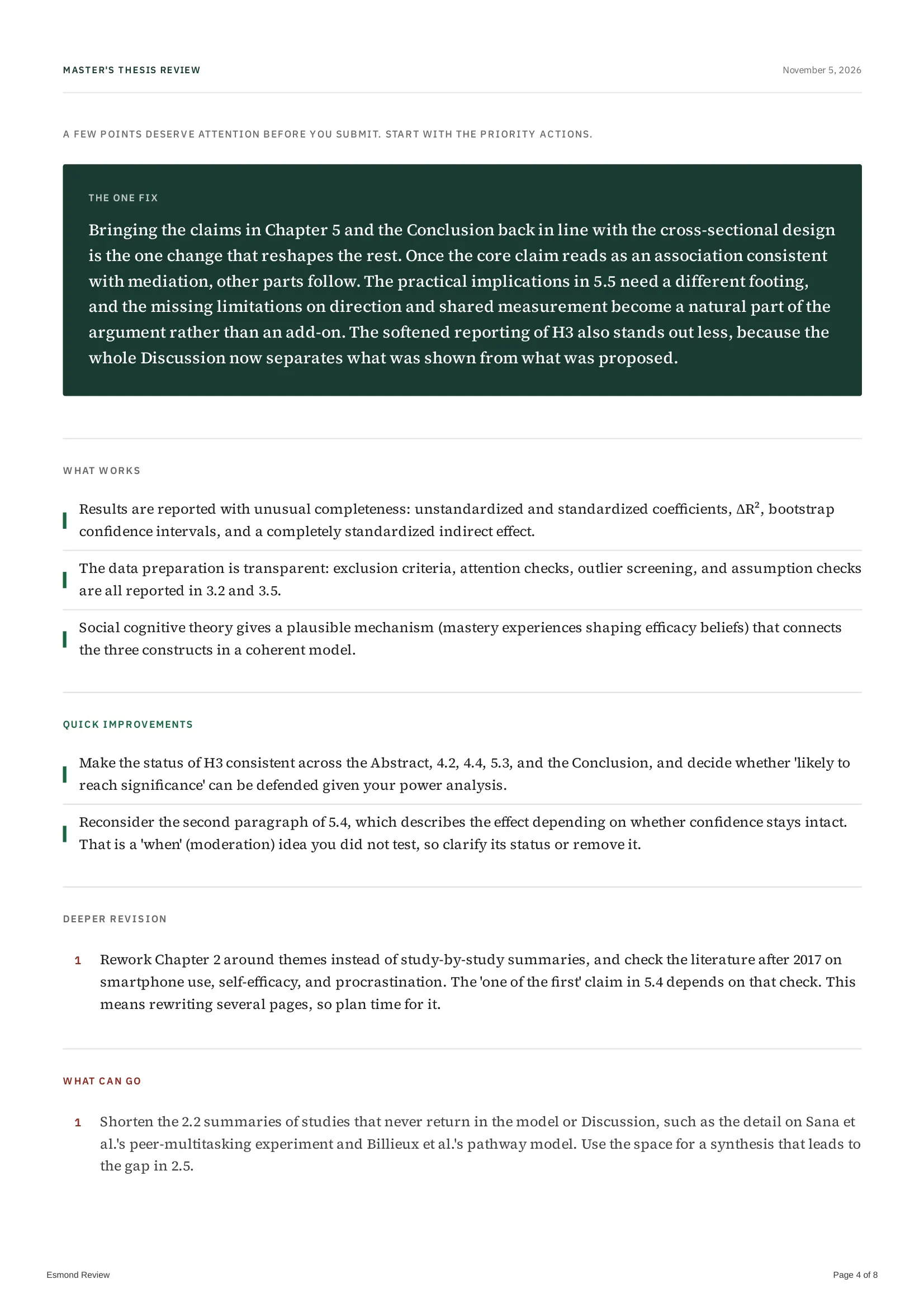
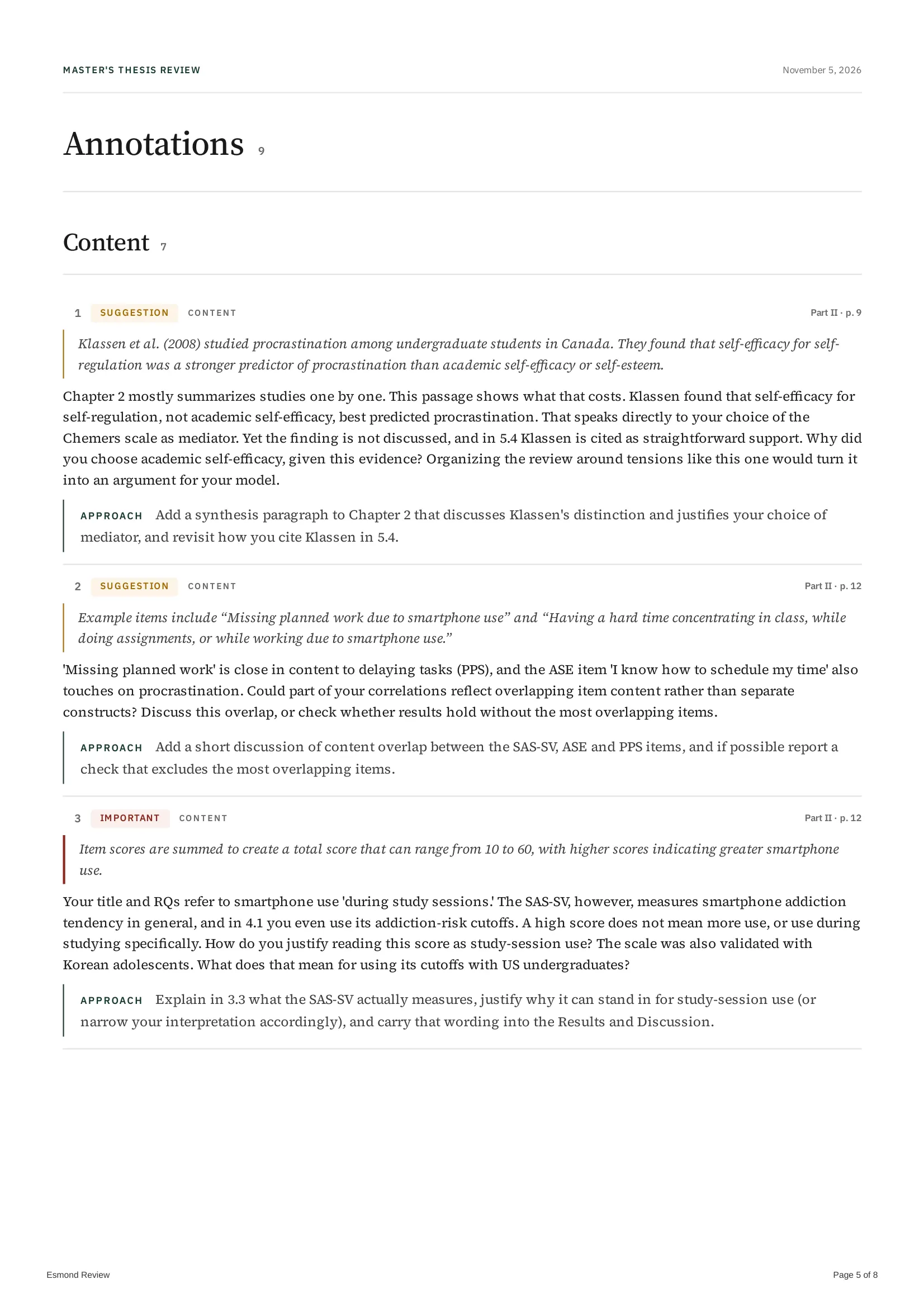
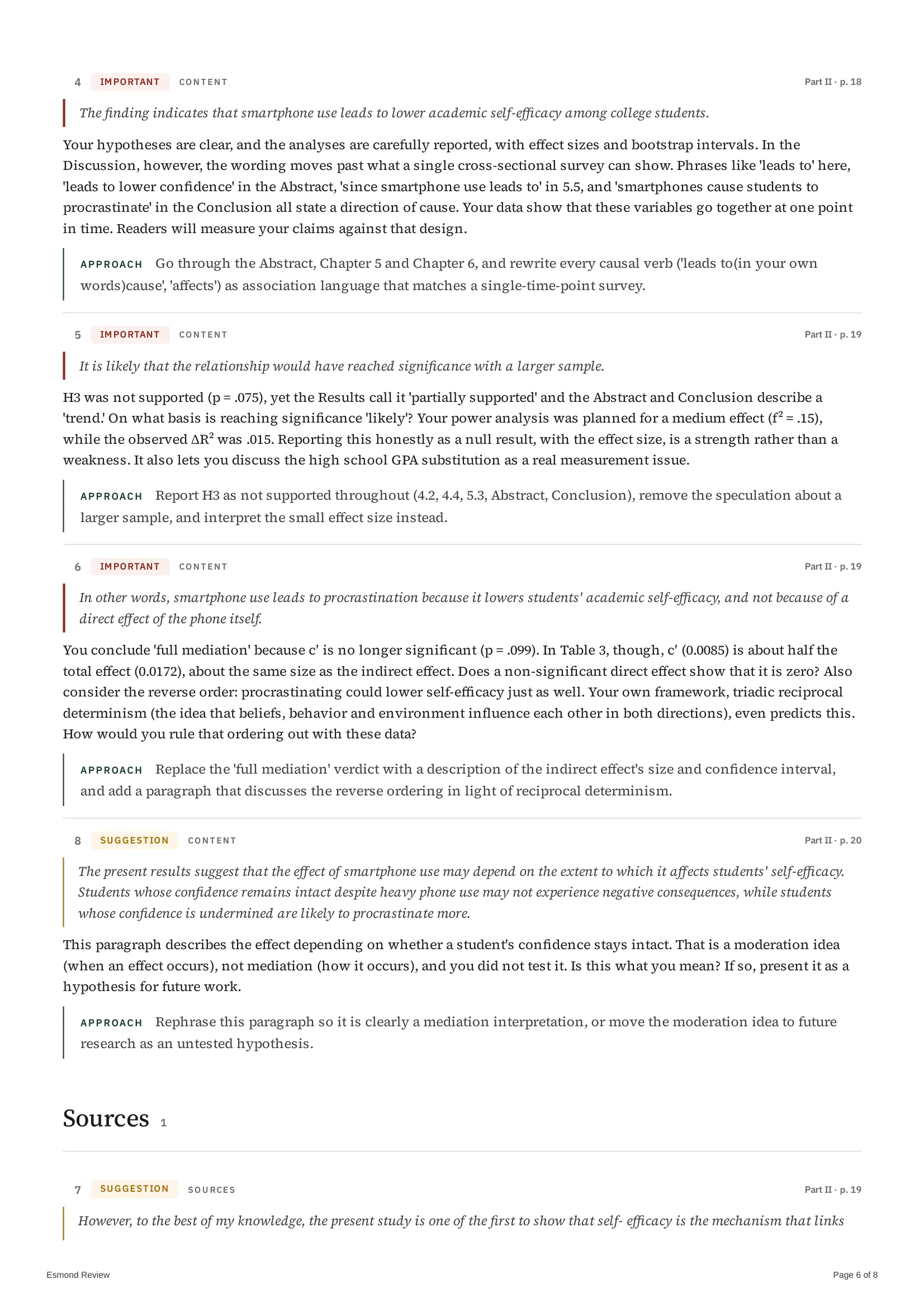
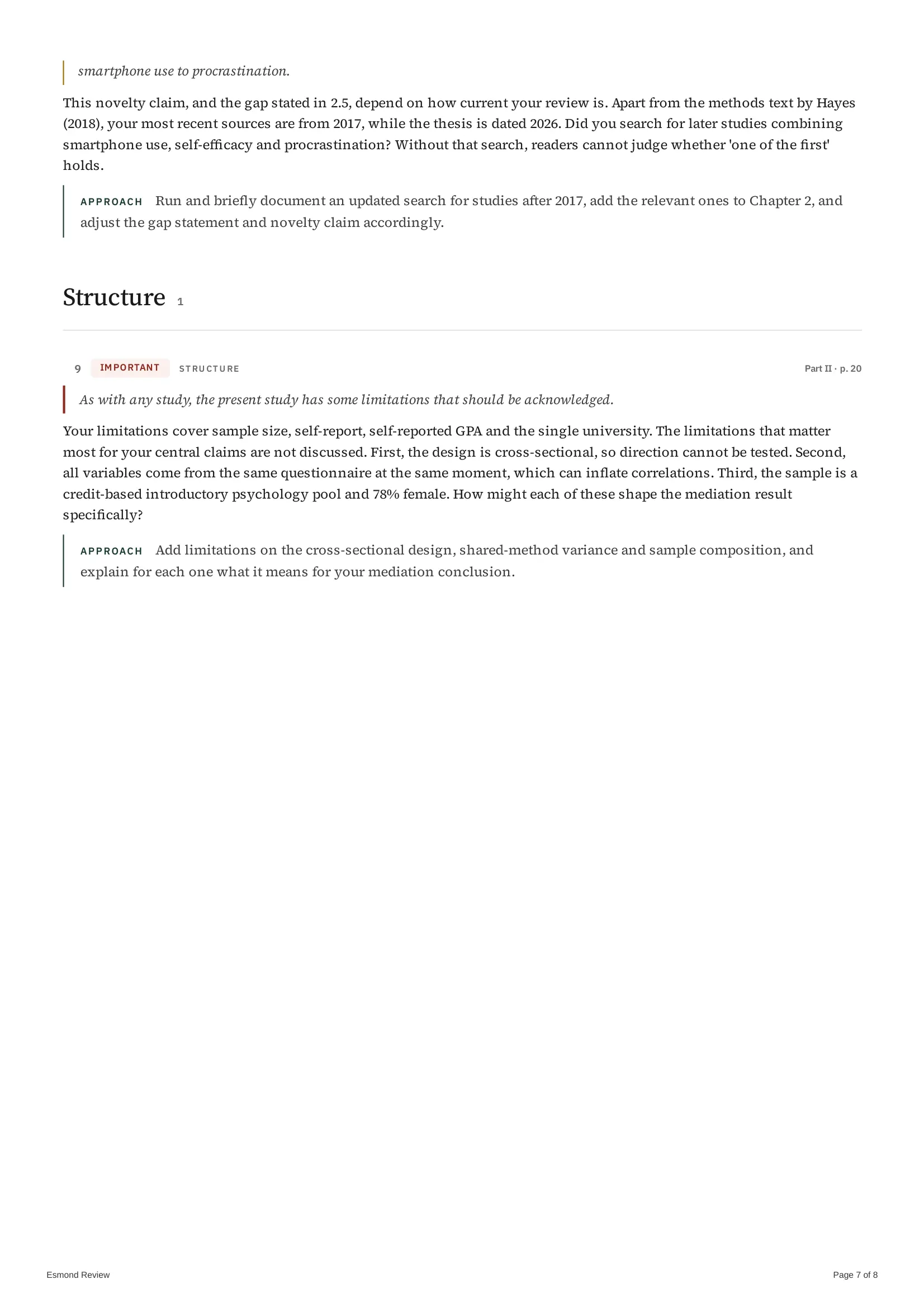
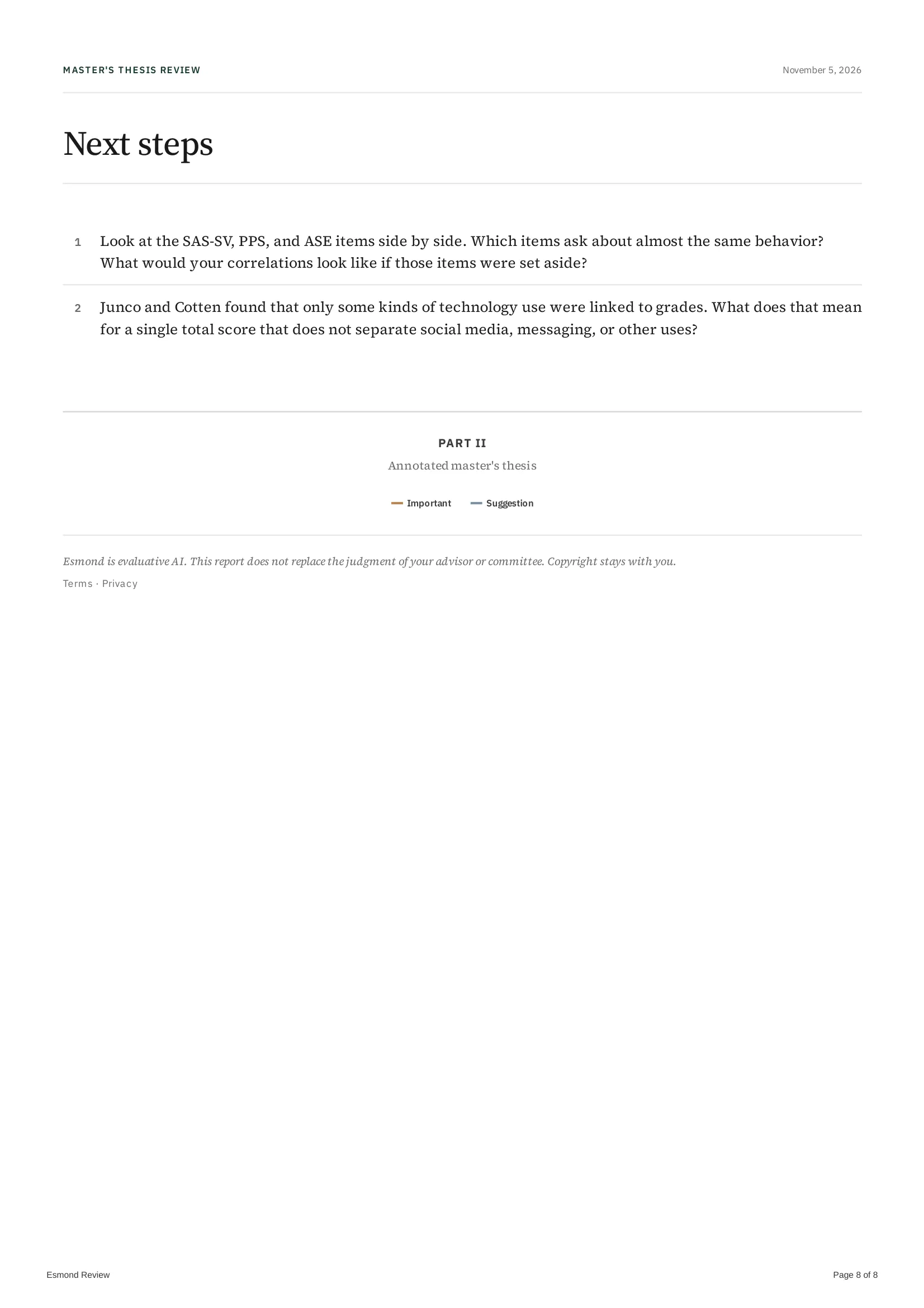
Esmond is a review of your own draft before you submit it: it evaluates the text and points out factual errors, inconsistencies, and blind spots, and you keep the pen. See how Esmond works and a sample report. Section 28 asks you to disclose generative AI used in any aspect of producing the thesis, so the safe course is to list a review of your draft on the preamble page. Your supervisory committee decides whether it is permitted: ask before you upload a draft, then describe how, where and why you used it. The University of Lethbridge has not reviewed or approved Esmond.
Read on November 12, 2026.
We last checked the passages quoted on this page against their sources on . University of Lethbridge is one of the universities in the AI policy tracker.
Last revised
Get your paper evaluated before you submit