Abstract
The University of New Brunswick's School of Graduate Studies accepts appropriate AI use in graduate research, including editing for clarity and language, formatting help and limited structural feedback on the thesis, when it is clearly disclosed and justified. Its guidelines require a Statement of AI Transparency in the thesis front matter naming whether AI was used, which tools and why.
Yes, if you agree on it with your supervisor and disclose it. The University of New Brunswick's School of Graduate Studies (SGS) allows appropriate AI use in graduate research when it is clearly disclosed and justified. For the thesis it lists accepted practices and requires a Statement of AI Transparency stating whether AI was used, which tools, and why.
In short
The SGS page Guidelines on the use of AI sits under Regulations and Guidelines, next to Thesis Preparation and Submission. It is written for graduate students and supervisors, and it complements UNB's graduate regulations, an institutional AI site on UNB's SharePoint, and UNB Library resources. The page carries no date; we read it on November 12, 2026.
It opens with four principles. The second reads: “Transparency matters more than prohibition: appropriate AI use is allowed when clearly disclosed and justified.” The other three say that students remain fully responsible for their work, that supervisors and students must align on use early and revisit it, and that ethics, privacy and employment obligations still apply.
Ask your supervisor how the rule above applies to your thesis. If AI feedback on a draft is allowed, an online thesis review by Esmond comments on its content and adds no text to it.
The guidelines walk through graduate research in stages, summarized below.
| Stage | What the guidelines say | What to have ready |
|---|---|---|
| Ideas and early exploration | AI may serve as a sparring partner; every suggested concept is checked against peer-reviewed sources | Informal notes on how an idea changed |
| Proposal | AI should not generate the core argument, design or rationale unless explicitly approved; some programs may prohibit AI drafting here | A brief transparency statement if AI was used |
| Research and analysis | Code, qualitative coding support and summaries of documents you provide are permissible with supervisory endorsement | The endorsement, plus a description in the Methods section |
| Thesis | Accepted: editing for clarity and language, formatting assistance, limited structural feedback | The Statement of AI Transparency |
| Prompt logs | Recommended, not required, and not part of the submission | Key prompts, outputs and iterations, kept in case someone asks |
The disclosure rule for the thesis is mandatory: “Students must include a Statement of AI Transparency facilitated by using the AI Use Disclosure Worksheet to state whether AI was used, which tools were used and, for what purposes.” SGS calls the statement a standardized mechanism and places it in the thesis front matter.
Analysis gets a second place in the thesis. The guidelines say: “AI-assisted analysis must be described in the Methods section, including tool names and roles.” So a tool that coded interviews appears twice: briefly in the statement, and in detail where you describe your method. The two descriptions should match.
SGS asks students and supervisors to discuss AI explicitly at the start of the research relationship, using the checklist and the worksheet. The checklist on roles and responsibilities of research-based graduate students has a Part C, Early-Stage Questions on AI Use. Two of its questions:
“Which research activities must be completed without AI assistance to ensure core scholarly skills are developed?” And: “How will AI use be documented, disclosed, and cited from the outset of the project?”
Part C also asks about tools and purposes, ethical and data constraints, and responsibility for every output. The guidelines add that AI expectations should be revisited at proposal approval, ethics submission and thesis drafting.
The guidelines separate two roles. As a paid graduate research assistant or teaching assistant, employment contracts and confidentiality obligations apply, and in that role the page says you must confirm whether AI tools are permitted for your duties and never upload confidential, proprietary, unpublished or personal data into public AI systems.
That rule is written for employment duties; the part on your role as a student has no such sentence. Ethics approval is required before sensitive or identifiable data goes into an AI tool. Whether your own thesis draft counts as unpublished data under the RA rule is not settled by these texts, so ask your supervisor before you upload a draft to Esmond or any other AI tool. This matters most for data from paid RA work.
Hypothetical example, forestry. A master's student uses an AI tool to generate R code for a growth model, with her supervisor's endorsement noted in an email. The statement in the front matter mentions code support, and the Methods section does not name the tool. Her committee asks: which parts of the model code came from the tool, and how did you verify them?
Hypothetical example, education. A PhD student uses AI support for a first pass of qualitative coding on teacher interviews, then recodes by hand. His Methods section describes the hand coding only. His supervisor asks: what role did the tool play, and where does a reader see the codes it proposed?
Hypothetical example, computer science. A master's student asks an AI tool for structural feedback on chapter order and moves her related-work chapter as a result. Her statement says no AI was used for the thesis text. Her supervisor asks: does feedback on structure belong in the statement?
Yes, within limits. The SGS guidelines allow appropriate AI use when it is clearly disclosed and justified, and accept editing for clarity and language, formatting assistance, and limited structural feedback on the thesis.
The guidelines say the statement states whether AI was used, which points to a statement in every thesis. Confirm the wording with your supervisor or SGS.
No. Prompt logs are a recommended practice and are not part of the thesis submission. Your supervisor or committee may ask to see them.
Ethics approval is required before sensitive or identifiable data goes into an AI tool. In paid RA or TA work, the guidelines say never to upload confidential, proprietary, unpublished or personal data into public AI systems. For anything else, ask your supervisor.
Esmond evaluates every assignment before you submit. It never writes it.
Esmond is an AI tool that doesn't write for you. If your course doesn't allow any AI tools, don't use Esmond for that work. If you're unsure, ask your instructor or advisor.
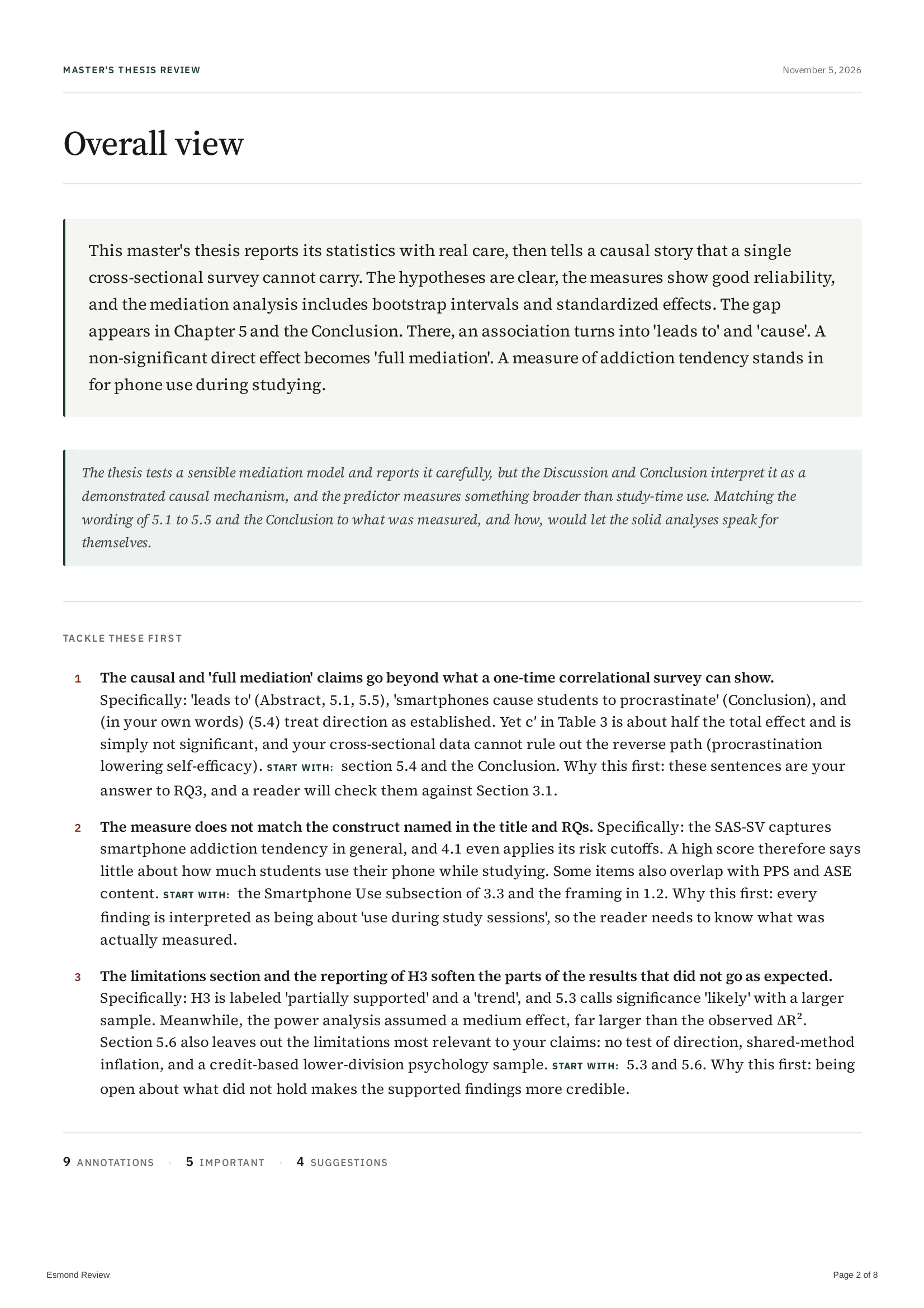
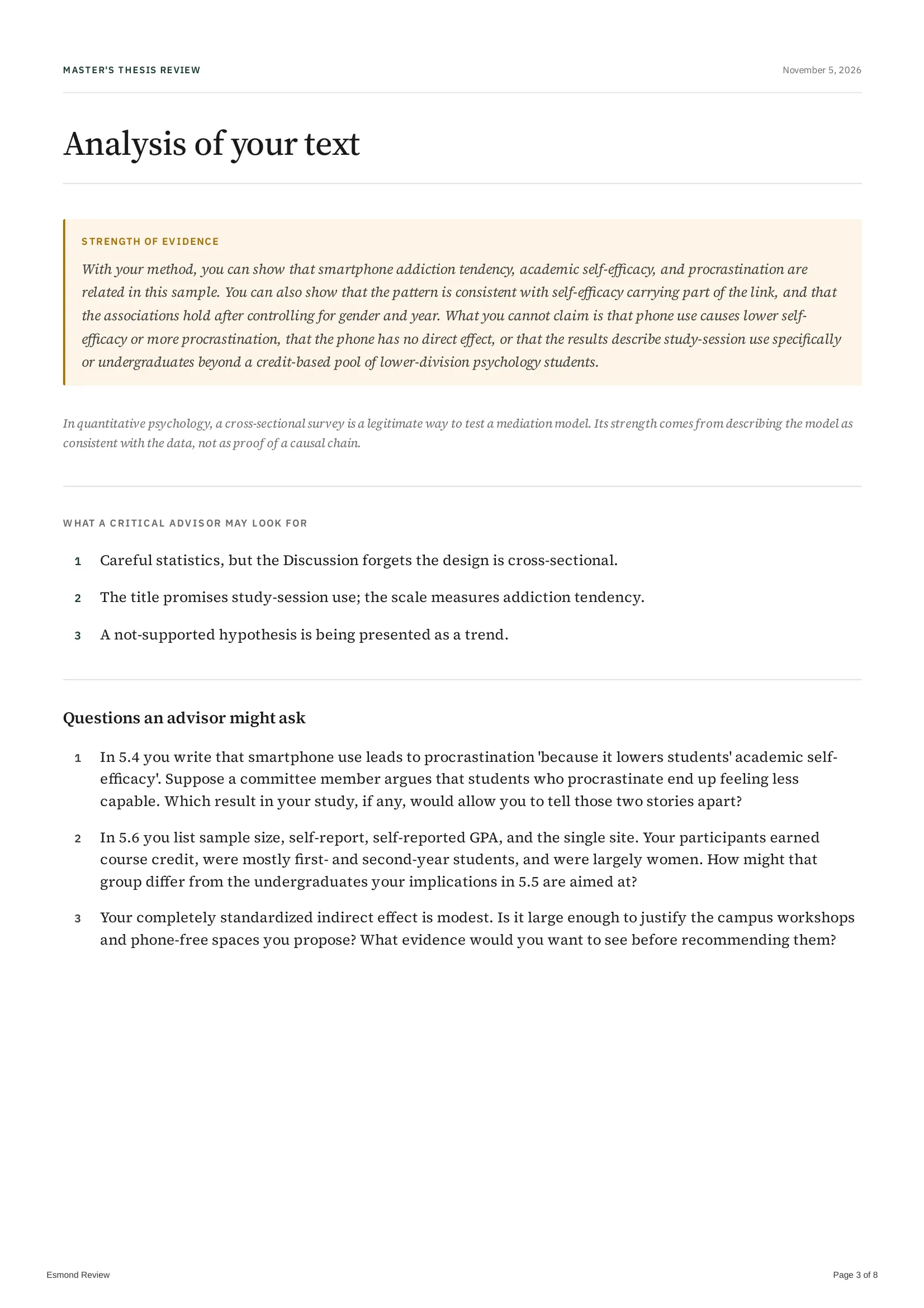
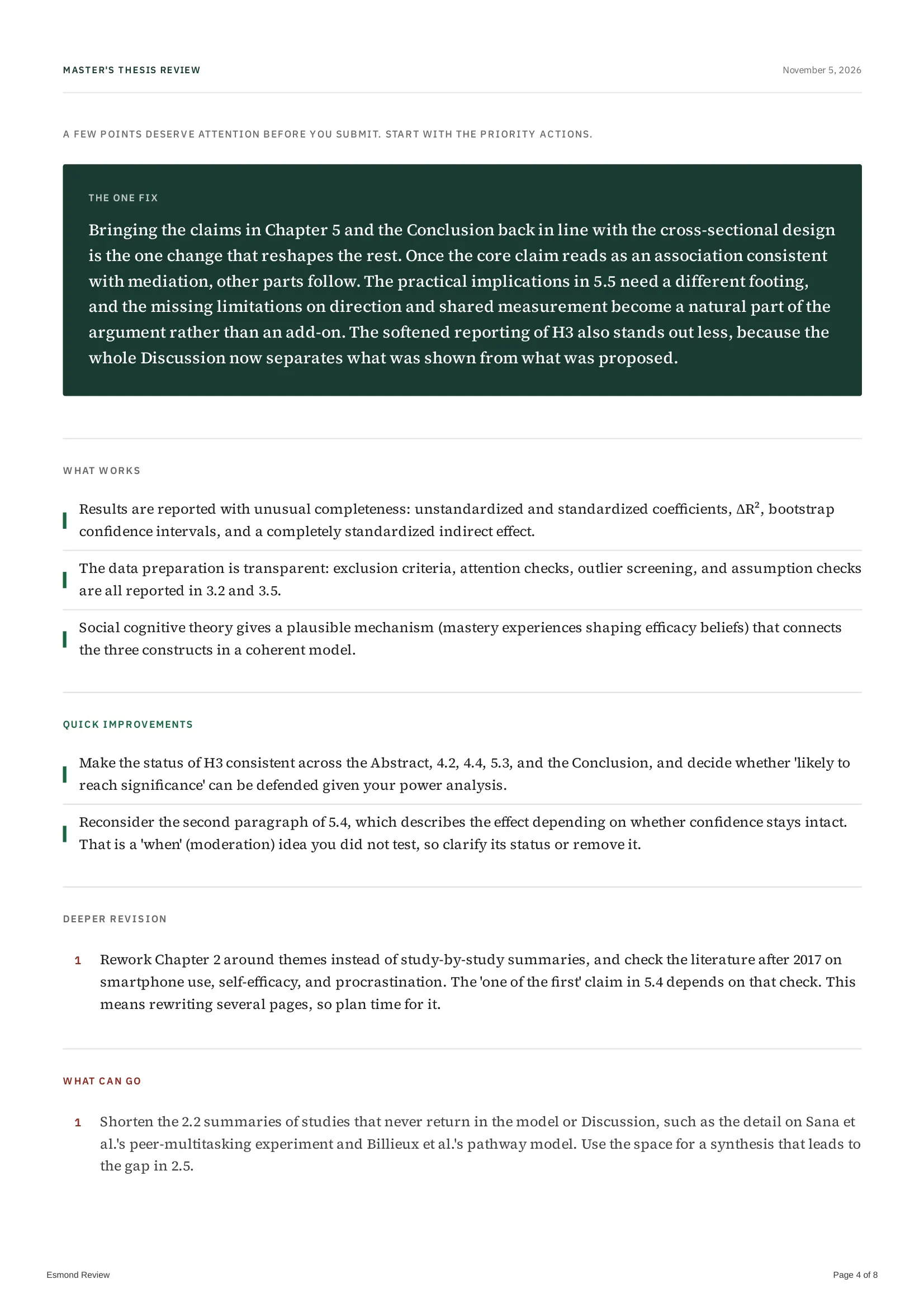
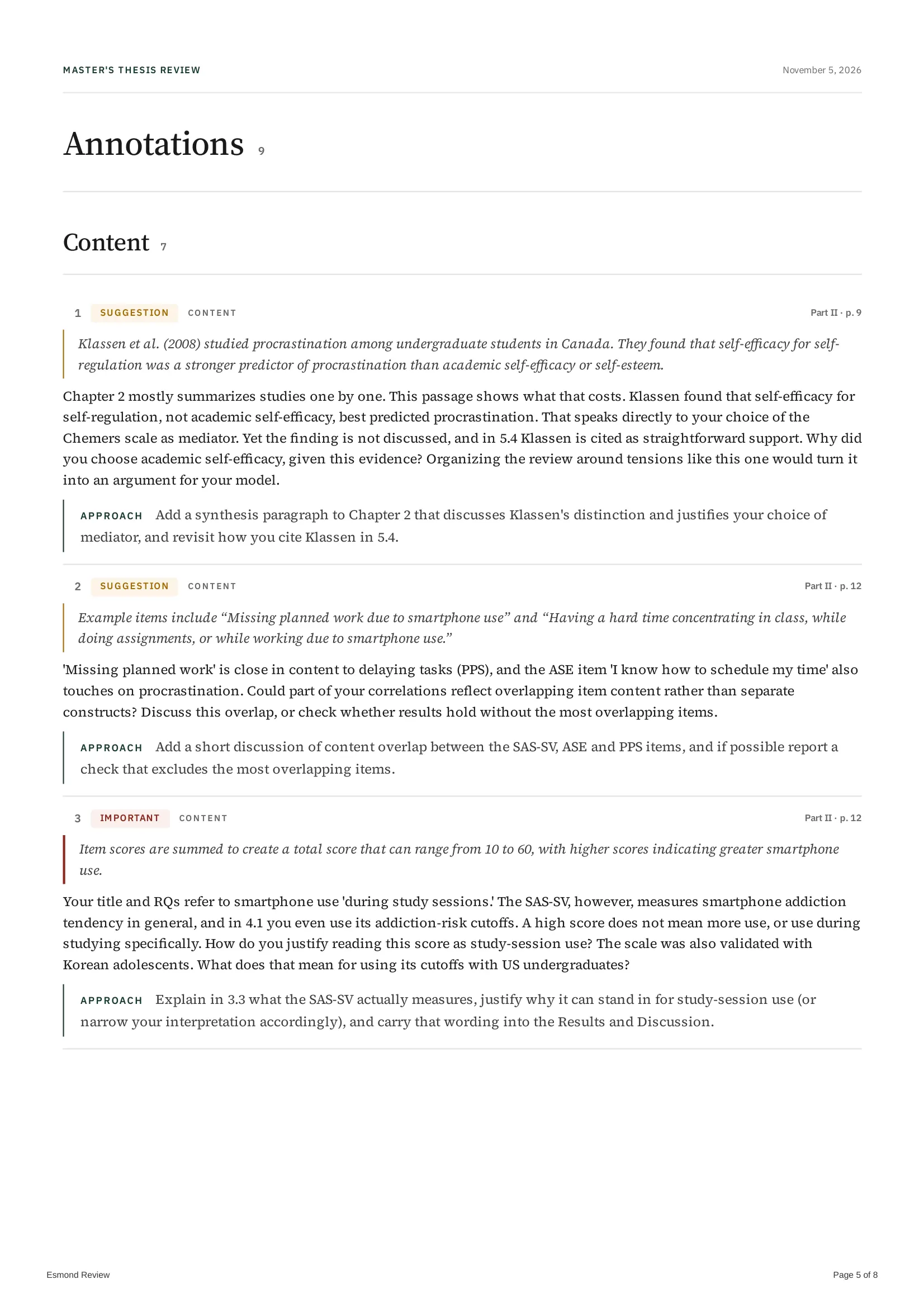
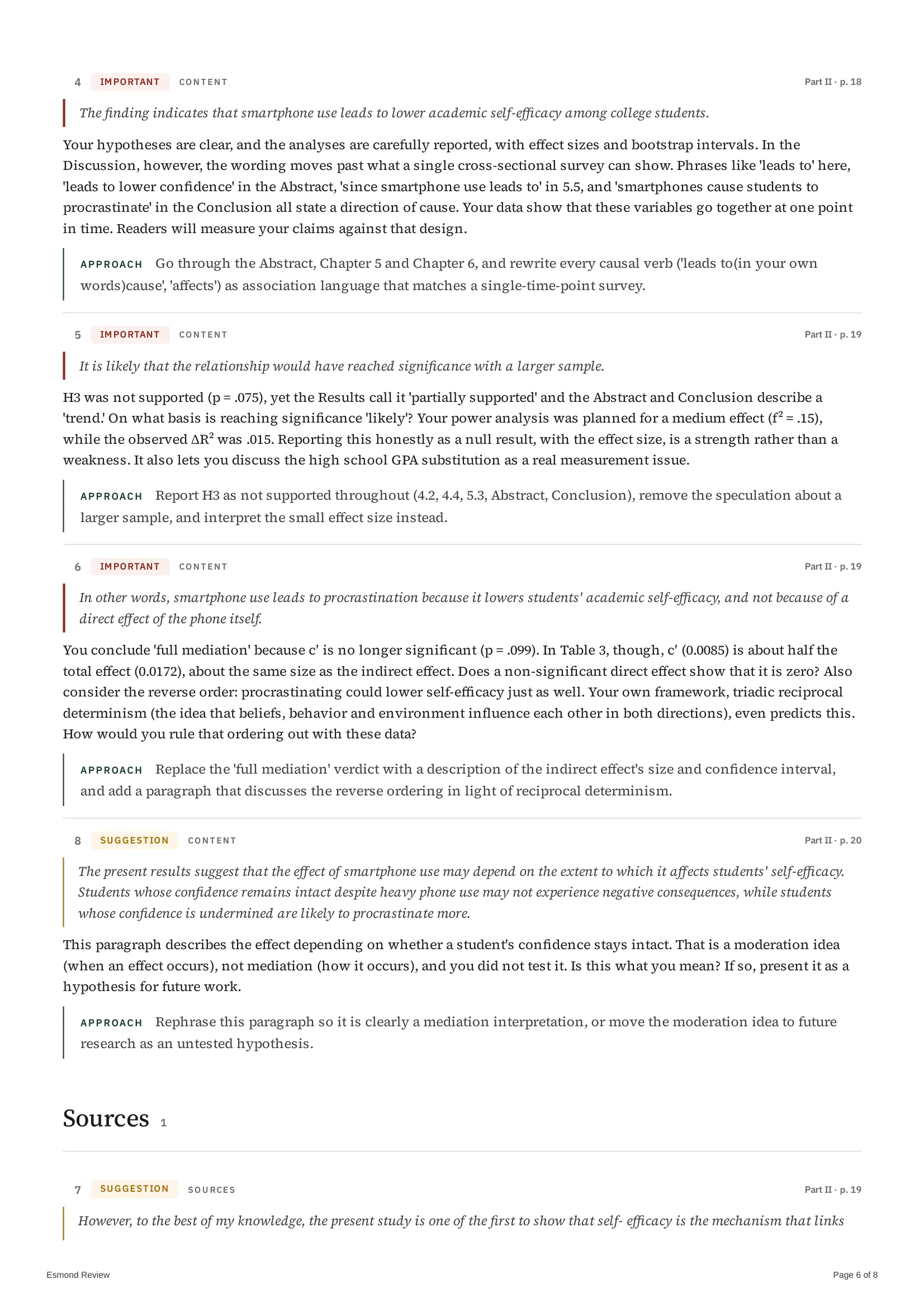
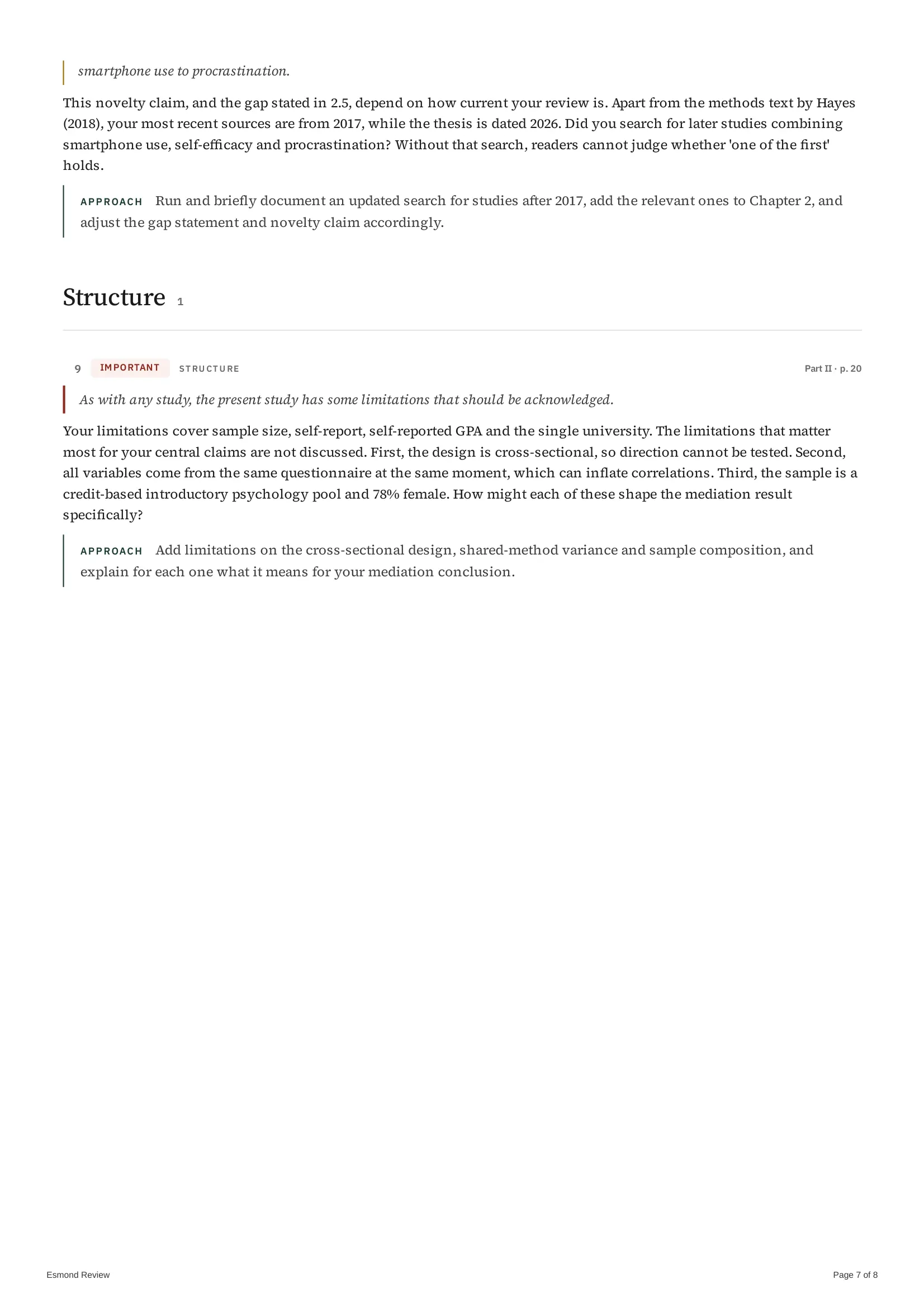
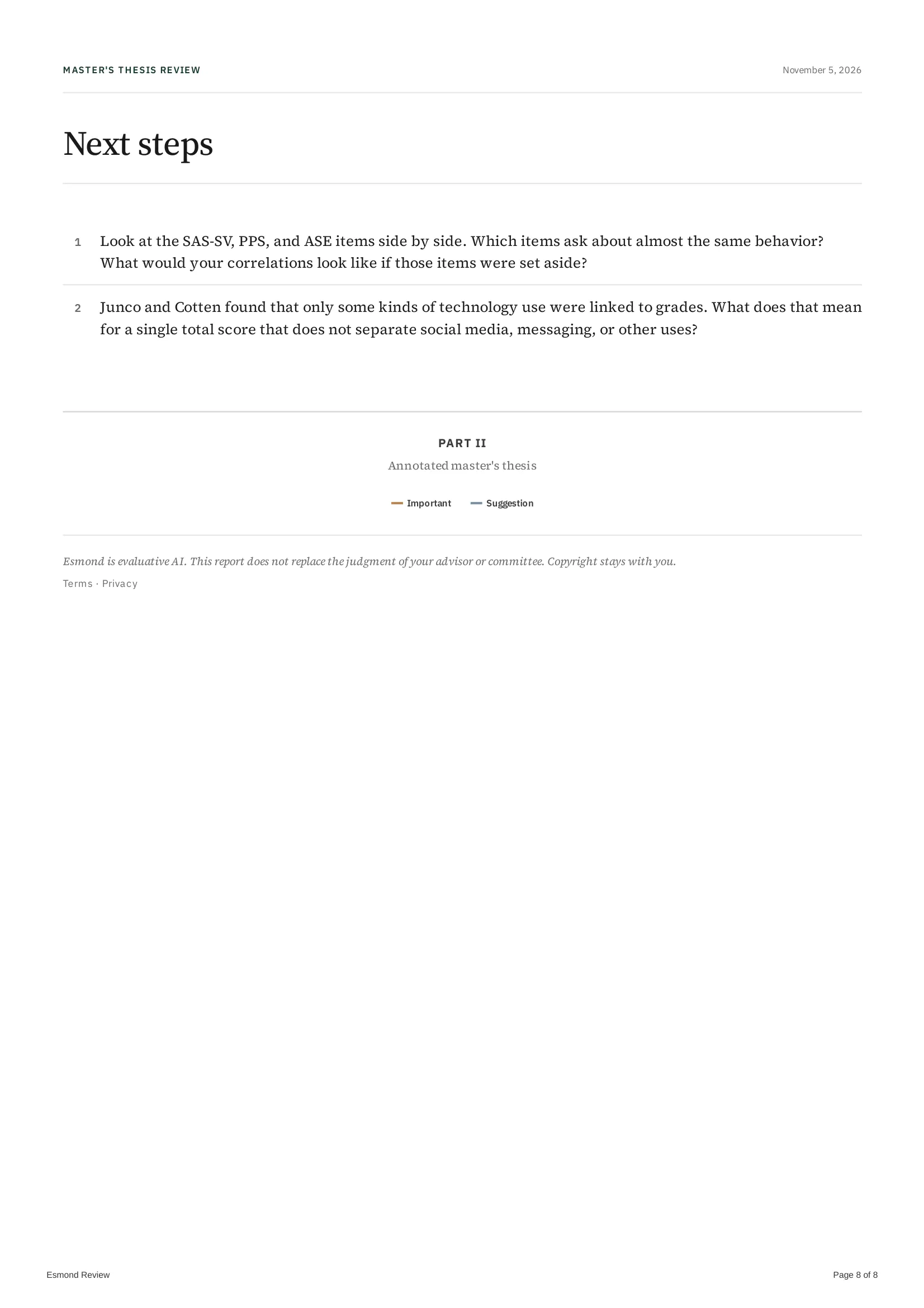
Esmond is a review of your own draft before you submit it: it evaluates the text and points out factual errors, inconsistencies, and blind spots, and you keep the pen. See how Esmond works and a sample report. UNB's guidelines list accepted practices for the thesis without naming a content review, and ask that AI use be agreed with your supervisor and disclosed. So ask your supervisor before you upload a draft to Esmond, and name it in your Statement of AI Transparency like any other tool. The University of New Brunswick has not reviewed or approved Esmond.
Read on November 12, 2026.
We last checked the passages quoted on this page against their sources on . University of New Brunswick is one of the universities in the AI policy tracker.
Last revised
Get your paper evaluated before you submit