Abstract
Esmond reviews your capstone paper in minutes, from $3.99 for a short paper to $7.99 for a report of up to 50,000 words, and you see the price before you pay. You get comments in your own PDF on structure, research question, argument, method and sources, plus questions your committee or instructor might ask.
A capstone asks you to apply what your program taught you to a real problem, so its weak points sit where your setting, your data and your recommendations meet. Esmond reads your paper or thesis against the standards of your field: factual errors, blind spots and inconsistencies, flagged before you submit. It adds no text to your work.
The price follows the length of your paper: $3.99 up to 4,000 words, $4.99 up to 15,000 words and $7.99 up to 50,000 words. Outside the US you pay the same amounts in euros. Esmond counts the words after you upload and shows the format and the price before you pay.
You stay the author of every sentence: Esmond points to passages and asks questions, and every change is yours to make. The comments come from an AI model and can contain errors, so check each one against your own data before you change anything.
The same few gaps come back across fields. They are the passages a careful reader stops at, and the ones a review flags with a question at the place where they occur:
The University of Oregon's graduate school describes a thesis as work that generates new knowledge through original research, and a capstone or terminal project as work that shows mastery of the skills and concepts of the program. Oregon Health & Science University sees the main difference in scope and focus: its capstone answers a practical question within a particular agency or setting, while a thesis should apply beyond one setting.
Readers of a capstone therefore mostly ask whether each recommendation follows from what you found in that setting, more than whether you filled a gap in the literature. Esmond has no separate capstone setting: it reads your project from within your field and comments where a recommendation or conclusion goes beyond your own material. Whether the project meets your program's requirements is up to your instructor and committee. Capstone vs. thesis compares how four programs define each.
Each guide sets out what programs in that field ask of the paper, chapter by chapter: the nursing capstone project, the MBA capstone project, the MPH capstone project and the social work capstone project.
Your instructor or capstone advisor is still the first reader. Ask which draft stages they review, and use their comments and the review side by side.
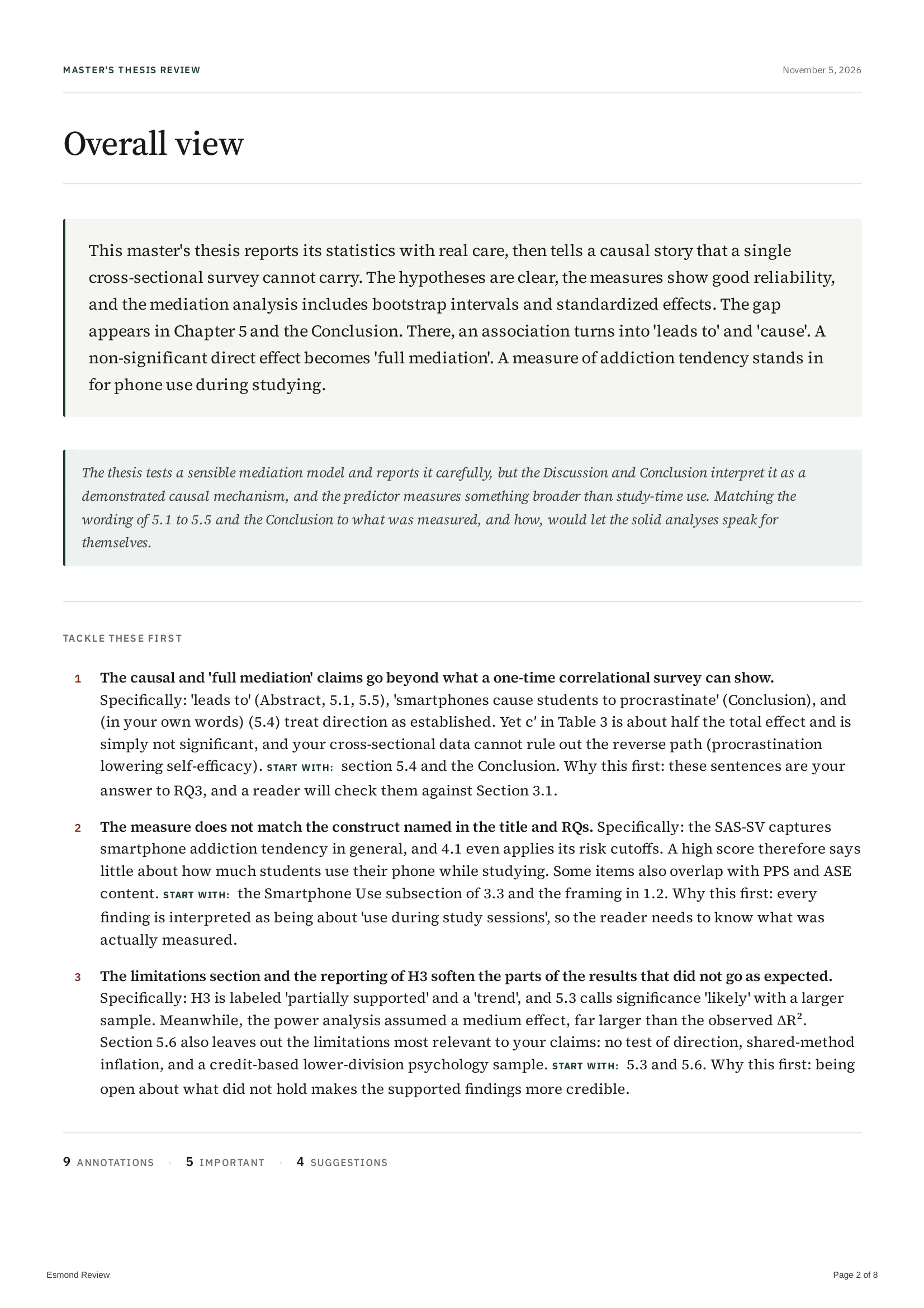
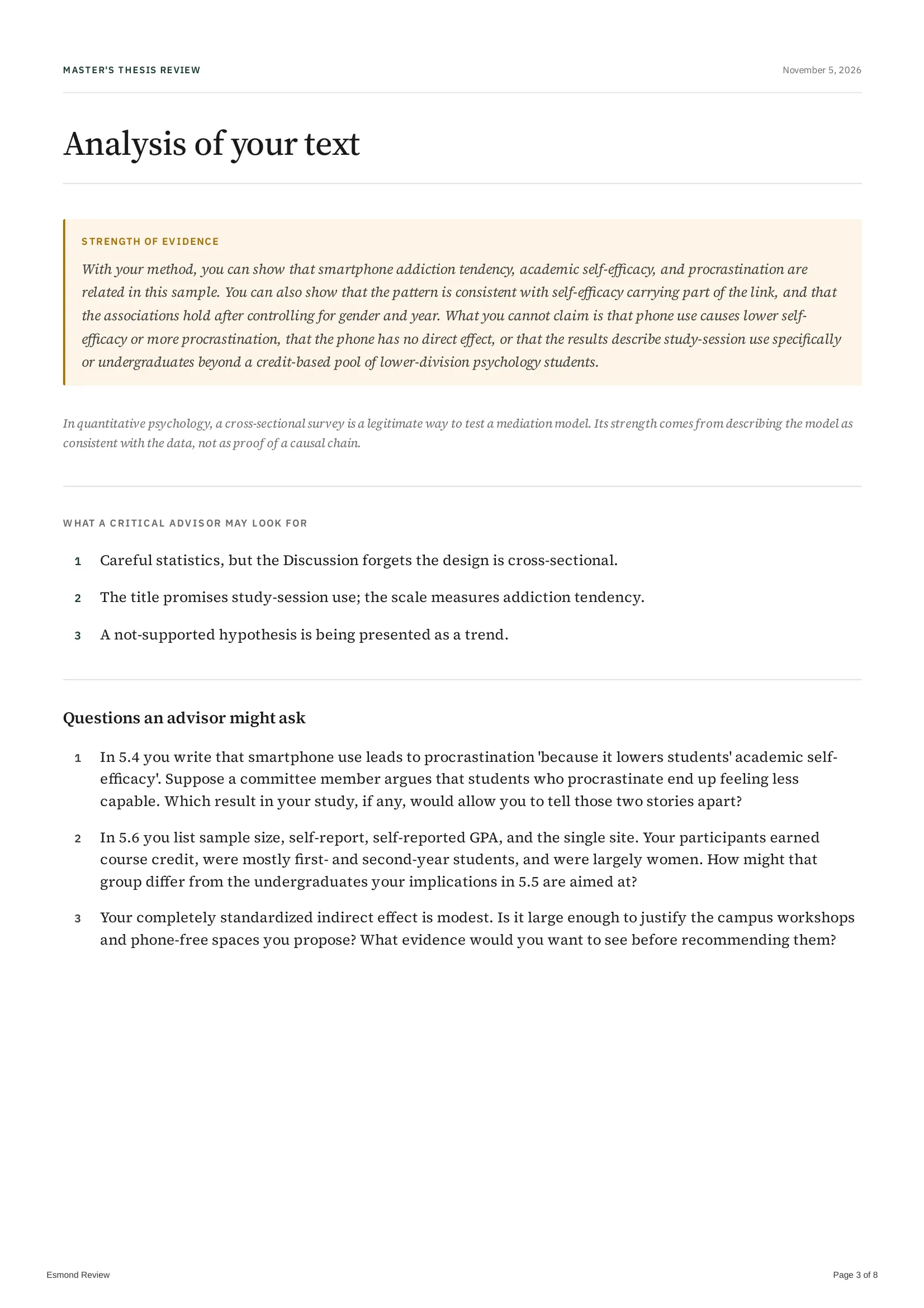
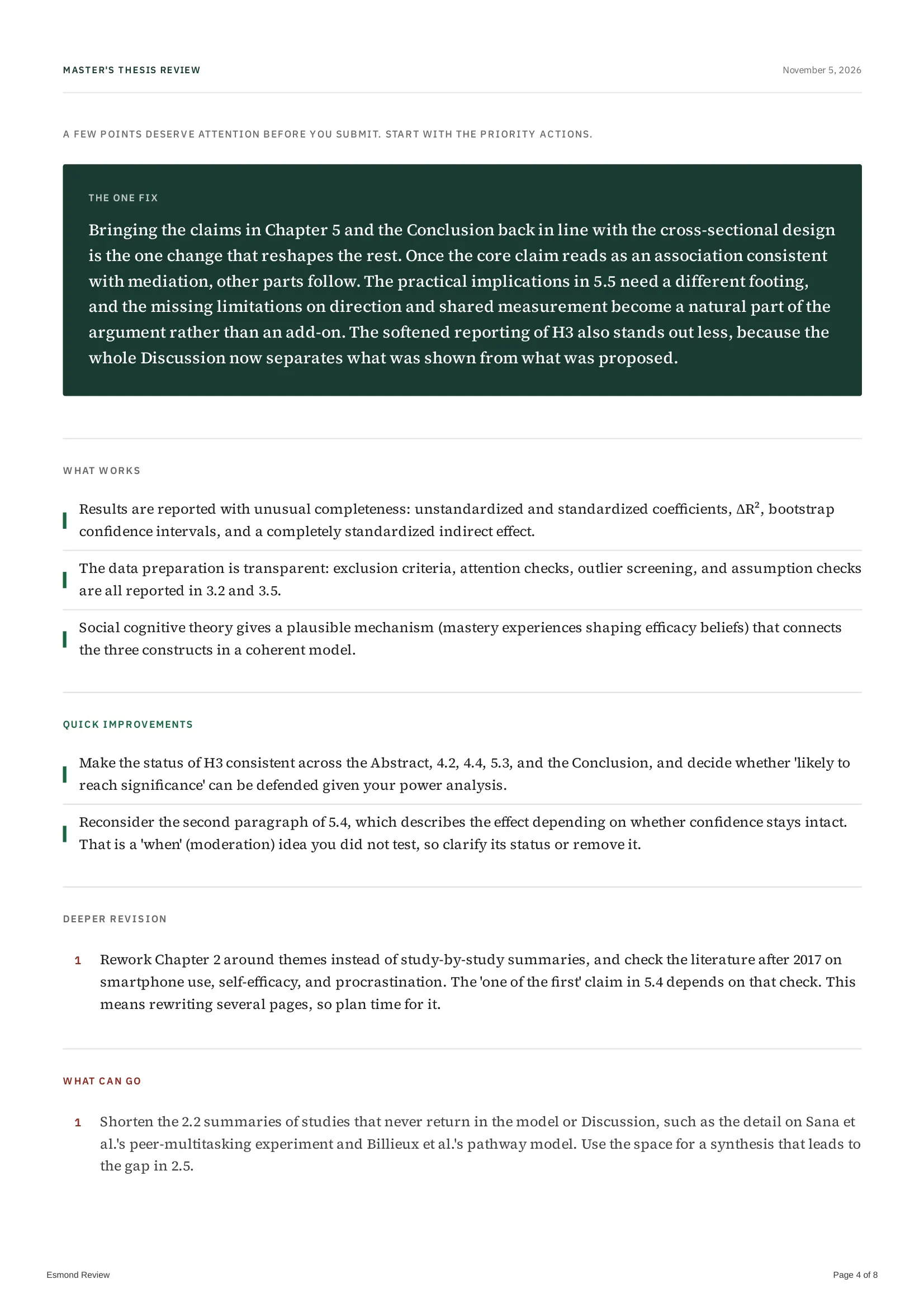
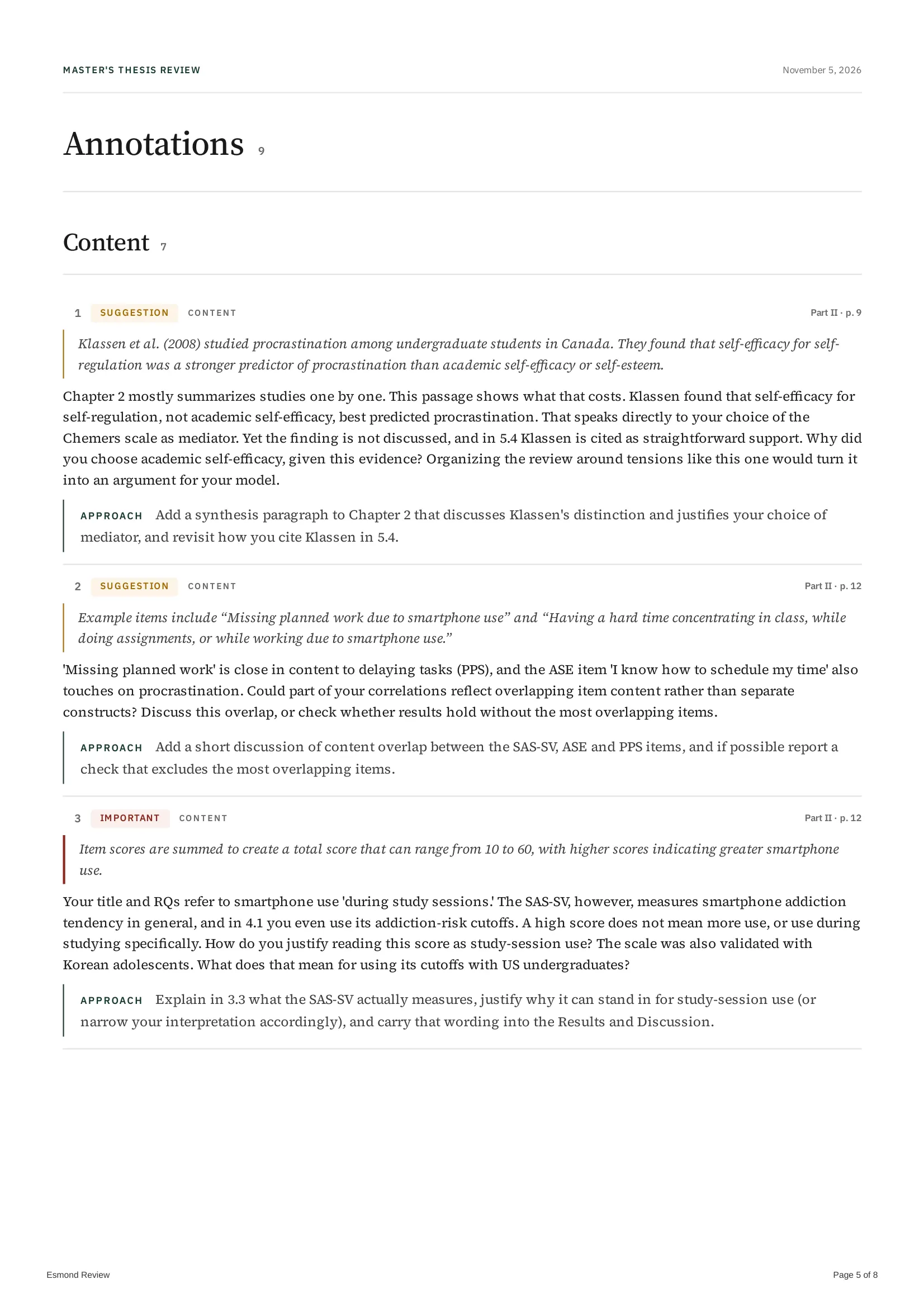
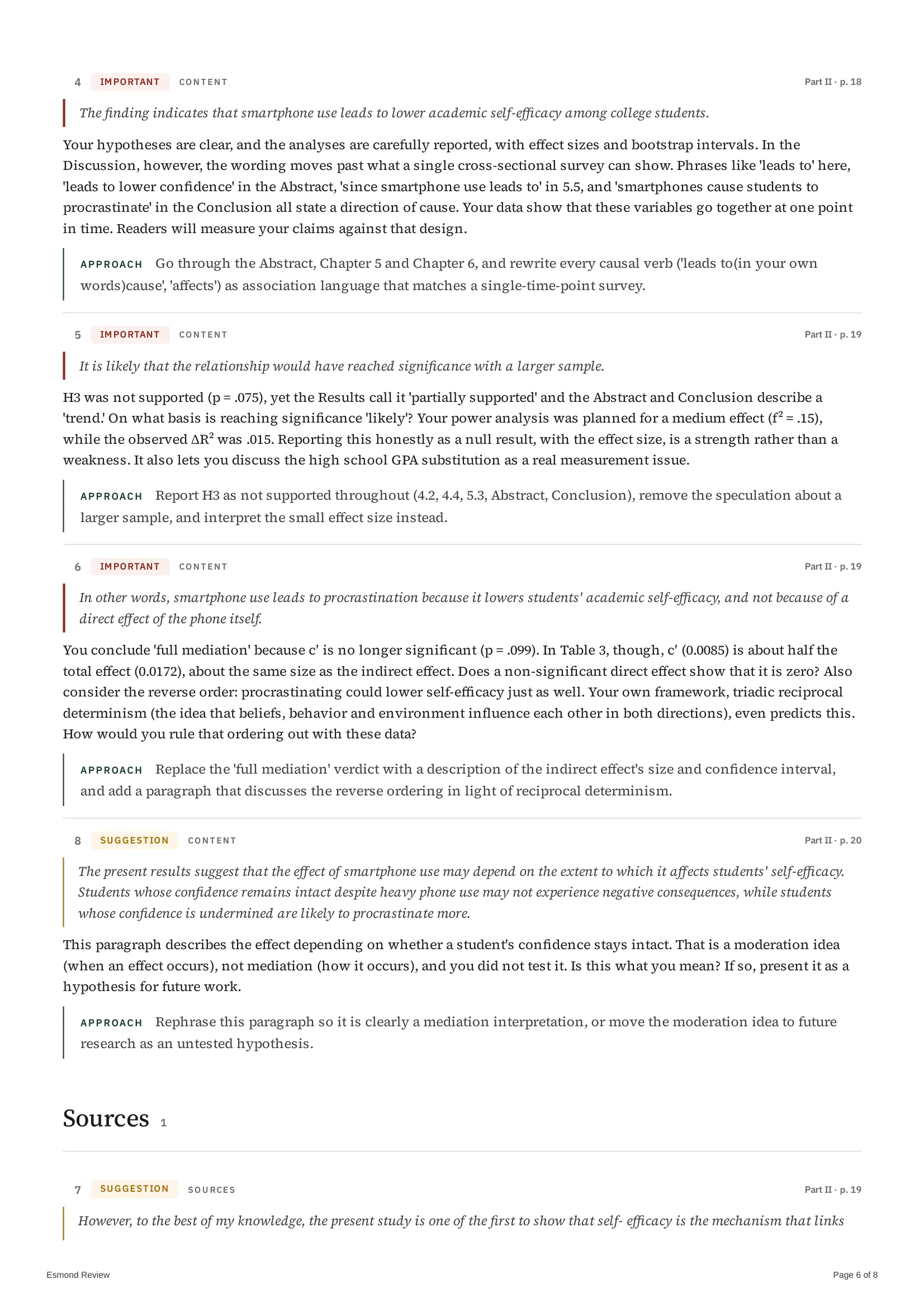
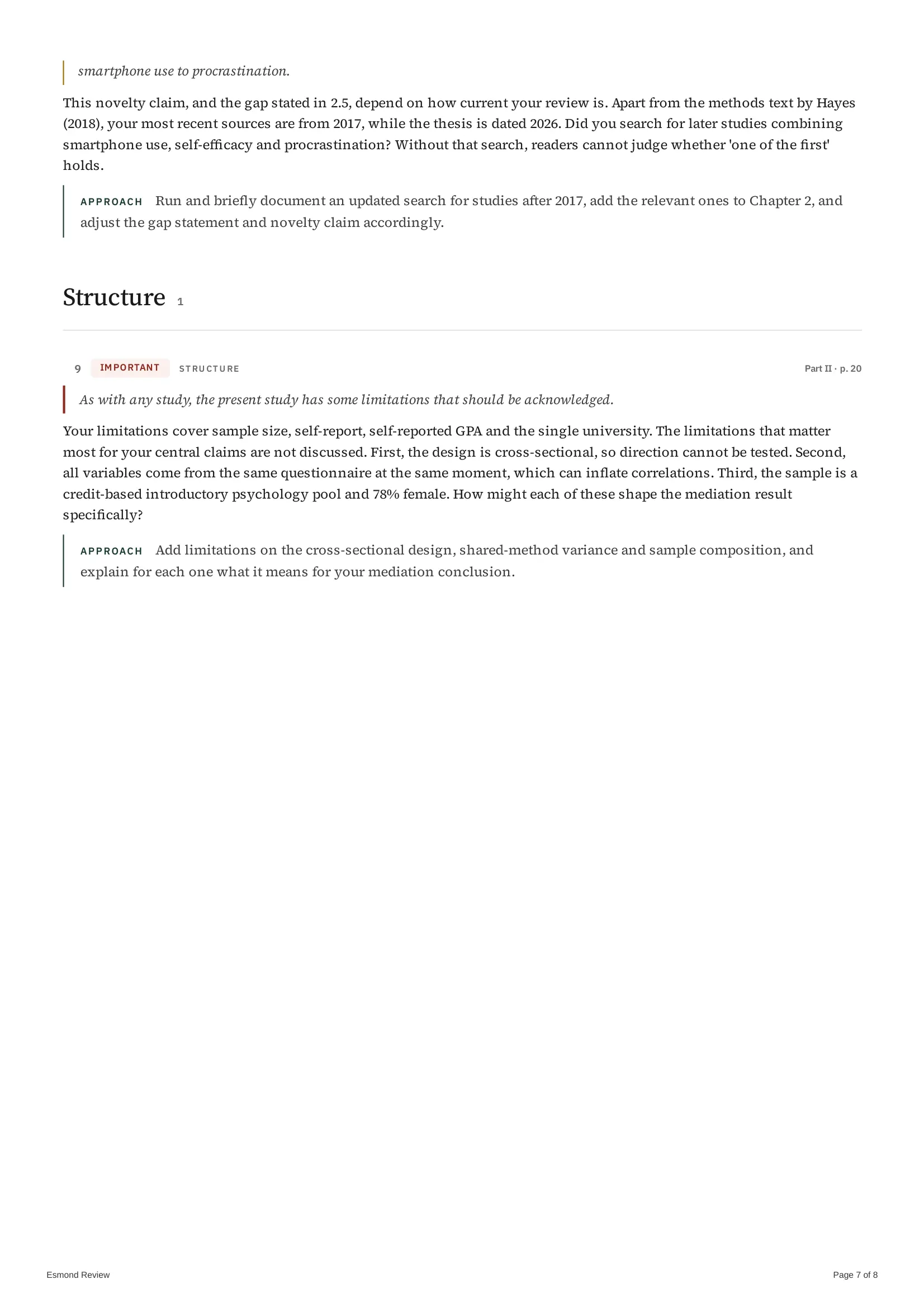
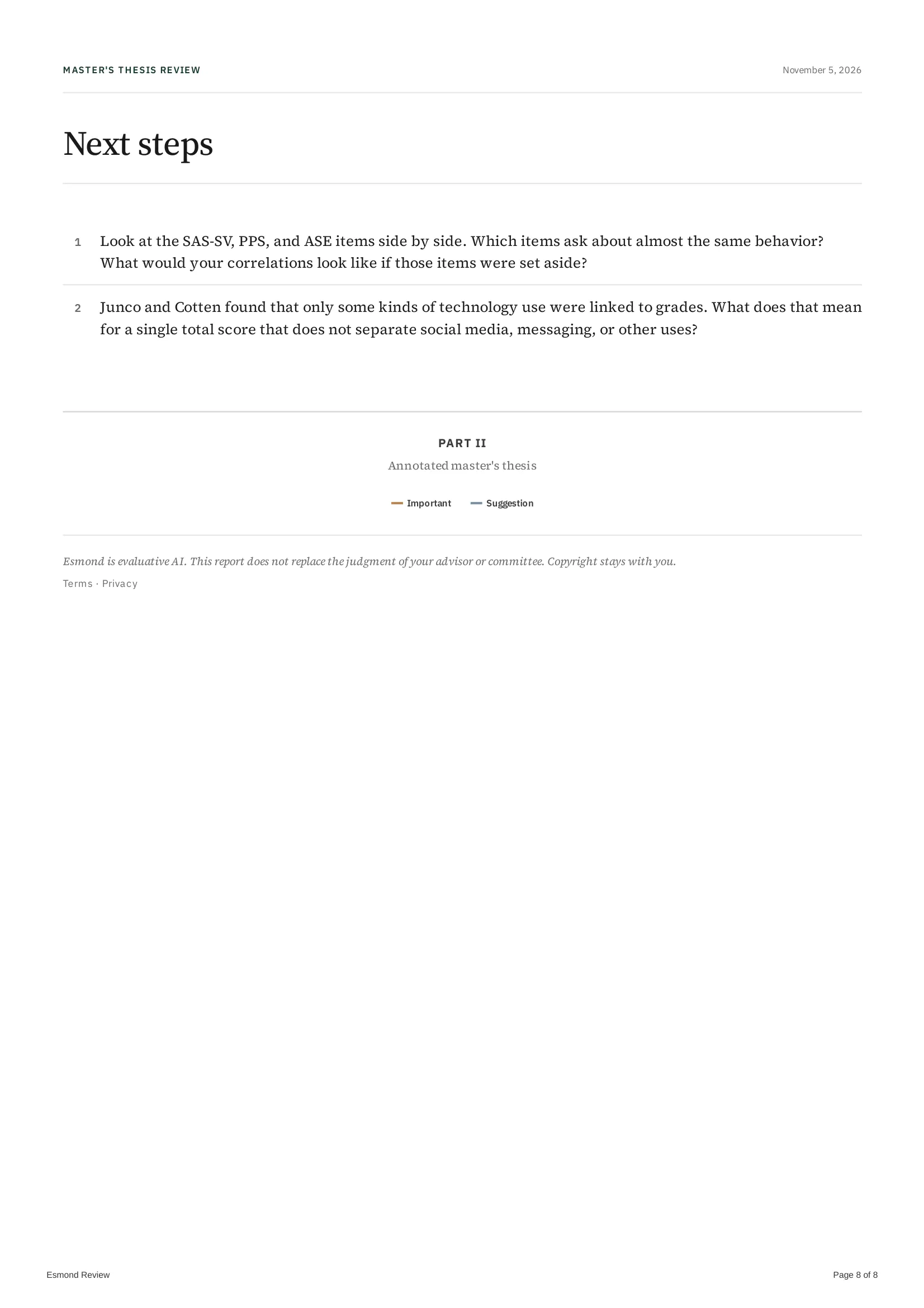
Open the sample report before you upload anything. Esmond produced it for an invented master's thesis on young adults who avoid the news, and it shows how the priorities read, where the margin comments sit and what kind of questions come up. The review of your capstone takes the same shape.
Your program sets the rules for AI in a capstone, and they can differ between courses. Ask your instructor or capstone advisor before you upload, and keep the answer. The AI Policy Register collects what universities publish about AI, quoted and dated, and the university AI policy tracker goes through thesis rules school by school.
Yes. Upload the PDF to Esmond and most reviews are ready in a few minutes, from $3.99 for a short paper to $7.99 for a report of up to 50,000 words. You see the format and the price before you pay.
Comments next to the passages in your PDF on structure, research question, argument, method and sources, a list of what to fix first and questions your committee or instructor might ask. The sample report shows a full example.
That depends on your program and your course. Ask your instructor or capstone advisor first and keep the answer. The AI Policy Register quotes what many universities publish.
No. Esmond doesn't write anything for you: it comments on the content and asks questions, and you make every change yourself.
Most reviews take a few minutes. You read the review in your browser and get it as an annotated PDF by email.
Esmond evaluates every assignment before you submit. It never writes it.
It evaluates: it reads your capstone from within your field and points out factual errors, inconsistencies and blind spots, with comments next to the passages they are about. It doesn't check grammar or style.
Esmond is an AI tool that doesn't write for you. If your course doesn't allow any AI tools, don't use Esmond for that work. If you're unsure, ask your instructor or advisor.
How Esmond works covers what you upload, and what a thesis review costs lists the four formats.
Read on November 3, 2026.
Last revised
Get your paper evaluated before you submit